
Al Majalla Spotlight on Gadi Eisenkot
The esteemed Saudi weekly, Al Majalla, which has been a prominent publication since its inception in London in 1980 by brothers Hisham and Ali Hafez, has recently dedicated its latest cover to a familiar figure in Israeli politics: Gadi Eisenkot. This magazine, which has enjoyed financial backing from the Saudi treasury since its establishment, has seen a notable increase in editorial freedom in the past decade under the leadership of its Syrian-born editor-in-chief, Ibrahim Hamidi. As a result, its circulation has expanded significantly across the Arab world.
The cover story poses a provocative question: “Can Eisenkot break Israel’s generals’ curse?” Hamidi employs this phrase to highlight the consistent inability of former Israeli military chiefs to convert their military prestige into political success against Benjamin Netanyahu. He notes that Ariel Sharon remains the only general to have successfully disrupted Netanyahu’s hold on power, while figures like Moshe Ya’alon, Benny Gantz, and Gabi Ashkenazi are cited as examples of generals who have attempted and failed in this regard.
Eisenkot's Political Ascent
Gadi Eisenkot, who previously served as the Israeli army's chief of staff, is currently leading the opinion polls in anticipation of the upcoming legislative elections in October. This marks a significant political challenge to Benjamin Netanyahu, who has been Israel’s longest-serving prime minister. Hamidi conveys a warm yet subtly critical perspective on Eisenkot’s journey, tracing his military background, the tragic loss of his son Gal during the Gaza conflict, and his subsequent transition into politics as the leader of the Yashar party. Al Majalla describes him as “beloved by the people” and enjoying substantial support within Israel. Interestingly, his Moroccan heritage has sparked discussions among Arab intellectuals, with some previously assuming he was Ashkenazi.
As Eisenkot emerges as a potential political force, questions arise regarding his stance on Israel’s Arab parties, particularly Mansour Abbas’ Ra’am party, should he succeed in defeating Netanyahu. Furthermore, the implications of his potential victory for the West Bank remain a topic of speculation.
It is essential to highlight Ibrahim Hamidi’s own compelling narrative. Born in Idlib, Syria, he became a notable journalist during the regimes of Hafez and Bashar Assad. His insightful reports were often translated for Israeli leaders. However, in December 2002, he faced imprisonment for a year without trial, accused of disseminating false information regarding Iraqi refugees. After his release, Hamidi relocated to Britain, where he has since developed a keen editorial vision for Al Majalla.
Despite the absence of collaboration with Israeli journalists, Hamidi’s detailed profile of Eisenkot has garnered attention among senior Arab figures, who are keenly observing whether a shift in Israel's political landscape may be on the horizon. One observer noted, “Half of Israelis want a change of government so badly that they would agree to almost any deal that gets Netanyahu out.”
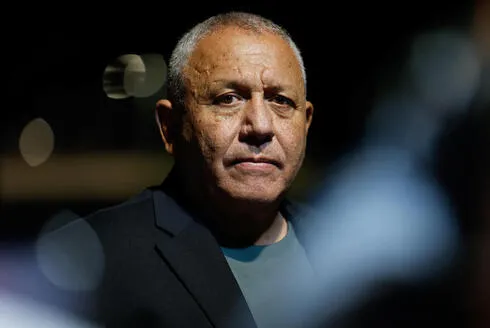
The cover of Al Majalla features Eisenkot prominently, presenting him in a serious demeanor, while a smaller image of Netanyahu looms in the background. This visual representation underscores Eisenkot’s emerging political viability. Notably absent from the cover are mentions of other political figures such as Naftali Bennett, Avigdor Lieberman, or the Democrats, framing Eisenkot as the singular “general who could end the Netanyahu era.”
However, Hamidi cautions that the road ahead will be challenging for Eisenkot. Despite the current favorable polls, Netanyahu is expected to employ strategic maneuvers to undermine his opponent’s chances of victory. Hamidi’s assessment suggests that Netanyahu is likely to reveal a last-minute plan aimed at consolidating his hold on power, indicating that the political battle is far from over.
As reported by ynetnews.com.