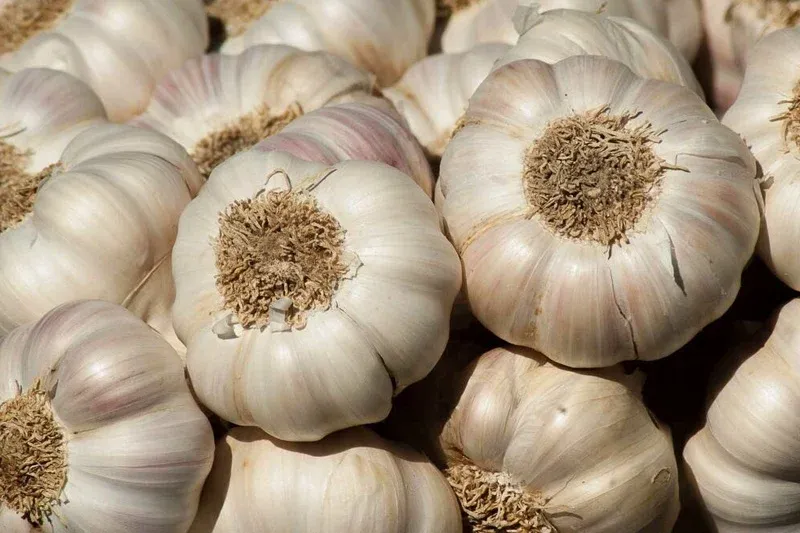

Garlic Trade Tensions Between Morocco and Spain
The ongoing trade relationship between Morocco and Spain has recently come under strain due to a new regulation affecting garlic imports. The National Association of Garlic Producers and Marketers in Spain (ANPCA) has urged the European Union to implement "urgent measures" to protect garlic production within its member states. This call to action follows Morocco's recent customs decision, which mandates that fresh or chilled garlic imports, classified under customs tariff heading 0703.20.00.00, require an import license.
The Spanish association expressed its surprise at this Moroccan decision, which they claim could hinder commercial operations with Morocco. They emphasized that Morocco is a particularly important market for Spanish producers and marketers, especially due to the popularity of Spanish purple garlic among Moroccan consumers, known for its quality and unique sensory characteristics.
Furthermore, the association highlighted that the introduction of an import licensing system illustrates the ability of countries to implement measures aimed at regulating the entry of products from external markets when deemed necessary for local production protection. They called upon the EU to review the qualitative customs duties imposed on garlic imports from countries outside the set quotas, which have not been updated in the past 25 years.
In response, Ridouane El Aour, president of the National Federation of Garlic Producers and Sellers in Morocco, stated that the current national garlic production is sufficient to meet local market needs entirely. He pointed out that Spain, which criticizes Morocco’s regulation of foreign garlic imports, imposes significant tariffs on garlic imported from China to safeguard its domestic production.
El Aour further elaborated that the garlic production sector currently employs a substantial workforce across vast areas estimated at 400 square kilometers, encompassing various regions including Khénifra, El Hajeb, Sefrou, Akouray, Ifrane, Azrou, Klemous, and Timahdit. He noted that the recent Moroccan regulatory decision has revived hope among farmers who were facing debts and bankruptcy.
He emphasized that Morocco is achieving complete self-sufficiency in garlic this year, making it illogical to abandon domestic products in favor of an influx of Spanish garlic. He also indicated that Spain only exports specific sizes of garlic to Morocco, such as sizes 3747 and 3037, which are not sold in European markets, including Spain itself, due to their lower quality. In contrast, higher quality garlic is exported to the British market and elsewhere.
El Aour criticized Spanish producers for focusing solely on their interests and attempting to exert pressure, influenced by certain Moroccan importers whose only concern is profit. He clarified that the import regulation does not signify a severance of trade relations with Spain but rather constitutes a necessary regulatory measure to protect Moroccan farmers’ investments. The local stock will be periodically assessed through weekly meetings with relevant government entities to facilitate the issuance of specific import licenses when domestic production is deemed insufficient.
He concluded by stating that garlic prices in the market are quite favorable this year, ranging between 20 and 38 dirhams per kilogram depending on quality, in contrast to previous years that saw a significant price increase up to 65 dirhams wholesale due to lower supply. He reiterated that the priority must always be to protect Moroccan farmers and national production to prevent the country from becoming merely a consumer market reliant on foreign imports.
As reported by hespress.com.