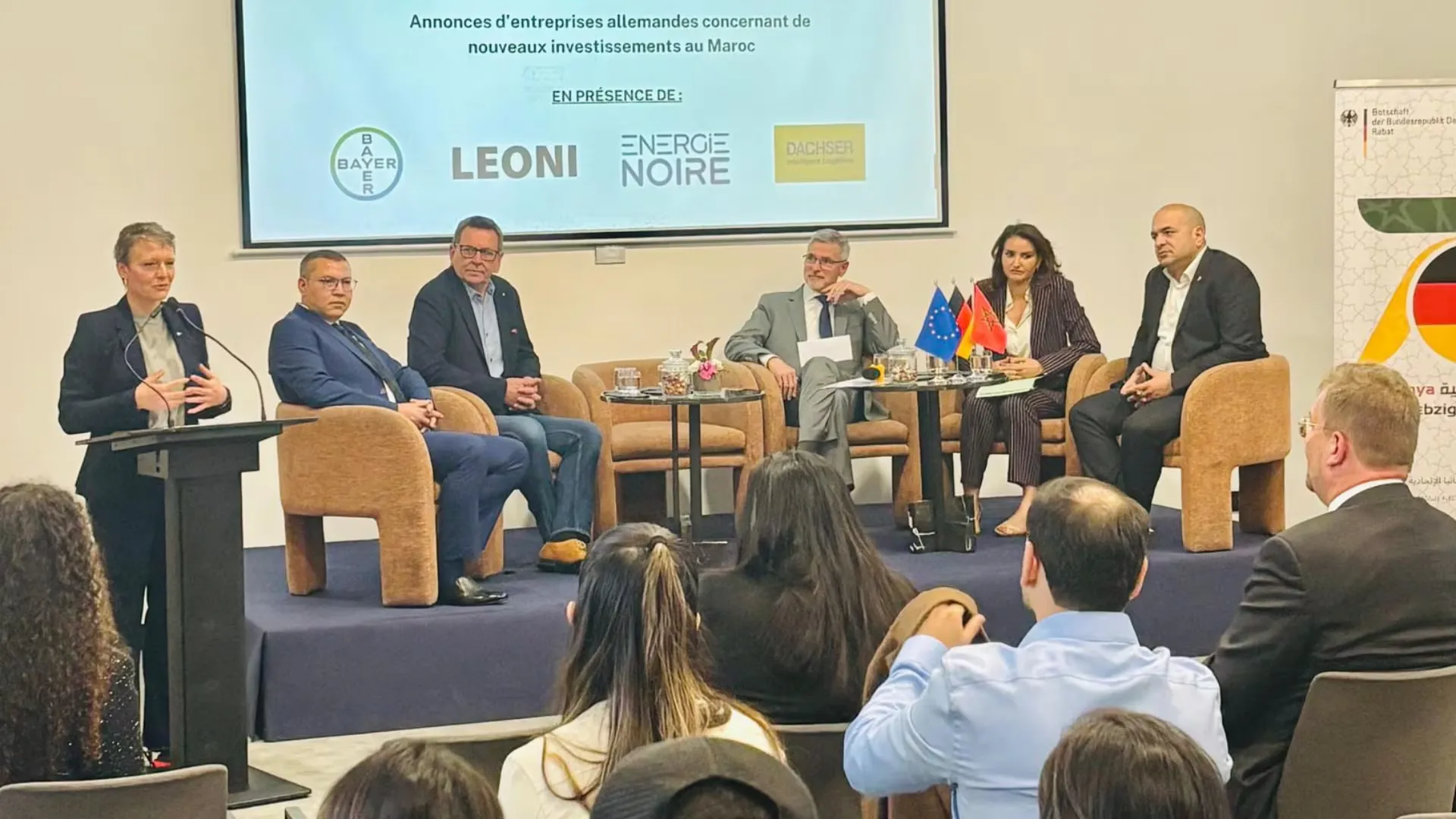
Germany Expands Investment Footprint in Morocco
On April 15, 2026, the German Embassy in Morocco and the German Chamber of Commerce and Industry hosted a significant event in Casablanca to celebrate 70 years of diplomatic relations between Morocco and Germany. This gathering brought together institutional leaders and business executives, including the German ambassador and the director general of AHK Morocco, who announced a series of new investments aimed at enhancing Morocco's position as a key industrial, logistical, and technological hub for Europe. Major companies such as Dachser, Bayer, Leoni, and Energie Noire revealed substantial upcoming investments, reinforcing Morocco's appeal in the global market.
Strategic Investments to Foster Economic Growth
The event highlighted a robust partnership between Germany and Morocco, characterized by a mutual commitment to deepening economic exchanges built on trust and increased integration into European markets. Robert Dölger, the German ambassador to Morocco, emphasized the significance of these investments, stating, "These major ventures in the automotive, artificial intelligence, and logistics sectors underscore the strength of our partnership. They not only create local jobs but also further integrate the Moroccan economy into European value chains." The event showcased the diverse range of current projects, reflecting Morocco's growing attractiveness and the vital role of the private sector in fostering sustainable economic relations between the two nations.
Dachser, a prominent logistics provider present in Morocco since 1982, announced a major project in the Tanger Automotive City. The company plans to construct a logistics facility spanning 75,000 square meters, set to open by the end of 2027. The first phase of this project includes a 20,000 square meter warehouse featuring customs zones and adhering to high sustainability standards. This initiative aims to provide Moroccan businesses with connectivity to Europe that rivals that of the single market.
Meanwhile, Bayer, which has been operating in Morocco for over six decades, is investing nearly 200 million dirhams to expand its facility in Nouaceur. Between 2026 and 2028, three new production lines will be established, allowing for the local manufacturing of up to 40 different formulations, particularly in family health products. The workforce is projected to grow from 110 to 170 employees by 2028, positively impacting the wider industrial ecosystem.
Leoni, a major automotive wiring supplier, is rapidly expanding its operations in Morocco through multiple projects. The company is constructing a new site in Bouskoura, finalizing a facility in Agadir, and supporting the establishment of a unit in Kénitra. The investment in Agadir is expected to exceed 230 million dirhams and create over 3,000 direct jobs by 2027. With goals to employ 10,000 workers in Berrechid by 2026 and a total of 23,000 across Morocco, Leoni is solidifying the country’s role in its industrial strategy.
Additionally, Energie Noire, a subsidiary of the German group MikroPlan, is entering the technology and AI sector with plans to establish two centers in Casablanca and Khouribga, focusing on software and ERP solutions for SMEs. Initially, around 50 employees will be hired, with a medium-term goal of expanding to 300 to 400 positions. Furthermore, an IT academy is set to launch in Fès by late 2026 to train young talents in digital professions and assist in the digital transformation of Moroccan businesses.
In terms of economic metrics, German direct investments reached 2.1 billion euros in 2024, making Germany the second-largest foreign investor in Morocco. The stock of foreign direct investments has quintupled since 2011, totaling 1.4 billion euros in 2023. Currently, over 300 German companies operate in Morocco, generating nearly 35,000 jobs, with trade between the two countries reaching 7.4 billion euros in 2025, marking an increase of over 10% and underscoring the dynamic nature of bilateral relations.
As reported by fr.le360.ma.