
German Tourists Increasingly Favor Morocco
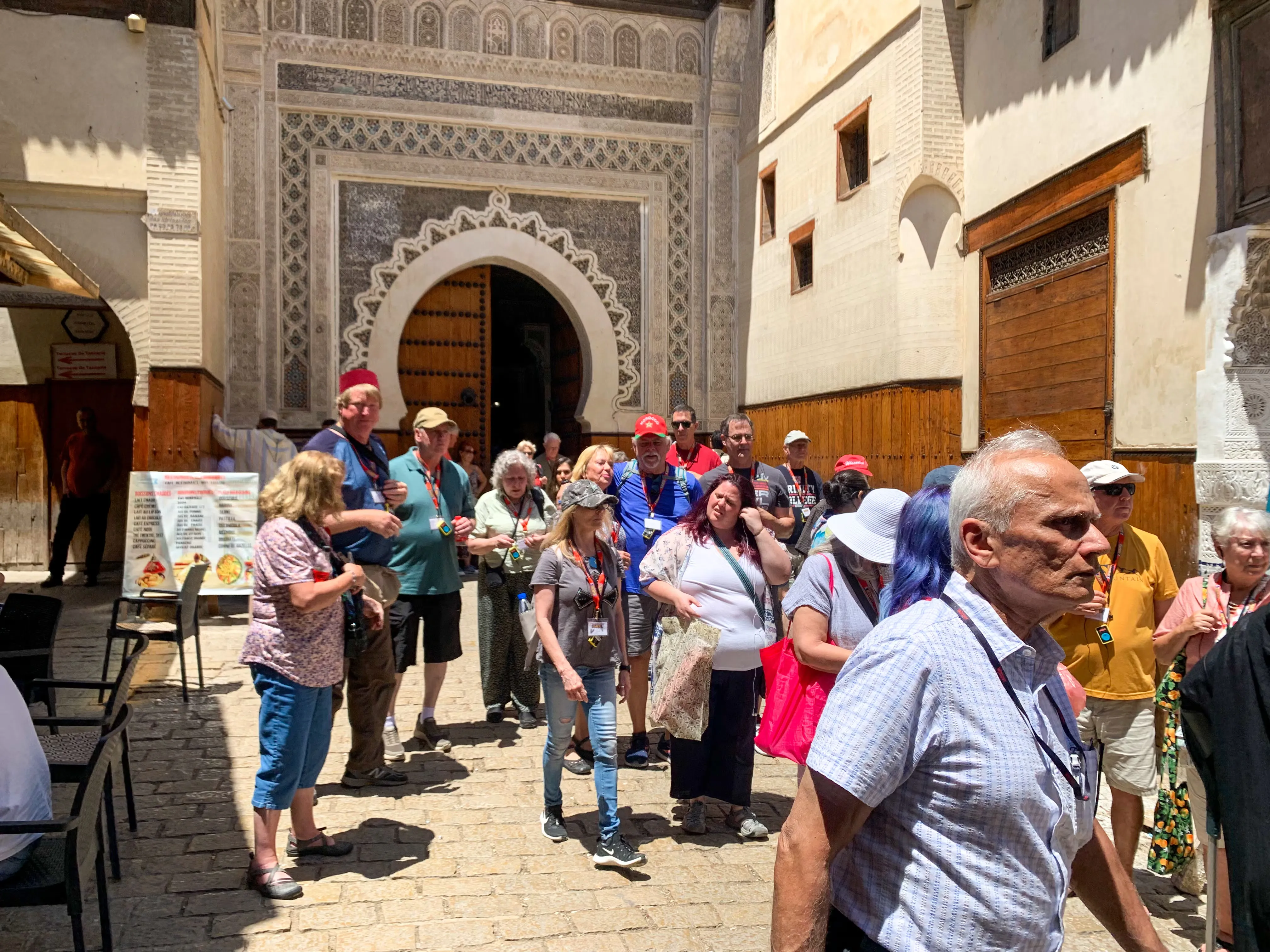
The presence of German tourists in Morocco is steadily strengthening, marking a significant shift in the country's tourism landscape. Although Germany still trails behind traditional markets such as France, Spain, and the United Kingdom, its rapid growth, preference for classified accommodations, and ability to travel outside the peak seasons position it as a strategic market for Morocco's tourism sector. This insight is drawn from an academic thesis titled "German Tourism in Morocco," presented by Achraf Laroussi Akhrif at the Faculty of Tourism and Finance at the University of Seville, under the supervision of Professor Juan Fadrique Fernández Martínez. The study meticulously examines the evolution of this market from 2022 to 2024, primarily based on data from the Moroccan Tourism Observatory.
The findings reveal a remarkable increase in German tourist arrivals, soaring from 171,219 in 2022 to 280,788 in 2023, which translates to a year-on-year growth rate of 64%. The market maintained its momentum into 2024, recording a further 27% increase, outpacing France and rivaling other expanding European markets such as Belgium and Italy.
Air Travel: The Key to Growth
Air connectivity emerges as the pivotal factor driving this market's development. Among the 280,788 German travelers recorded in 2023, a substantial 244,261 arrived in Morocco by air, while 28,418 arrived by sea and 8,109 by land, indicating that nearly 87% of arrivals were via flights. The Marrakech-Menara Airport served as the primary entry point, welcoming 101,143 passengers, followed by Agadir-Al Massira with 58,418 arrivals. Other airports, such as Casablanca Mohammed V, Fès-Saïss, Tangier Ibn Battouta, and Rabat-Salé, also played roles in accommodating these travelers.
The study emphasizes that Germany's reliance on air transport sets it apart from geographically closer markets like Spain. The availability of direct flights, their frequency, and pricing significantly influence the choice of Morocco over other Mediterranean destinations. In 2024, the air capacity linked to the German market increased by 42%, approaching 800,000 seats, thereby enhancing Morocco's competitiveness and improving access to its two main hubs for German visitors, Marrakech and Agadir.
Notably, the growth in German tourism is not limited to the number of travelers; overnight stays in classified tourist accommodations surged from 428,559 in 2022 to 864,109 in 2023, representing a staggering increase of 102%. Agadir accounted for 412,349 of those nights, nearly half of the total, solidifying its status as the premier Moroccan destination for the German market. Marrakech followed closely behind with 212,350 overnight stays, with Essaouira, Casablanca, and Fès also contributing to the overall figures.
Agadir's appeal can be attributed to its mild climate, stunning beaches, robust hotel infrastructure, organized packages, and convenient flight connections. Marrakech, on the other hand, attracts tourists interested in cultural experiences, gastronomy, shopping, and urban getaways. The study suggests that the complementary nature of these two destinations could be leveraged through circuits that incorporate Essaouira, Taroudant, the Atlas Mountains, and other southern regions. Such an expansion would not only increase the duration of stays but also ensure a more equitable distribution of economic benefits derived from tourism.
The monthly distribution of arrivals further illustrates a reduced dependence on the peak summer months. October emerged as the month with the highest number of German tourists staying in classified accommodations in 2023, registering 33,555 arrivals, followed closely by November. This pattern indicates a growing interest among German travelers to escape the cold of Central Europe during the autumn and winter months and visit Morocco in the spring, avoiding higher temperatures and peak tourist periods. This preference provides a distinct advantage for destinations like Agadir and Marrakech, allowing them to sustain hotel activity over a more extended period, reduce seasonality, and stabilize employment linked to the tourism sector.
Moreover, the profile outlined in the study highlights the importance of safety, organization, quality accommodation, value for money, culture, and sustainability. Morocco is well-equipped to offer a blend of beach experiences, historical cities, nature, gastronomy, and cultural encounters within a single trip. The study indicates that there is still considerable room for growth in the German market, advocating for the expansion of direct connections from German cities to other destinations beyond Marrakech and Agadir, including Fès, Tangier, Rabat, and Ouarzazate.
In conclusion, the growth of German tourism in Morocco occurs within a broader context of rising overall tourism in the country, which welcomed 17.4 million visitors in 2024 and generated 112.5 billion dirhams in travel revenue. However, the interest from the German market extends beyond mere arrival numbers; their capacity to travel outside the summer months, their preference for extended stays in classified accommodations, and their desire to combine relaxation, culture, and nature can contribute to diversifying both the origins of tourists and the destinations they explore within the Kingdom.
As reported by es.le360.ma.