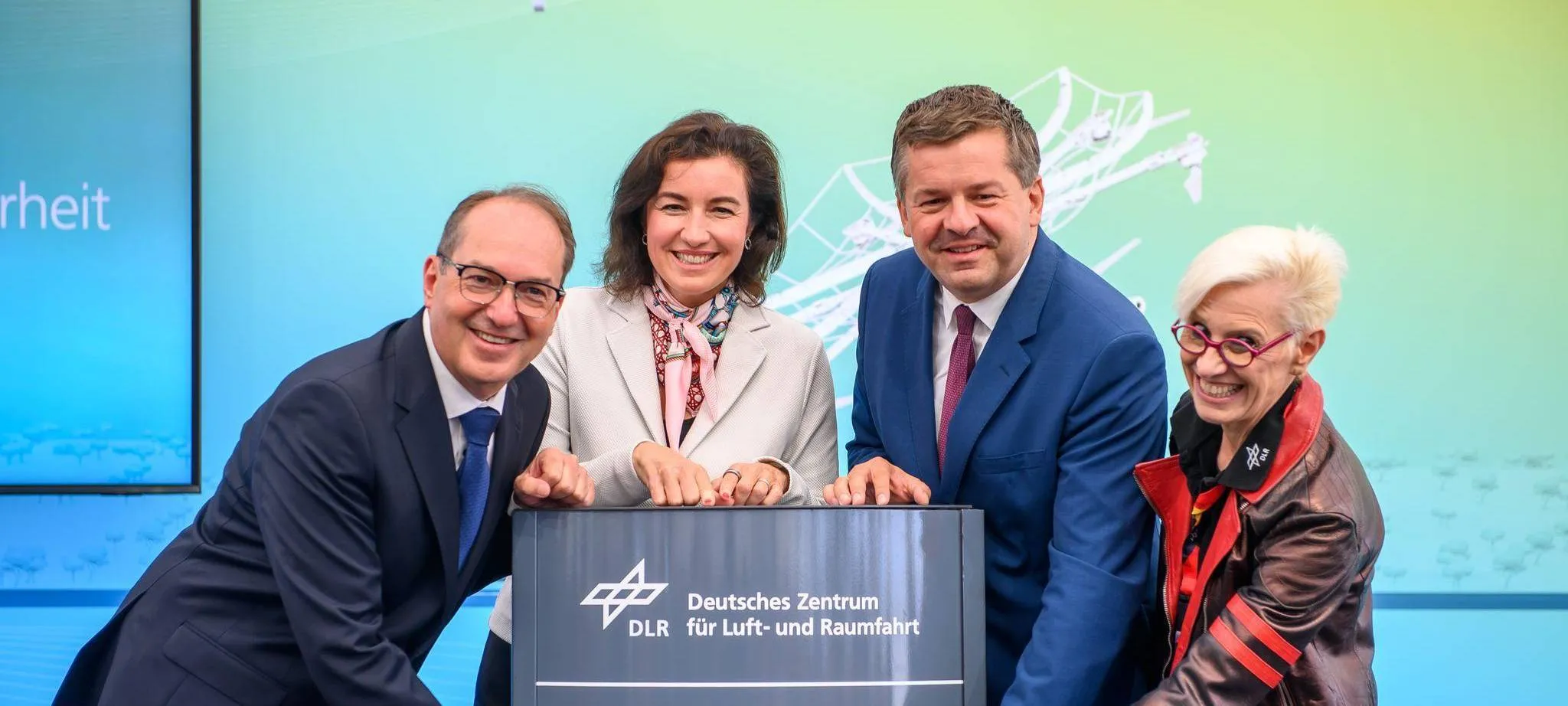

Germany's New Drone Security Center in Cochstedt
Published on Tuesday, August 18, 2026, Germany is increasingly confronted with hybrid threats encompassing espionage, sabotage, and attacks on critical infrastructure. Drones, which are becoming more powerful and increasingly challenging to defend against, play a crucial role in these threats. To combat this escalating issue, a new technology center focused on drone security has been established in Cochstedt, Saxony-Anhalt, aimed at advancing research in technologies that can provide law enforcement agencies with a competitive edge in this ongoing struggle.
The German Aerospace Center (DLR) in Cochstedt has received an investment of up to ten million euros over the coming years to enhance its capabilities. Researchers will collaborate with the Braunschweig facility to develop technologies that ensure the safe use of drones, as well as methods for their detection and defense, all tested under realistic conditions.
Addressing the Growing Security Threats
During the opening ceremony, Federal Interior Minister Alexander Dobrindt (CSU) painted a sobering picture of the current security landscape. He emphasized that Germany is the target of hybrid attacks on a daily basis. As a nation of significant economic, political, and security importance at the heart of Europe, Germany is particularly vulnerable, with Dobrindt stating, "Whoever targets Germany, targets all of Europe." This multifaceted threat encompasses espionage, sabotage, destabilization, manipulation, and influence operations, which Dobrindt referred to as a "shadow war of the 21st century." The threat environment has intensified, with increased indications from allied intelligence agencies concerning operations and activities over recent months.
A stark illustration of the potential danger posed by drones was highlighted by a recent incident at Leipzig/Halle Airport, where a modified drone equipped with explosives was discovered among Ukrainian cargo planes. The Federal Prosecutor's Office labeled this a serious assault on Germany's transport and logistics infrastructure. Dobrindt categorized this event within the broader context of heightened threats, asserting, "Leipzig is not an isolated case; it is part of a larger pattern we are facing." While the potential link to Russia remains unconfirmed, Dobrindt acknowledged past instances of cyberattacks attributed to Russian origins, asserting that in the case of Leipzig/Halle, security agencies must first gather evidence before making any attributions.
Moreover, Federal Research Minister Dorothee Bär (CSU) pointed to Russia's ongoing war against Ukraine as a clear demonstration of how drones are becoming increasingly sophisticated and capable, thus expanding the spectrum of potential threat scenarios. Dobrindt referred to an arms race between drone defense systems and technologies aimed at overcoming those defenses, indicating that partners from Israel and Ukraine reported innovation cycles of merely eight to twelve weeks, necessitating that defense measures keep pace.
Cochstedt will serve as a practical testing ground where companies and security agencies can evaluate and refine new technologies under realistic conditions. Currently, about 40 individuals are employed at the DLR location, with plans to expand to 65 employees. In larger exercises, as many as 250 representatives from various federal and state law enforcement agencies, military, and other entities have participated simultaneously.
Additionally, the Federal Police will enhance their capabilities, with Minister Dobrindt announcing a doubling of the mobile drone defense unit to 300 personnel, equipped with modern technology to operate from more locations across Germany. A joint drone defense center involving both federal and state authorities will also be established, facilitating collaboration between security agencies and the military. The Cochstedt technology center will act as the research and development cornerstone of this comprehensive strategy.
Minister-President of Saxony-Anhalt, Sven Schulze (CDU), highlighted potential threats to the region's critical infrastructure, particularly given its several large chemical parks, with the largest covering approximately 13 square kilometers of chemical industry. He underscored the necessity of considering the implications of drone attacks in such critical areas. For Schulze, Cochstedt symbolizes the transformation of a site he has known since childhood; he grew up just a few kilometers away. Once a military exclusion zone during the DDR era, the area has undergone various attempts at civilian use since reunification. With the establishment of the current research facility, Schulze believes Saxony-Anhalt is now positioned in the "Champions League" of drone technology.
As reported by radiomuelheim.de.