
Exploring Palestinian Theatre in Morocco
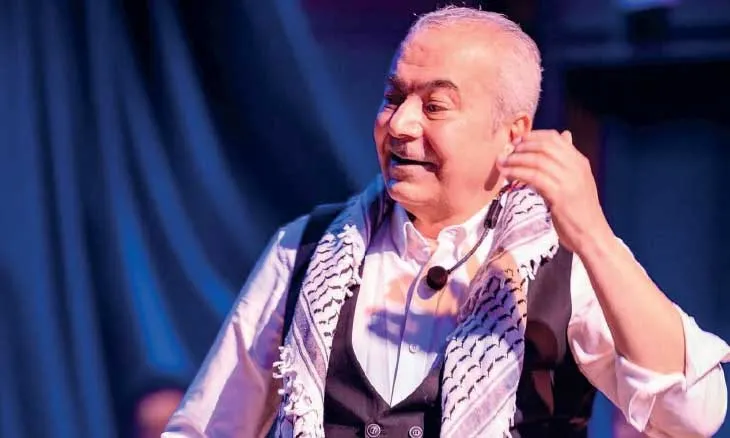
The presence of Palestinian actor and director Ghanam Saber Ghanam in Morocco was far from inconspicuous, as his involvement in the eighth edition of the Casablanca Amazigh Theatre Festival opened the door to a myriad of activities that spanned from theatrical performances to academic discussions. Ghanam found himself engaging with a diverse audience, including theatre students from Rabat, attendees in Casablanca, and various theatre professionals and researchers who took part in discussions focused on the memory of Moroccan theatre and its preservation. The five decades Ghanam has spent in the theatrical field were a significant part of these encounters, as he shared insights about his experiences as an actor, emphasizing theatre's role as a vessel for memory and the critical need to safeguard the theatrical legacy from fading away.
Masterclass and Performances: A Personal Journey
At the Higher Institute of Dramatic Arts and Cultural Animation in Rabat, Ghanam conducted a masterclass titled "The Idea and Position in Acting" with third-year performance students. This session transcended mere technical instruction in acting; it delved into Ghanam's extensive experience, inviting students to discuss the fundamental aspects of an actor's craft, particularly the interplay between concept and performance, role and stance, as well as the actor's message to the audience. Ghanam utilized his artistic journey as a foundation to present his perspective on how actors can translate the ideas behind their performances into impactful stances, rather than simply executing a character or movement on stage. He stressed the importance of merging theoretical knowledge with practical experience to shape an actor's identity and presence in the theatrical world.
In Casablanca, Ghanam introduced Palestine to the festival's audience through his performance titled "With My Own Eyes 1948," where he served as author, director, and actor. This work is rooted in a personal narrative and Palestinian memory intertwined with place, humanity, and identity. The performance chronicles Ghanam's visit to Palestinian territories in 2017, capturing the intricacies of daily life for Palestinians and their steadfastness in preserving their identity and memory. The production recalls significant historical events, such as the city of Akka and the graves of martyrs from the 1929 revolt, aiming to transform personal and historical memories into a theatrical act that combines documentation with performance and a revival of place. "With My Own Eyes 1948" marks Ghanam's third theatrical endeavor related to Palestine, following "Return to Haifa" in 2009 and "I Will Die in Exile" in 2016, all of which utilize Palestine as a cornerstone of his theatrical exploration, reawakening Palestinian memory and the experiences of Palestinian individuals on stage.
In this particular work, Ghanam did not rely on a full cast, as his body, voice, and storytelling served as his primary tools to convey his experience and forge a direct connection with the audience. This connection was vividly illustrated during a second performance for the residents of the "Abd al-Salam Benani Center for Child Protection" in the economic capital. Ghanam described this performance in a social media post as "a show that is unlike any I have ever presented from this work," affirming that it would not resemble any future performance. He explained that he felt a level of anxiety while preparing for it, questioning, "How can I speak about Palestine, occupation, and my separation from my daughters and grandchildren because of it to an audience that lacks family ties?" When the moment of performance arrived, Ghanam recounted, "The heart spoke to the heart, emotions intertwined with emotions, and the residents left the performance calling out: 'Where is Palestine? Where is the occupation? Why haven't you brought your daughters to Morocco to live under its protection?"
The third phase of Ghanam's activities in Morocco involved participating in a scientific seminar as a representative of the "Arab Theatre Authority" from Sharjah, which focused on "Investing in Documenting Moroccan Theatre: The Need for a National Centre for the Moroccan Theatrical Archive." Here, Ghanam transitioned from being a performer on stage to engaging in the discourse surrounding the memory of theatre itself. The seminar was part of a broader discussion about documenting the trajectory of Moroccan theatre and the experiences of its generations, aimed at preserving its artistic heritage and making it accessible to researchers and future generations. Ghanam's longstanding connections and friendships with Moroccan theatre artists, some extending over thirty years, were evident in his contributions to discussions on preserving the memory of Moroccan theatre. A media report highlighted by journalist Ahmed Tnish emphasized the significance of documenting Moroccan and Arab theatrical history, encompassing photographs, posters, and scripts, to protect them from being lost and transforming a scattered archive into an accessible knowledge base. The project, which commenced in October 2018 between the Moroccan Syndicate of Dramatic Arts Professionals and the Arab Theatre Authority, falls under the initiative "The Archive of Arab Theatre Memory," aimed at documenting modern Moroccan theatre since its centenary. The initiative, led by Azeddine Bouhnit and involving approximately 30 researchers, has produced a descriptive archive of 5,000 pages covering the historical and geographical aspects of theatrical accomplishments. The launch of this digital archival resource is expected in October 2026, with accessibility planned for early 2027, serving as a reference for researchers and a foundation for establishing a future theatrical museum.
As reported by alquds.co.uk.