
GITEX in Marrakech: A Pivotal Moment for Africa's Digital Future
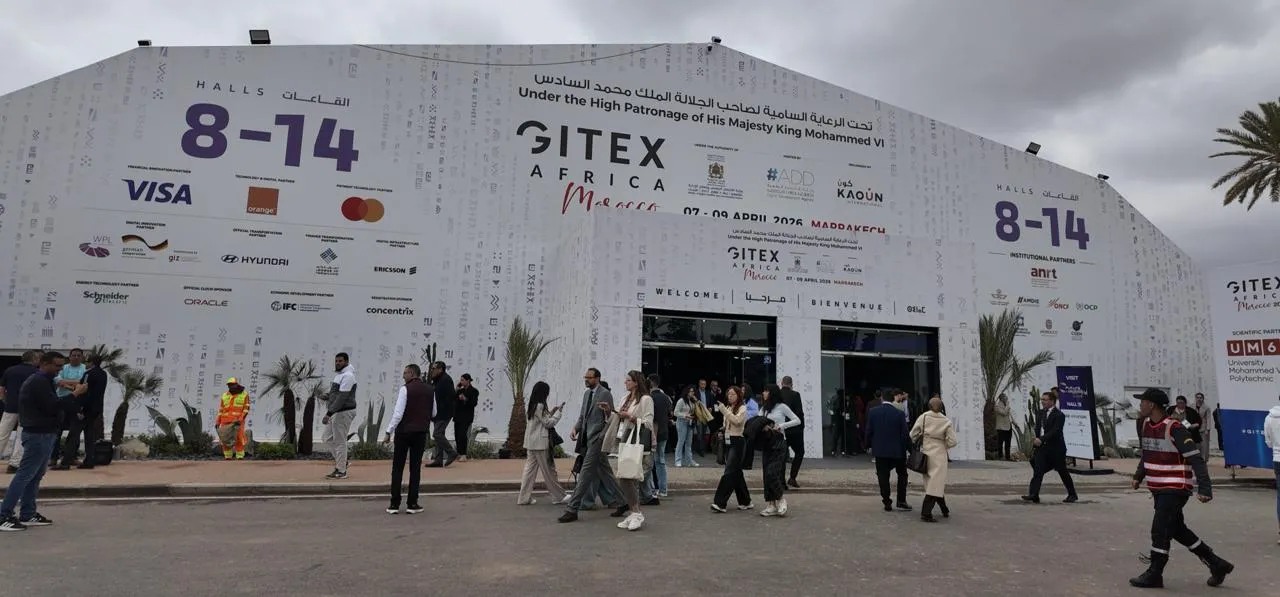
Opening its doors on April 7, 2026, amidst global tensions and fluctuating oil prices, GITEX Africa Morocco transcends the ordinary technology trade show. With the Strait of Hormuz, a critical conduit for 20% of the world’s oil, facing near paralysis and oil prices surging to unprecedented heights of $110 per barrel, Morocco's budget was initially calculated on a much lower scale of $65. In response to this energy crisis, the Akhannouch government has mobilized a ministerial emergency committee. Yet, in the midst of these pressures, Marrakech welcomes 1,450 tech companies from 130 countries, convening to discuss Africa's digital future.
This juxtaposition is not merely a coincidence; it starkly highlights the vulnerabilities that the ongoing conflict in Iran has exposed. A nation reliant on imported energy, equipment, and technology cannot independently chart its own destiny. In this restructured world, digital sovereignty becomes a vital condition for strategic autonomy, rather than a mere abstract policy concept.
Amal El Fallah Seghrouchni, the Minister Delegate, aptly notes that “the world's maps are changing.” Artificial Intelligence (AI), she asserts, is now a crucial lever for competitiveness, a matter of sovereignty, a regulatory challenge, and a novel governance approach. Each word in her statement carries significant weight, as the GITEX event, with its vibrant exhibition booths, startup pitches, and plenary sessions, encapsulates a deeper struggle. Who will dictate the rules of African AI? Will it be Washington, Beijing, Brussels, or Marrakech?
The Stakes of Digital Sovereignty
The competition for technological supremacy is fierce. The United States has invested over $300 billion in AI in recent years, while China pursues an industrial strategy backed by more than $100 billion in public and private investments. Simultaneously, the European Union is preparing a $200 billion plan. These three blocs represent distinct visions and models for technological governance. The question looms large: where does Africa fit in? With a population of 1.4 billion, AI has the potential to generate $1,200 billion in value by 2030. However, if Africa fails to secure a seat at the table where these standards are defined, it risks becoming merely a consumer market. Chakib Alj, President of CGEM, succinctly articulated this concern at the event's opening, stating, “If Africa does not participate in establishing the rules for AI, others will set them for us.”
In this context, Morocco finds itself in a unique yet precarious position. The Kingdom must navigate a landscape where each technological choice bears geopolitical implications. The concurrent presence of global actors at GITEX, each openly displaying their ambitions for “digital sovereignty in Africa,” underscores the complexity of the global chessboard.
Thus, GITEX Africa Morocco 2026 is significant not merely for what it showcases but for what it symbolizes. It signifies Morocco's choice to be a platform for dialogue rather than a passive observer. It emphasizes that digital sovereignty is not a luxury to be considered post-crisis but rather an essential investment that makes crises manageable. The data centers in Casablanca, Dakhla, and Settat, the RamadanIA hackathon that engaged 4,000 youths across the nation, and the Morocco 300 program aimed at internationalizing local startups are all foundational elements of a structure whose global tensions have recently highlighted their critical importance.
The world emerging from these events will present a binary choice: to be sovereign or dependent. Morocco has made its choice; it now falls to the nation to fulfill the promise encapsulated by this significant event.
As reported by lnt.ma.