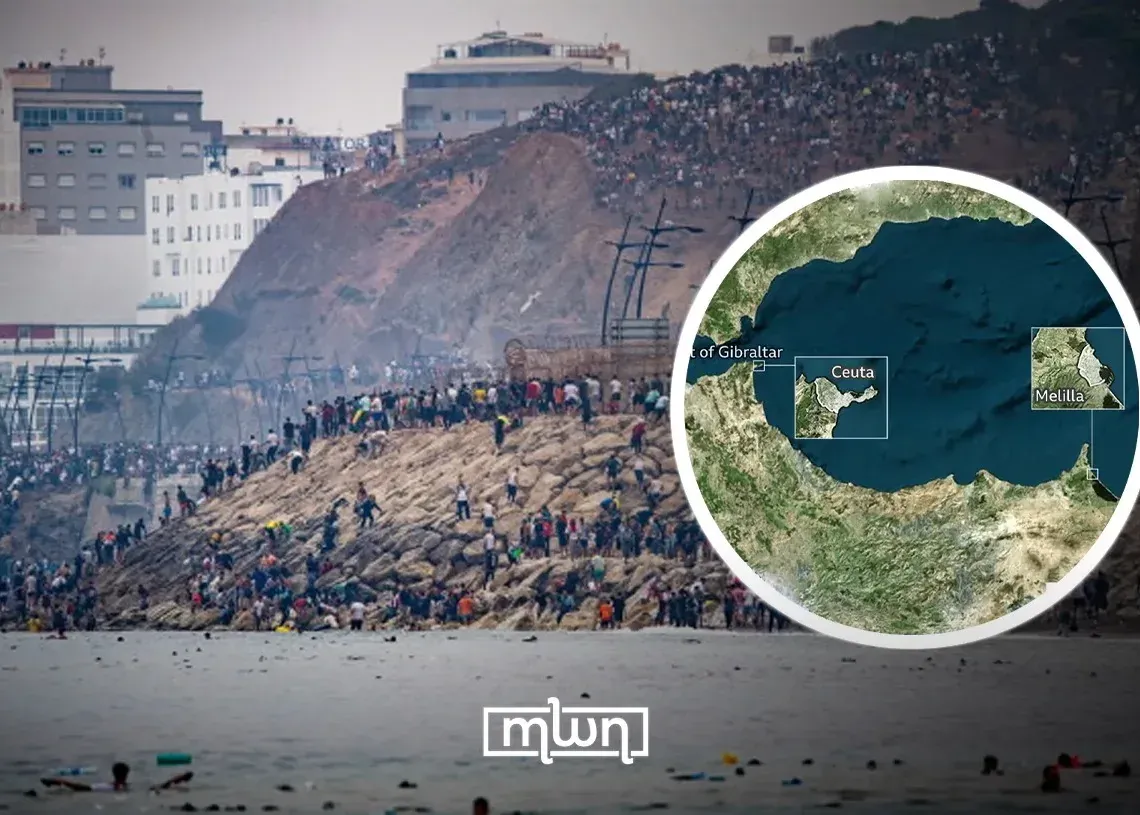

The president of Gran Canaria's Cabildo, Antonio Morales, has made a compelling appeal for Spain and the European Union to closely examine Morocco's increasing influence in the region, particularly in light of the recent crisis in Ceuta. Morales asserts that the implications of this situation extend far beyond mere migration concerns, highlighting the need for a proactive response from both Spanish and European institutions. He emphasized that what is currently happening in Ceuta could have far-reaching effects, stating, "Today, it is Ceuta; tomorrow, if we do not act, it could be the Canary Islands," thereby underscoring the urgency of the matter.
Morales elaborated that the substantial influx of individuals toward Ceuta in late July should not be viewed as an isolated incident focused solely on migration. He noted the significant change in Morocco's approach following the circulation of social media messages that encouraged another mass attempt to enter the enclave on August 15. In response, Moroccan authorities took immediate action by enhancing controls along both land and maritime borders, effectively preventing a repeat of the earlier mass movement. This shift raises critical questions regarding Morocco's capacity to exert pressure on Spain through various means, illustrating a broader geopolitical context that necessitates careful consideration.
Furthermore, Morales pointed to Morocco's ambitious infrastructure projects in Western Sahara, particularly the Dakhla Atlantic port, which is estimated to cost around €1.3 billion. This initiative is part of Morocco's broader strategy to develop the region into a significant economic and maritime hub, with implications that extend beyond mere trade and infrastructure development. He also drew attention to the Tropic Seamount, an underwater mountain located south of the Canary Islands, known to contain valuable deposits of tellurium, cobalt, nickel, and rare earth elements. These minerals are increasingly vital due to their applications in clean energy technologies and advanced industries, making the region's economic potential particularly appealing to both Spain and Morocco.
In addition to economic concerns, Morales raised alarms regarding airspace management over Western Sahara, which falls within the Canarias Flight Information Region operated from Gran Canaria. He noted that Morocco has been gradually expanding its control over certain airspace regions, particularly those associated with military exercises, presenting this as a significant shift in regional capabilities. Morales also expressed concerns about Morocco’s defense posture, highlighting the country's strengthened ties with the United States and increased defense spending as indicators of a broader strategic realignment that could impact the Canary Islands and the surrounding areas.
In light of these developments, Morales's comments reflect growing apprehension within the Canary Islands about Morocco's expanding presence and influence in the Atlantic. While the immediate context for his statements was the Ceuta crisis, the implications of his arguments extend to encompass a range of issues, including infrastructure, strategic minerals, airspace management, defense capabilities, and Morocco's overall assertiveness in the region. As the geopolitical landscape evolves, it becomes imperative for Madrid and Brussels to pay closer attention to these dynamics.
As reported by moroccoworldnews.com.