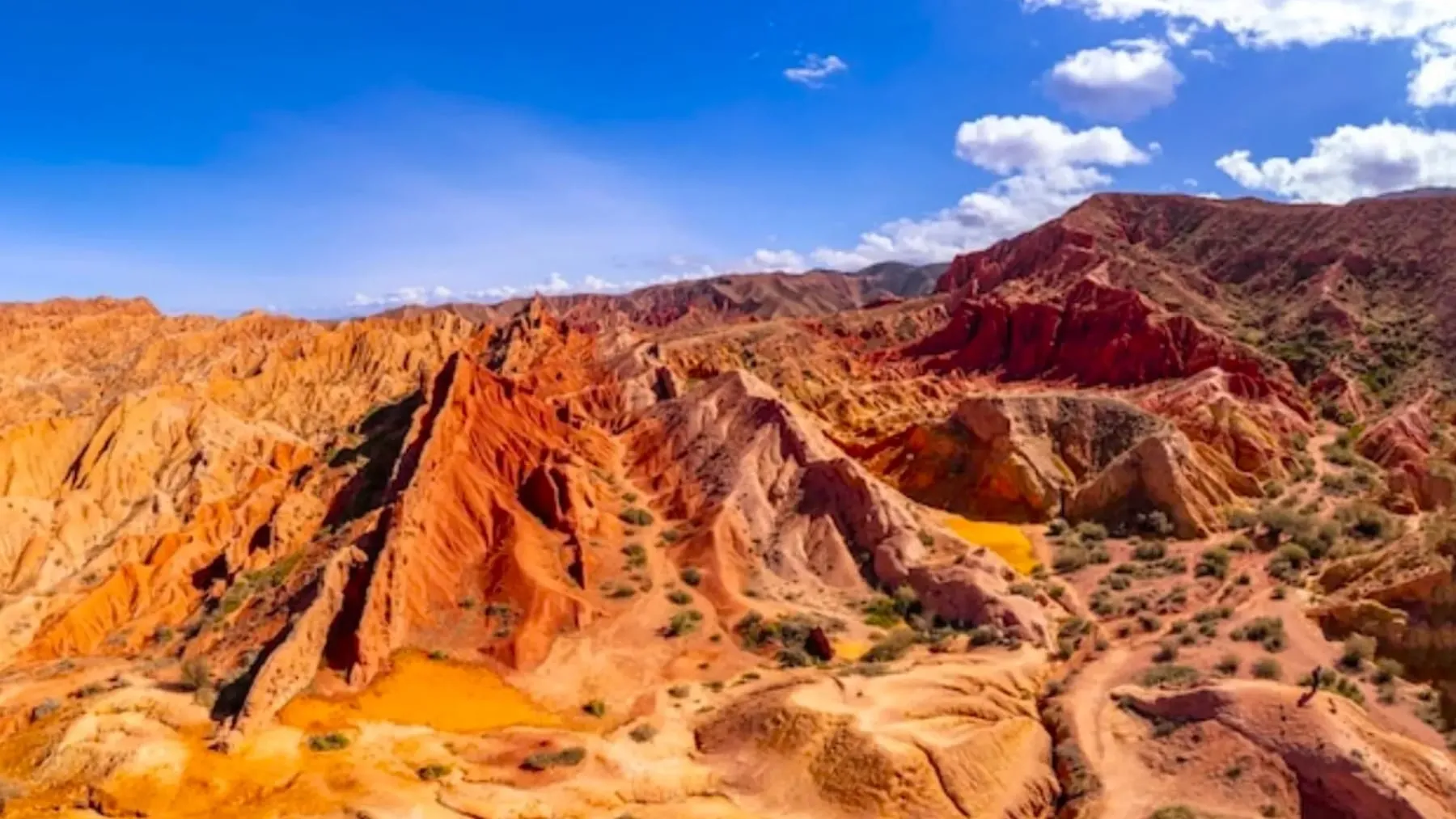

Unveiling Ancient Mysteries Beneath the Surface
A groundbreaking study conducted by researchers from the University of Texas and the University of Leeds has sent shockwaves through the geological community with the discovery of peculiar sedimentary structures in the Dadès Valley of Morocco. This remarkable find, which includes fossilized microbial mats commonly referred to as "elephant skin structures," dates back approximately 182 million years. What has baffled international scientists is the emergence of these delicate formations, traditionally associated with the Middle Jurassic period, in an environment where their existence was previously deemed impossible.
Historically, conventional geological models dictated that such structures could only develop in shallow marine waters along coastlines, where sunlight facilitates the photosynthesis of microorganisms. However, the analysis of this terrain has unequivocally determined that the sediments were deposited in a deep marine basin, hundreds of meters beneath the water's surface. This contradiction has compelled experts to reconsider the mechanisms behind the preservation of organic life on ocean floors.
Revolutionizing Our Understanding of Deep Jurassic Life
The scientific explanation for this astonishing phenomenon, which continues to leave experts in awe, lies in a radical shift in the understanding of deep Jurassic life. Researchers found that these bacterial communities did not rely on sunlight; rather, they were chemosynthetic organisms capable of thriving in darkness. These microbes harnessed chemical nutrients and organic matter transported to the seabed by underwater currents from sand avalanches, thereby creating a self-sustaining and complex ecosystem in a hostile environment.
Despite the various theories surrounding this find, its uniqueness has prompted the international geological community to completely reformulate and update sedimentary interpretation models of the Jurassic period. This study reveals that the fossil record of deep waters is far more dynamic and biologically active than previously believed. Beyond reshaping terrestrial geological principles, this discovery also paves the way for new research avenues in fields such as astrobiology. It serves as a model for searching for potential traces of extreme life in the icy oceans of other planets and moons, indicating that this discovery is not merely an isolated incident but could extend to other surfaces, revealing new secrets beyond Earth.
As reported by vozpopuli.com.