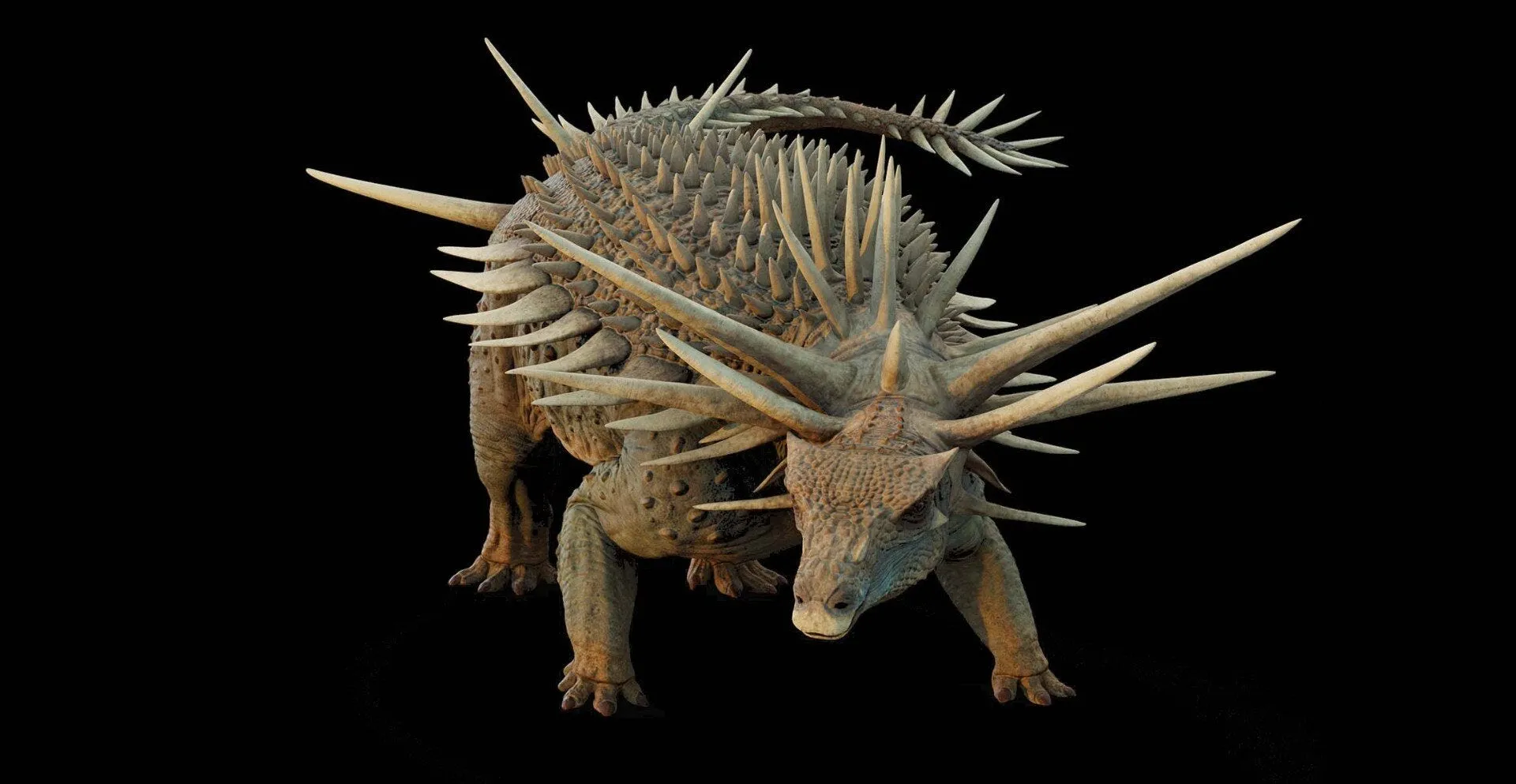

Unearthing the Spicomellus afer: A Unique Dinosaur from the Middle Jurassic
Deep within the stunning Middle Atlas Mountains of central Morocco, a team of international palaeontologists and geologists has made an astonishing discovery: new fossils of an unusual dinosaur belonging to the ankylosaur group, known for their plant-based diets and distinctive bony plates covering their bodies. These newly uncovered fossils indicate that this heavily armoured dinosaur, now identified as Spicomellus afer, lived approximately 165 million years ago, making it the oldest known ankylosaur specimen discovered to date. The significance of this finding cannot be overstated, as it not only expands our understanding of the ankylosaur lineage but also provides crucial insights into the evolutionary history of these remarkable creatures.
Initially described in 2021 from a solitary rib found at the same Moroccan site, the original discovery of Spicomellus afer was groundbreaking due to the scarcity of ankylosaur fossils from the Middle Jurassic period, a time frame that falls between the late Jurassic and the Cretaceous periods, spanning from about 145 to 66 million years ago. The original rib is currently housed at the Natural History Museum in London, while the new fossils, which include spiked ribs nearly one metre in length, a cervical half-ring, and pelvic bone fragments, are curated at Sidi Mohamed Ben Abdellah University in Fez. These additional remains have allowed researchers to delve deeper into the anatomical features of this extraordinary dinosaur, revealing that its spikes were not merely external embellishments but were integrated into its skeletal structure, suggesting a complex evolutionary adaptation.
Insights into Evolutionary Adaptations and Habitat
The fossils also provide compelling evidence that the tail weapons commonly associated with ankylosaurs evolved much earlier than previously believed, indicating that these dinosaurs had developed significant defensive adaptations much earlier in their evolutionary timeline. The stiffened tail of Spicomellus, with its fused vertebrae, likely served as a formidable defensive mechanism against predators, while the spikes scattered across its body offered additional protection and made it an intimidating target. Furthermore, this discovery raises intriguing possibilities about the dual functionality of ankylosaur armour, which may have served both as a protective shield and a means of social display.
Found within the Jurassic red beds of the Middle Atlas Mountains, these fossils were preserved in sedimentary rocks rich in iron oxides, which typically form in continental environments, such as rivers and floodplains. The region is characterized by high plateaus and lush forests, providing an essential ecological backdrop that has preserved extensive geological history, including the red beds that record significant tectonic and climatic changes over millions of years. Notably, the area has a rich history of dinosaur discoveries, including the sauropod Cetiosaurus moghrebiensis, which was first reported in 1955, and more recent findings of other dinosaur species. This extensive history underscores the importance of continued exploration and research in the region, as each fossil recovered represents not only a scientific treasure but also a testament to the challenging conditions faced by researchers in their quest for knowledge.
The collaborative efforts of palaeontologists and geologists from the UK, Morocco, and the US have been instrumental in this discovery, with the fossils prepared and analyzed at the Department of Geology at Sidi Mohamed Ben Abdellah University. Future research will focus on detailed anatomical and histological analyses of the fossils, alongside ongoing fieldwork aimed at uncovering additional specimens. This ambitious endeavor seeks to deepen our understanding of the early evolution, functional morphology, and palaeoecology of armoured dinosaurs in North Africa, shedding light on their appearance and lifestyle in their ancient environments. Such collaborative international efforts highlight the significance of scientific partnerships in advancing our knowledge of the natural world.
As reported by theconversation.com.