
Escalating Military Tensions Between Spain and Israel
The past few years have witnessed a notable rise in tensions between Spain and Israel, particularly against the backdrop of the burgeoning military collaboration between Tel Aviv and Rabat. This escalating cooperation has sparked concerns in Madrid, primarily due to Morocco's acquisition of sophisticated Israeli systems that bolster its reconnaissance, air defense, and long-range strike capabilities. While it is not Israel's intention to arm Morocco specifically to counter Spain, the nature of the weaponry acquired, along with Morocco's geographical proximity to Spanish territories, means that this military partnership has significant implications for Spain's security and military calculations.
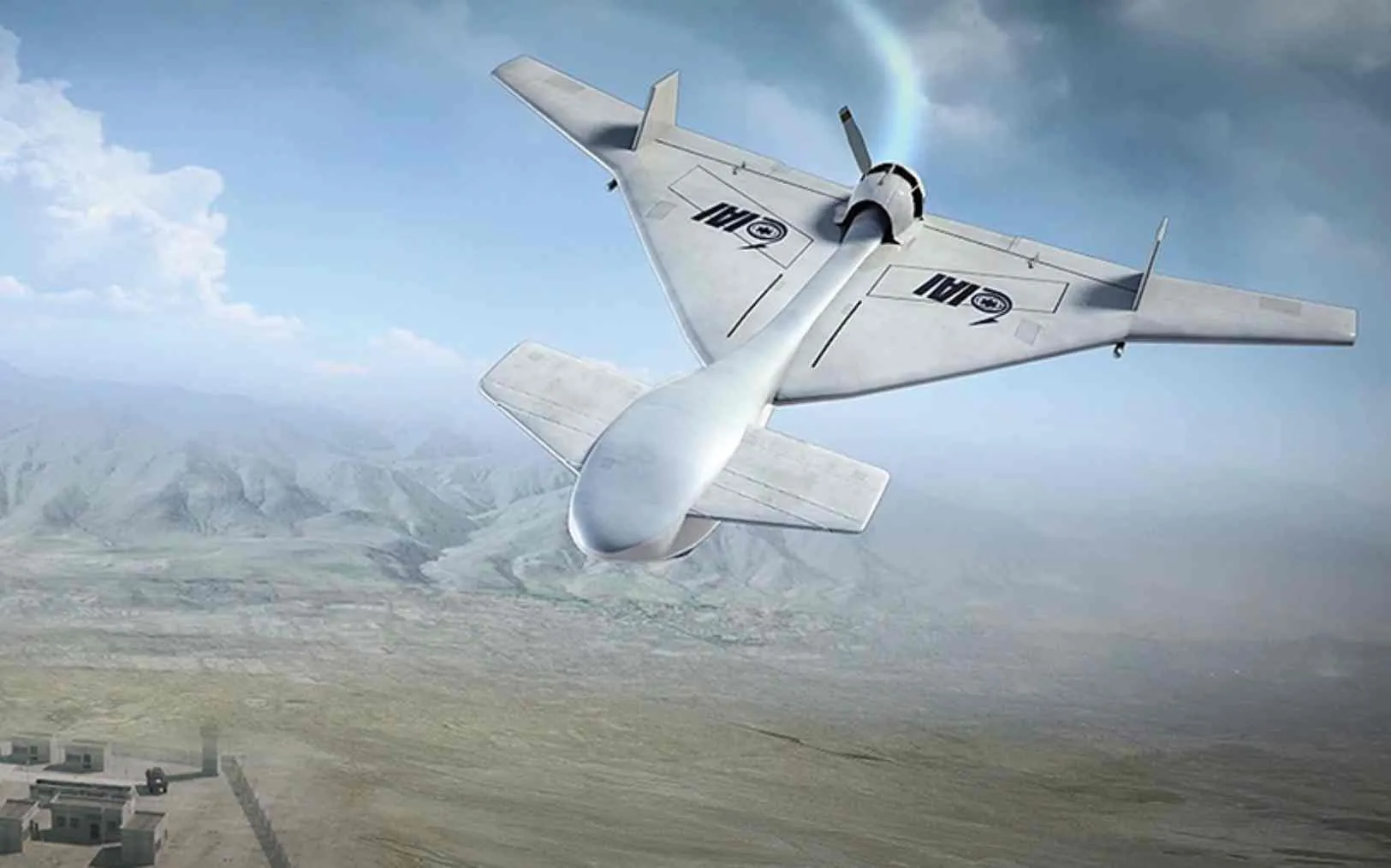
Among the most significant Israeli capabilities that Morocco has procured are the Harop loitering munitions, which are distinguished by their ability to fly long distances in search of targets before executing strikes, with an estimated range of about 1,000 kilometers. Given the northern location of Morocco, this range greatly surpasses the width of the Strait of Gibraltar, thereby theoretically placing large swathes of Spain within reach of these systems. Their importance lies in their dual function of reconnaissance and attack, enabling Morocco to target military sites and high-value installations without relying solely on fighter aircraft.
Moreover, Morocco has enhanced its missile capabilities by acquiring the Israeli PULS system from Elbit Systems, a multi-caliber rocket launcher capable of utilizing various munitions, some of which have a range of approximately 300 kilometers. If deployed in northern Morocco, this system would extend the reach of its longer-range munitions into areas of southern Spain. The actual engagement capability varies depending on the type of missile Morocco possesses and the launch location.
Advanced Defense Systems and Their Strategic Implications
Alongside these offensive capabilities, Morocco has also acquired the Israeli Barak MX system, which represents a crucial aspect of its air defense modernization efforts. This system employs multi-range missiles to intercept aircraft, drones, cruise missiles, and certain ballistic threats, operating within a command and control network that allows for the establishment of a layered air defense. For Spain, while the Barak MX does not constitute an offensive weapon, its existence indicates that Moroccan airspace, particularly in strategically significant northern regions, has become increasingly challenging for any potential aerial operations.
Additionally, the Israeli SPYDER system has entered service in Morocco, relying on Python and Derby missiles to provide protection against aircraft, drones, and various aerial threats. The deployment of such systems in the northern part of Morocco gains added significance due to the proximity of the area to Spanish airspace. The SPYDER system comes in various versions, with engagement ranges differing based on the missile and configuration employed. The SPYDER-SR variant is designed for short-range defense, with a reach of approximately 15–20 kilometers, while the SPYDER-ER boasts an extended range of about 40 kilometers using the I-DERBY ER missile. Meanwhile, the SPYDER-MR/LR variants utilize vertical launch systems and booster-equipped missiles, with the farthest engagement ranges reaching around 80 kilometers according to Rafael's data.
Furthermore, military collaboration between Morocco and Israel extends beyond missiles and air defense to encompass reconnaissance and satellite surveillance. Reports indicate that Morocco is potentially involved in negotiations to acquire an Israeli spy satellite of the Ofek model, equipped with advanced radar capabilities. Should Morocco secure such capabilities, it would enable extensive monitoring and intelligence gathering on movements, installations, and infrastructure, which is a critical element of modern targeting systems.
The sensitivity of these capabilities is further heightened by the region's geography. The short distance between northern Morocco and southern Spain, coupled with the near proximity of Ceuta and Melilla on the Moroccan coast, means that any advancements in missile range, weapon accuracy, or Moroccan reconnaissance capabilities could have direct ramifications for Spanish defense calculations.
Given these factors, it is evident that Israeli-Moroccan military cooperation is a significant element that heightens the sensitivity of relations between Madrid and Tel Aviv. Spain faces not merely a traditional upgrade of Moroccan forces but rather the emergence of a comprehensive system that integrates modern fighter jets, drones, loitering munitions, long-range precision missiles, air defense, and electronic and space reconnaissance.
Consequently, Spanish concerns are not confined to a single system but rather stem from the accumulation of these capabilities on the southern side of the Strait of Gibraltar. Morocco now possesses Israeli weapons, some of which, depending on their range and deployment location, can reach deep into Spanish territory, while other systems offer enhanced protection for Moroccan forces and installations against any aerial threats.
Thus, Israel's provision of arms to Morocco has become a pivotal part of the new security equation between the two nations. It has significantly elevated Morocco's capabilities in precision strikes, reconnaissance, and air defense, making Spain increasingly attentive to the trajectory of military cooperation between Rabat and Tel Aviv, especially as Morocco's armed forces continue to modernize, bringing new systems closer to geographical ranges that could directly impact Spanish security.
As reported by defense-arabic.com.