
Shifting Alliances: The Rise of Morocco's Diplomatic Influence
The Polisario Front is finding itself increasingly isolated on the international stage, as a growing number of countries express their support for Morocco's sovereignty over Western Sahara or endorse Rabat's 2007 autonomy initiative as a foundation for resolving the regional dispute. This shift is particularly evident in Latin America, a region long regarded as a stronghold for political and diplomatic backing of the Polisario. In recent years, a series of diplomatic breakthroughs by Morocco in this region have significantly altered the landscape of positions regarding the Sahara issue.
Colombia is among the latest countries to reassess its relationship with the Polisario. The new government has opted to freeze its ties with the self-proclaimed Sahrawi Arab Democratic Republic (SADR) and has gone further by announcing its support for Morocco's sovereignty over the Sahara. This move also includes a commitment to enhance cooperation with Morocco in areas such as trade, investment, food security, port infrastructure, and transatlantic connectivity.
Before Colombia's decision, Peru had already severed its ties with the SADR in September 2023. The office of newly elected President Keiko Fujimori confirmed that the Peruvian government is committed to supporting Morocco's territorial integrity and sovereignty over its southern provinces. Similarly, in 2024, Ecuador decided to suspend its recognition of the SADR, which it had initially recognized in 1983, allowing the opening of a 'embassy' in 2009. This decision has marked a new chapter in relations with Morocco.
In February, Bolivia decided to suspend its diplomatic relations with the Polisario, ceasing all official contacts and reaffirming its support for international efforts aimed at achieving a realistic, pragmatic, and sustainable political solution based on compromise, in line with parameters set by the United Nations. Two months later, Honduras also announced the suspension of its recognition of the SADR, referring to this move as a 'sovereign decision based on its commitment to non-interference and respect for the internal sovereignty of other states.' The country reiterated its full support for the efforts of the UN Secretary-General and his personal envoy to seek a fair and lasting political solution, along with its commitment to UN Security Council resolutions, particularly resolution 2797.
Latin America Realigns: Closer Ties with Morocco
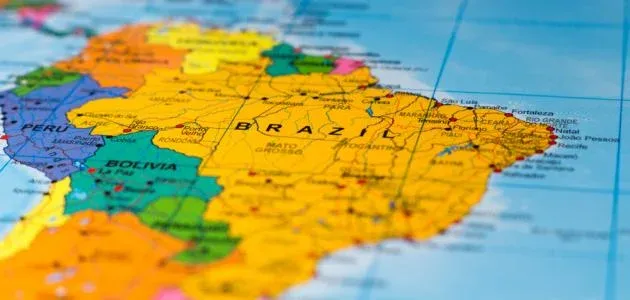
Latin American countries such as Chile, Brazil, and Argentina are also showing signs of aligning more closely with Morocco's positions. In Chile, which has never recognized the Polisario, the relationship with Morocco has strengthened notably since the rise to power of José Antonio Kast, founder of the Republican Party, in March. Recently, official negotiations have been initiated for a free trade agreement between the two nations, a development that the Polisario fears could implicitly recognize Morocco's sovereignty over Western Sahara.
Brazil's official and political discourse has increasingly favored support for Morocco's autonomy efforts in recent years. The Workers' Party of President Luiz Inácio Lula da Silva has already stated that Morocco's autonomy plan aligns with principles of dialogue and international law and could contribute to enhancing the well-being of the affected populations. Furthermore, Argentina appears to be moving closer to Moroccan positions under the right-wing government of President Javier Milei, which leaves the Polisario with limited maneuverability to sway Buenos Aires towards its cause.
The developments observed in the region indicate that Morocco's presence in Latin America extends beyond mere bilateral relations; it is now reaching into regional institutions. In June 2022, the Polisario warned the Andean Parliament against Moroccan attempts to gain institutional support for its position on the Sahara. Fast forward three years, and the Andean Parliament has held a plenary session in Morocco, where its president described the kingdom as a 'strategic bridge between Africa, Europe, and Latin America.' The institution also announced its support for Morocco's territorial integrity, further solidifying ties.
Only a handful of Latin American countries, led by Mexico and Venezuela, which are facing significant economic difficulties, continue to support the separatist front. Most countries in the region increasingly view Morocco as a gateway to the African continent, leveraging its strategic position in both the Mediterranean and Atlantic, along with its expanding network of economic relations and presence in several African nations. These assets provide Rabat with leverage to strengthen its foothold in the region and articulate economic cooperation with its strategic and diplomatic interests.
As reported by yabiladi.com.