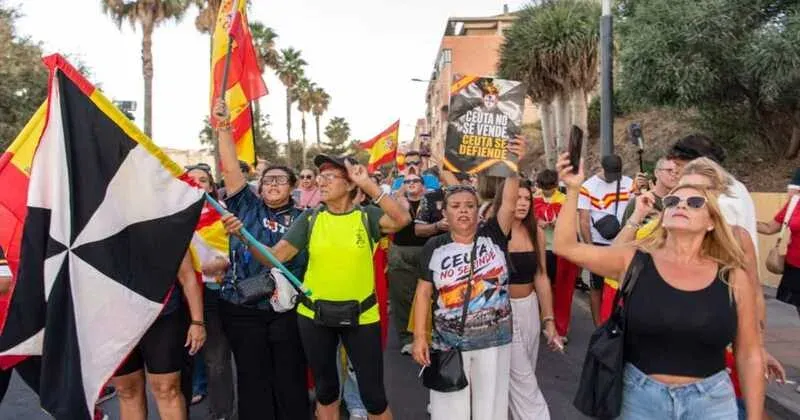

In recent days, the residents of Ceuta, a Spanish enclave located on the northern coast of Africa, have taken to the streets in significant numbers to express their deep-seated concerns regarding security and hygiene issues, which have escalated following a substantial influx of migrants from Morocco. This unrest has manifested in confrontations with police, further complicating an already delicate situation as thousands of migrants remain in the territory after crossing into Europe during a chaotic period in July 2026.
Ceuta's Unrest: Clashes Erupt Over Migrant Presence
On August 27, demonstrations in Ceuta intensified as police intervened to disperse protesters gathered on a beach where many migrants had sought refuge. Eyewitness accounts and broadcasts from Spanish public television depicted scenes of chaos, with some demonstrators setting fire to belongings in the migrant encampment. The anger among the local population is palpable, fueled by fears related to the overwhelmed community infrastructure as a direct result of the migrant situation.
Prior to this, on August 26, tensions flared as police deployed tear gas to mitigate potential clashes between the protesting residents and the Moroccan migrants camping nearby. The protests reflect a broader concern among Ceuta’s approximately 80,000 residents regarding the capacity of their small territory, which spans merely 18.5 square kilometers, to accommodate such a sudden and large influx of people.
In a notable incident, a military vehicle carrying soldiers was reportedly ambushed by a group of around 70 migrants, leading to a call for police assistance. This event has only exacerbated the anxiety felt by the local populace, with one soldier sustaining injuries from projectiles thrown during the altercation. Such clashes underline the fragile state of affairs between the residents, law enforcement, and the migrant population in Ceuta.
Government Response and Calls for Calm in Ceuta
As protests continue to unfold, Spain's Interior Minister, Fernando Grande-Marlaska, has urged both residents and migrants to refrain from violence, emphasizing that aggression is not a viable solution to the challenges faced by Ceuta. He articulated the government's stance that every migrant must be individually assessed to ascertain their eligibility for asylum or deportation, highlighting the complexity of the humanitarian situation.
The political discourse surrounding the migrant crisis has also intensified, with various political factions asserting the need for strict measures to manage the situation. Yet, the leftist government has cautioned against inciting further division and hostility, arguing that a legal framework must guide the handling of migrants, particularly vulnerable groups such as unaccompanied minors.
In light of the recent disturbances, officials including Kissy Chandiramani, Ceuta’s finance councillor, have acknowledged the heightened tensions in the city and the feeling of neglect among residents due to the perceived inaction from the national government. Nevertheless, calls for calm have been made, emphasizing the need for peaceful resolution and dialogue rather than violence. The ongoing protests highlight the urgency of addressing the pressing issues stemming from the migrant crisis, which has become a focal point of contention at one of Europe's most critical borders with Africa.
As reported by organiser.org.