
Transforming Medical Practice with Artificial Intelligence
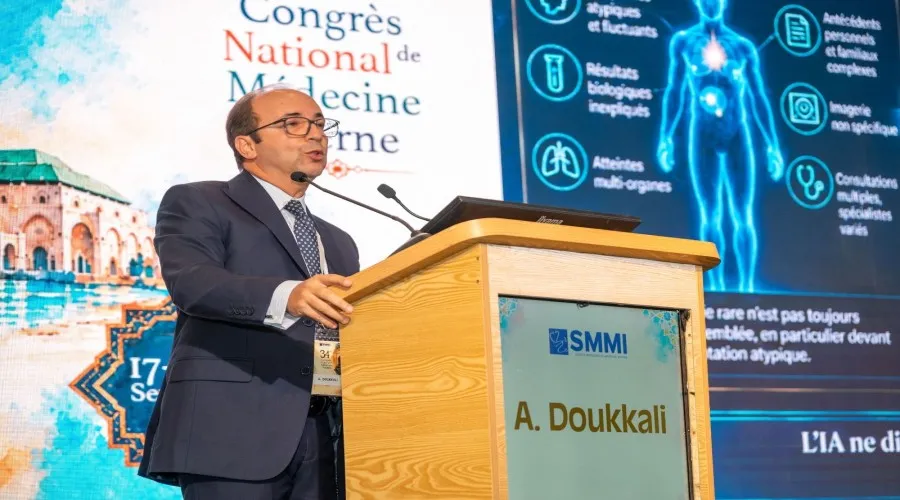
In a captivating discussion at the 34th National Congress of the Moroccan Society of Internal Medicine (SMMI) held in Casablanca, Professor Anass Doukkali from the Faculty of Medicine and Pharmacy of Rabat at Mohammed V University emphasized the transformative potential of artificial intelligence (AI) in healthcare. He articulated that while AI holds the promise of enhancing medical practice through improved diagnostic support, integration of complex patient data, and greater access to healthcare services, it is crucial that it serves merely as a tool to assist medical professionals rather than replacing them. Doukkali's insights were shared during a plenary session titled “AI and Health: Perspectives and Limits,” where he explored AI's role in redefining the daily functions of healthcare providers.
Focusing on the challenges faced by internists who regularly deal with intricate cases, multimorbidity, and diagnostic uncertainty, Doukkali posited that AI could significantly augment clinical practices. By enabling better integration of fragmented patient information, assisting in differential diagnosis, and anticipating patient developments, AI has the potential to alleviate the burden of time-consuming tasks that offer limited clinical value. This would not only enhance the efficiency of medical professionals but also improve patient outcomes.
Beyond the walls of individual practices and hospitals, Doukkali highlighted AI's capacity to facilitate earlier screenings, extend specialist knowledge to underserved areas, and enhance overall access to healthcare. Specific applications mentioned included advancements in medical imaging, anatomical pathology, cancer screening, and maternal health—domains where AI can play a pivotal role in saving lives and improving care delivery.
Addressing Trust and Ethical Considerations in AI
However, Doukkali was quick to point out that advancements in technology do not automatically foster trust among healthcare professionals and patients. Key issues such as the explainability of AI processes, the phenomenon of AI hallucinations, algorithmic biases, and the representativeness of population datasets must be thoroughly addressed. Furthermore, concerns surrounding data protection and medical liability are paramount, necessitating a thoughtful and cautious approach to the integration of AI in healthcare settings. Doukkali firmly argued that while AI should inform medical decisions, the ultimate clinical judgment and responsibility should rest with physicians, ensuring that human oversight remains a fundamental aspect of patient care.
Contextualizing his discussion within the Moroccan healthcare landscape, Doukkali referenced initiatives from the CIES, the e-Health Innovation Center, particularly their White Paper on AI in Health, and the Mahir – Moroccan AI for Health Implementation and Readiness program. He advocated for a strategy that prioritizes clinical needs and the specific requirements of the healthcare system, rather than adopting AI technology for its own sake. This calls for the establishment of foundational capabilities, including high-quality data management, interoperability among systems, robust governance structures, relevant training for healthcare professionals, rigorous scientific evaluations, and the ability to scale successful pilot projects effectively.
As reported by techreviewafrica.com.