
Artificial Intelligence as a Catalyst for Human Advancement
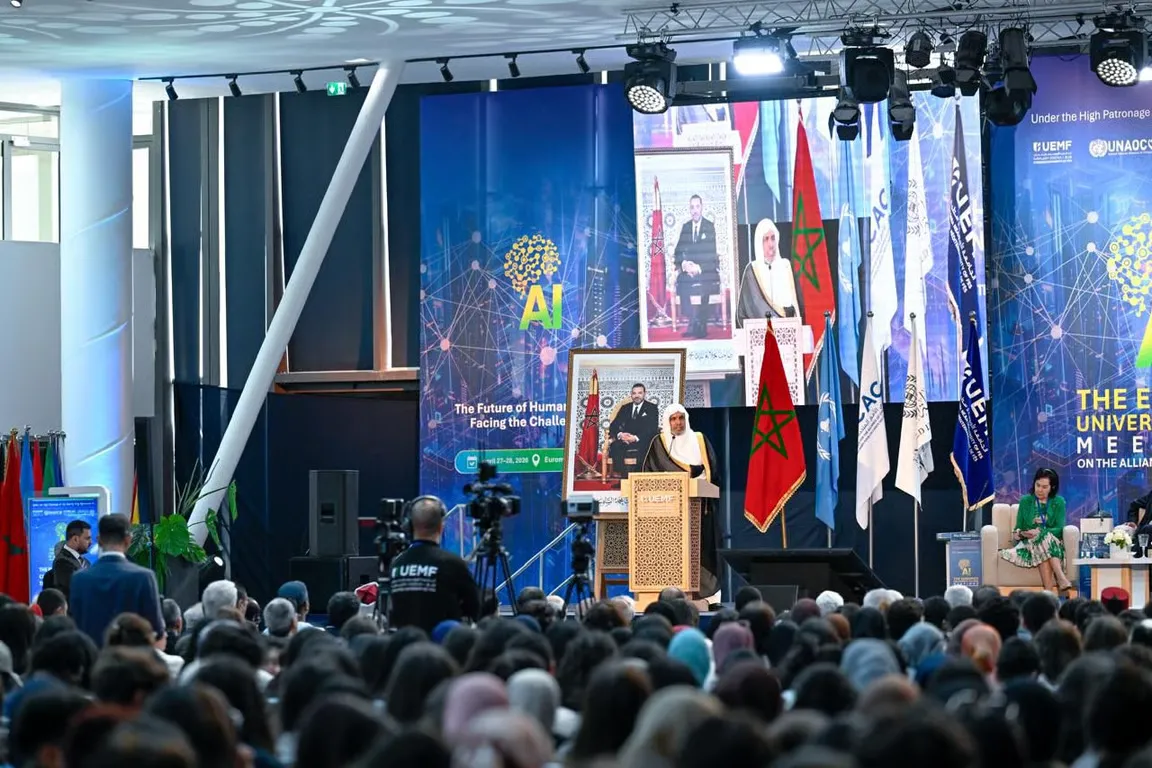
The recent international conference titled "The Future of Human Civilization in the Age of Artificial Intelligence," held at the Euro-Mediterranean University in Fes, Morocco, under the auspices of His Majesty King Mohammed VI, has underscored the transformative potential of artificial intelligence (AI) in fostering human progress. The event, which attracted over 2,000 participants, including global leaders, scholars, and representatives from 75 countries, culminated in the issuance of the "Fes Message on Human Civilization and Artificial Intelligence." The conference was notably marked by the participation of Dr. Mohammed Al-Issa, Secretary-General of the Muslim World League and a prominent speaker at the event.
Participants emphasized that the advancement of AI must be anchored in a framework that respects universal values, human dignity, and principles of fairness. They advocated for governance of AI systems to be founded on transparency, accountability, and interpretability, which are essential to enhancing public trust in intelligent systems. The discussions highlighted the urgent need for developing international regulatory frameworks to address challenges related to algorithmic biases and data quality. Moreover, the potential applications of AI in fields such as healthcare were recognized as promising, provided that data protection and scientific reliability are upheld.
Building a Resilient Future through Collaborative Efforts
Furthermore, the conference participants acknowledged that AI serves as a strategic lever in international relations, necessitating the enhancement of multilateral cooperation to prevent technological fragmentation and imbalances that favor certain groups over others. They called for effective mechanisms to address cybersecurity risks, misinformation, and hate speech, urging the development of AI models that respect cultural and linguistic nuances, thereby promoting digital sovereignty and equitable access to technology.
The investment in youth, human capital, and infrastructure was highlighted as a cornerstone for building a responsible and inclusive digital future. The consensus underscored the imperative of directing AI towards serving peace, sustainable development, and fostering intercultural dialogue. The conference featured four key sessions that explored critical themes such as "Transparency, Accountability, and Trust: Foundations of Global Governance in the Era of AI," and "AI Applications and Ethics in Healthcare." Additional discussions revolved around the role of AI in revitalizing shared human values and envisioning scenarios for civilization's future in the context of AI.
In addition to the main sessions, five parallel discussions delved into topics such as "Coexistence in the Age of AI" and "AI Governance and its Impact on Development." The event, characterized by a series of lectures and meetings, served as a significant international platform for dialogue and strategic thinking regarding the profound transformations ushered in by artificial intelligence.
As reported by sabq.org.