Morocco's Solar Power Ambitions Amidst Challenges
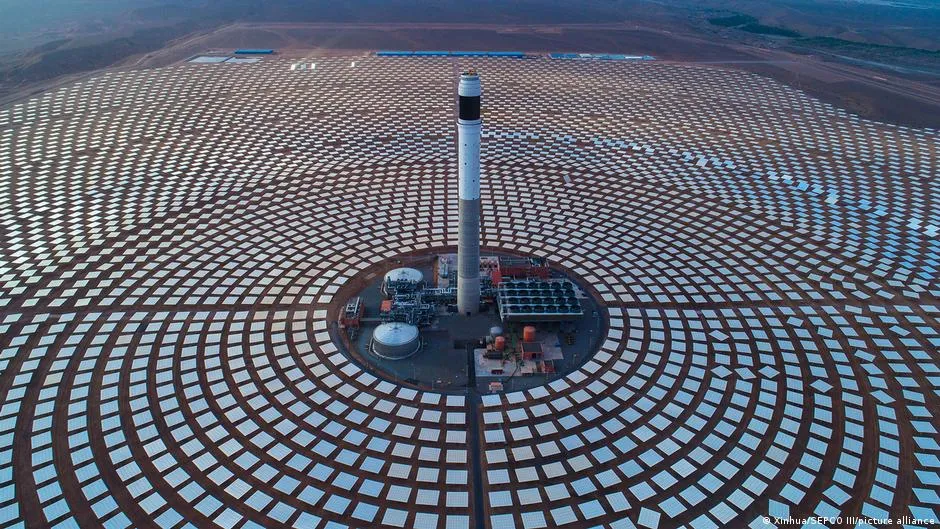
In the heart of the Moroccan desert, the colossal Noor solar power tower stands as a beacon of the nation's ambitious quest for clean energy. This project, located near the town of Ouarzazate, is one of the most significant renewable energy initiatives in the region, aiming to harness the abundant sunlight of the Sahara. However, despite its promising potential, the initiative faces various obstacles that hinder its optimal benefits for the local community. Many residents express concerns about the project's impact and its accessibility.
The Noor power plant is not just an ordinary solar farm; it employs concentrated solar power technology which uses a field of two million enormous mirrors to reflect sunlight onto a central receiver atop a 247-meter tower. This innovative approach allows the plant to generate steam at temperatures reaching 600 degrees Celsius, which then drives turbines to produce electricity. Remarkably, this system can continue to generate power even after sunset. Yet, despite these advancements, electricity in Ouarzazate remains prohibitively expensive for most households. Many families still rely on butane gas instead of solar energy, raising the question: why hasn't clean energy penetrated the local market?
The Dominance of Fossil Fuels and Economic Implications
One major reason for this reliance on conventional energy sources is Morocco's heavy dependence on fossil fuels, particularly coal-based electricity generation. According to Intissar Fakir, a leading researcher and director of the North Africa and Sahel program at the Middle East Institute in Washington, this reliance has significantly slowed the country's transition to clean energy. Fakir notes that fossil fuel-generated electricity accounts for approximately 48% of Morocco's energy-related greenhouse gas emissions. Furthermore, the economic burden of energy costs is palpable, with Moroccans spending an average of $110 from a monthly income of $550 on electricity—an unsustainable figure in a country characterized by high temperatures and dry conditions.
During summer, temperatures in Ouarzazate frequently exceed 40 degrees Celsius, and the number of hot days has doubled since the 1970s. Given that Morocco imports nearly 90% of its fossil fuel needs, price fluctuations in the energy market can severely strain the national budget, underscoring the urgent need to transition away from fossil fuels that contribute to global warming.
Despite these challenges, Morocco has made notable strides toward renewable energy development, positioning itself as a leader in North Africa. The country aims to generate 52% of its electricity from renewable sources by 2030 and 70% by 2050. With abundant solar and coastal wind resources, the conditions for such a transition appear promising. However, the path to achieving these ambitious targets is fraught with hurdles that must be addressed to ensure the benefits of solar energy reach all Moroccans.
As reported by dw.com.