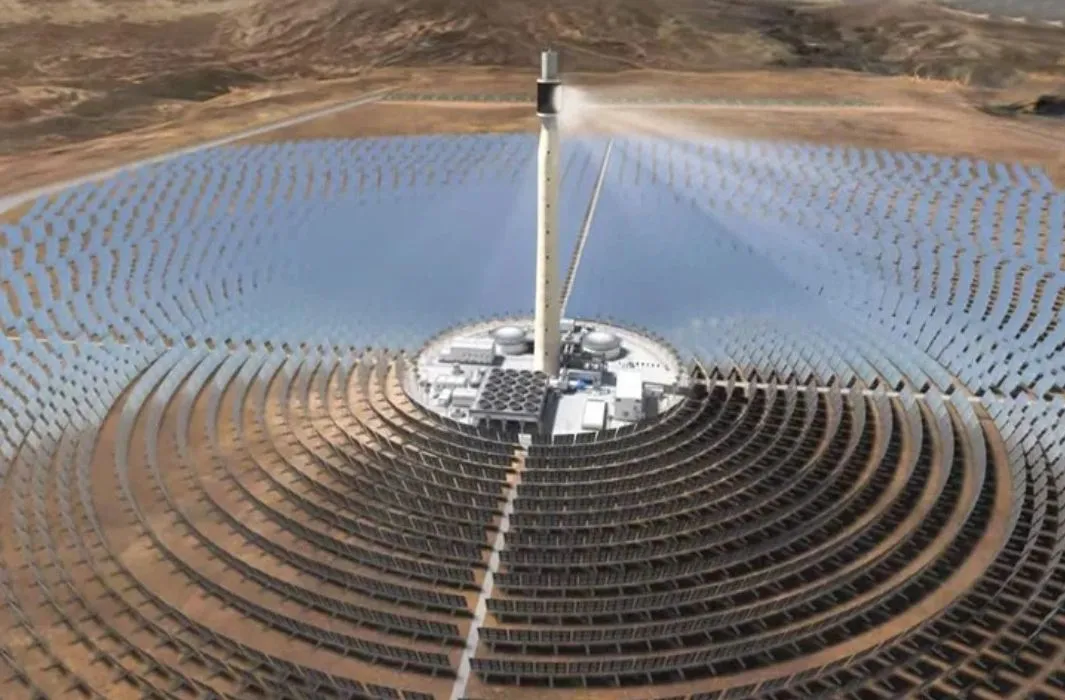

Rabat, Morocco - September 7, 2026: Nestled in the heart of southern Morocco, on the fringes of the Sahara Desert, the Noor Ouarzazate Solar Complex stands as a beacon of innovation and sustainability. This remarkable project is not only one of the largest solar initiatives in the country but also a pioneering endeavor that integrates both concentrated solar power (CSP) and photovoltaic (PV) technologies.
The complex commenced operations in phases starting in 2016, boasting a total installed capacity of approximately 580 megawatts. It comprises several distinct power plants, most notably Noor 1, Noor 2, and Noor 3, which utilize concentrated solar power, alongside Noor 4, which harnesses photovoltaic technology.
A Towering Achievement: The 250-Meter Solar Tower
Among the various components of the complex, Noor 3 is particularly striking, featuring a solar tower that reaches an impressive height of 250 meters, surrounded by thousands of reflective mirrors. These mirrors track the sun's movement, reflecting and concentrating its rays onto a thermal receiver located at the top of the tower. This process significantly elevates the temperature, enabling the harnessing of thermal energy to produce steam that drives turbines for electricity generation. Noor 3 commenced its commercial operations at the end of 2018, with a capacity of 150 megawatts.
Energy Storage: A Key Advantage
The significance of the concentrated solar power technology employed at Noor 3 lies in its ability to store thermal energy in molten salts for several hours. This capability allows for the continued production of steam and electricity even after sunset, a crucial advantage over traditional photovoltaic solar plants, which cease generation in the absence of sunlight. Consequently, energy storage not only preserves energy but also aligns electricity production with peak demand periods, reducing reliance on conventional generation sources when solar output diminishes.
The development of the Noor complex is closely tied to Morocco's vast potential for solar and wind energy, as well as its ambition to decrease dependency on fossil fuel imports while diversifying electricity production sources. In this context, the Noor project serves as a large-scale demonstration of solar energy's capacity to meet electricity demand, integrating thermal storage technologies to mitigate the challenges associated with solar production variability.
Furthermore, the project aligns with Morocco's strategy to increase the share of renewable energy in its electricity mix and reduce emissions associated with power generation. The establishment of the Noor Ouarzazate complex required investments exceeding $3 billion, alongside a more complex infrastructure than conventional photovoltaic solar plants, particularly concerning thermal storage systems and operational maintenance.
However, the project has also faced technical challenges. In 2024, one of the molten salt storage tanks at Noor 3 experienced a leak, resulting in a temporary shutdown of the plant before operations resumed later. The importance of Noor Ouarzazate transcends its production capacity; it exemplifies how renewable energy and storage can be synergistically combined to provide more flexible electricity supply solutions.
With abundant solar radiation in North Africa, the region surrounding Ouarzazate has emerged as a testing ground for technologies that could play a pivotal role in transitioning toward less fossil fuel-dependent electricity systems. Ultimately, the Noor Ouarzazate complex represents an ambitious attempt to convert one of the region's most significant natural resources, sunlight, into a strategic asset in Morocco's energy transition journey.
As reported by solarabic.com.