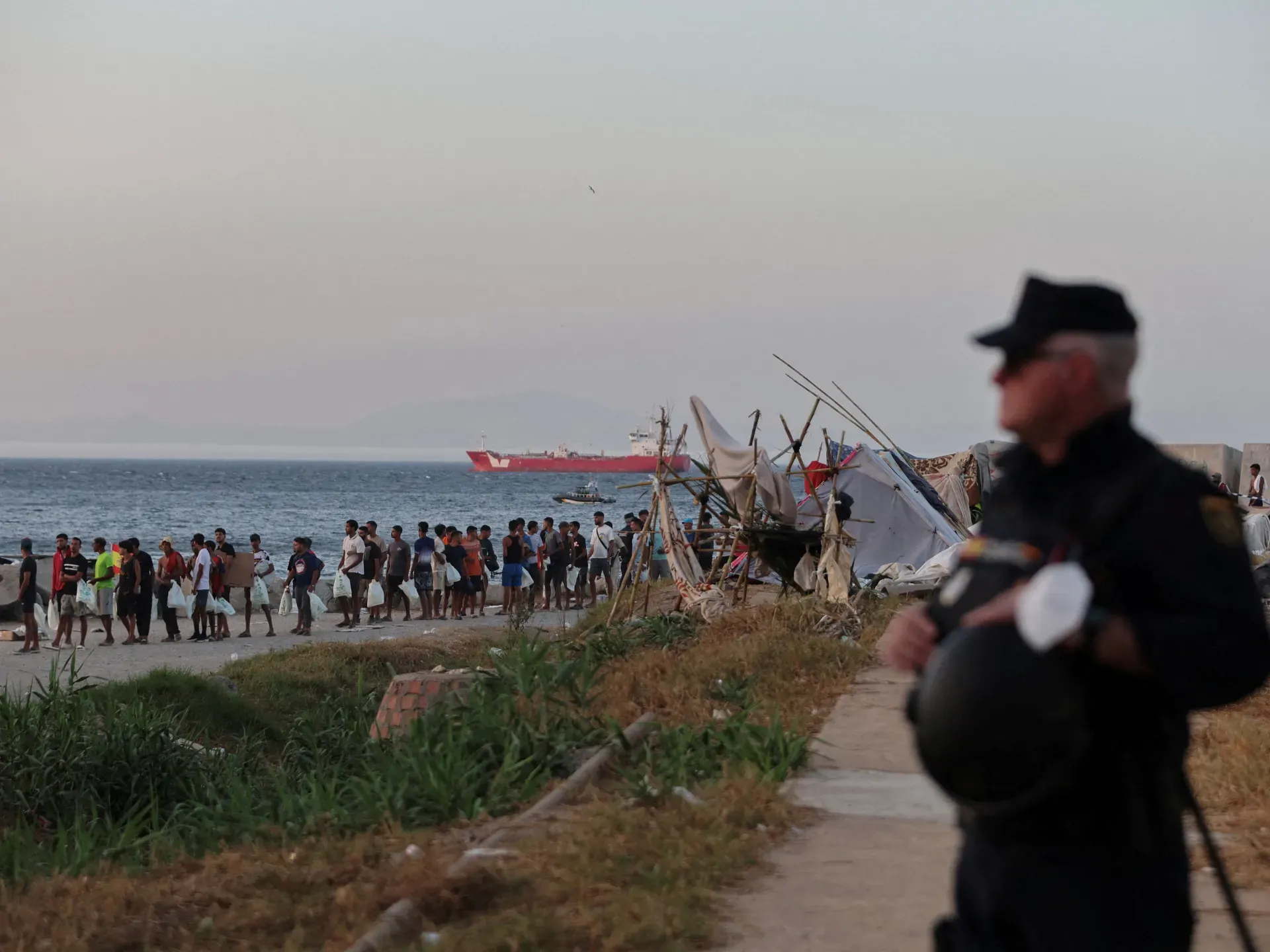

Struggles Faced by Ceuta's Migrants
In Ceuta, Spain, the living conditions for thousands of migrants have become increasingly dire, characterized by overcrowding, insufficient aid, and reported instances of abuse as they await critical decisions regarding their futures. Among those affected is 21-year-old Anis Fadi, a university graduate and certified accountant, who has found himself sleeping in a makeshift shelter since crossing the border from Morocco at the end of July. Fadi is one of approximately 70,000 migrants who have sought refuge in this Spanish enclave, located on the North African coast, in search of a better life.
Currently residing in a camp at Trampolin Beach, Fadi describes the arduous daily routine of queuing for hours at a Red Cross food distribution center, lamenting the lack of basic shelter. "I don’t even have a tent," he shared, explaining how he and others have fashioned their living spaces from scavenged materials like wood and broken branches. With winter approaching, the vulnerability of these makeshift shelters becomes more pronounced, raising concerns for those without adequate protection against the elements.
According to estimates from the Spanish government, between 6,000 and 10,000 migrants remain stranded in Ceuta, while local officials suggest the number could be as high as 13,000. While around 5,000 individuals, primarily women and children, have been provided temporary accommodation, many others continue to sleep outdoors in deplorable conditions. Fadi reflects on the harshness of life in Ceuta but maintains that his decision to leave Morocco was necessary, stating, "Life was harder there for me. I didn’t see any future for myself." His sentiments echo the stories of many who risked their lives to reach what they perceive as a gateway to Europe—a place where they hope to find opportunities and build a better future.
Allegations of Abuse and Government Response
Despite the hopeful aspirations of migrants like Fadi, the journey to safety has been fraught with peril. Reports indicate that over 100 individuals lost their lives attempting the crossing. Fadi himself endured a treacherous swim to reach Ceuta, fueled by the belief that a new life awaited him on the other side. However, the realities of life in the enclave have been harsh, with many migrants expressing feelings of insecurity and fear, particularly at night. Nolte Bauer from Mission Lifeline International emphasized the precarious conditions outside official camps, highlighting the lack of hygiene, inadequate medical resources, and the looming threat of violence.
Several migrants have recounted experiences of abuse allegedly perpetrated by individuals in military or police uniforms. One anonymous source described a harrowing encounter where he was assaulted without provocation, resulting in serious injuries. Fearing deportation, many choose not to seek medical assistance, instead relying on NGO volunteers who have stepped in to provide care for the wounded. In stark contrast, Spanish authorities have vehemently denied these allegations of mistreatment, asserting that their police forces operate with respect for human rights. They have outlined efforts to expand accommodation and provide essential services to migrants while processing their cases, with the overarching aim of returning those without legal status to Morocco.
As the situation continues to evolve, the leaders of Ceuta are calling for increased support from both Madrid and the broader European community to manage the crisis effectively. The plight of migrants in Ceuta remains a pressing humanitarian issue, reflecting the complex dynamics of migration in the region.
As reported by aljazeera.com.