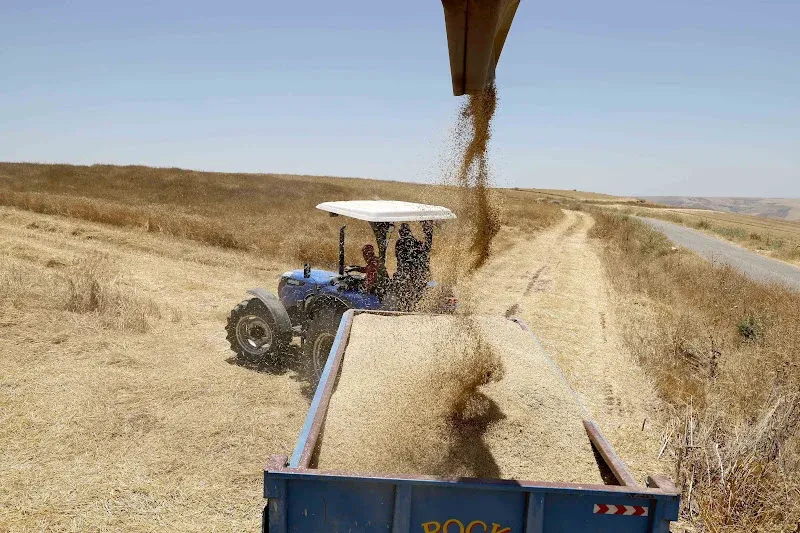

Challenges in the 2026 Harvest Season Amidst Promising Yields
The agricultural regions of Morocco are currently witnessing the ongoing harvest of the 2026 farming season, with official expectations predicting grain production to exceed 9 million quintals. This anticipated yield marks a significant turnaround following four consecutive seasons of deficits. However, despite the promising prospects due to recent significant rainfall, the harvesting process is facing various challenges that farmers must navigate.
Farmers have reported to agricultural chambers about the limited availability of harvesting machinery and a shortage of qualified labor. These issues have been compounded by a series of wildfires that erupted in some areas during the recent Eid al-Adha celebrations, which have devastated hundreds of hectares. Further complicating matters are additional fires that have occurred in the western regions of the country.
In response to these challenges, the National Office for Agricultural Advisory Services continues to conduct field visits aimed at collecting samples from crops and sending them to the grain technology laboratory affiliated with the National Office for Cereals and Pulses (ONICL) for quality assessment. Abdelali Demri, Vice President of the Agricultural Chamber of the Fes-Meknes region, confirmed that the harvest season is progressing in various provinces, albeit with noticeable increases in labor costs and limited harvesting machinery.
Demri elaborated on the issue of limited agricultural machinery, stating that it has previously been discussed in meetings with relevant ministries. He noted that some machinery has started to arrive in regions experiencing slow harvesting progress. Regarding labor shortages, he emphasized this as a national issue that requires a medium- to long-term strategic response.
Since the start of the harvest season, the chamber has received numerous complaints from farmers in the region, primarily concerning the aforementioned challenges. Furthermore, the cost of mechanical harvesting has surged to between 550 and 700 dirhams or more per hectare due to rising diesel prices and the challenging topography of some areas. The rental cost for hay balers ranges from 4 to 6 dirhams per bale, also influenced by supply and demand as well as terrain types.
Demri anticipates a decline in the yield per hectare for wheat and barley this year in the Fes-Meknes region due to excessive rainfall that has flooded some fields. He highlighted that crop yield does not solely depend on the quantity of rainfall but also on its timing, distribution, and the condition of the crops when the rain occurs.
It is worth mentioning that the Ministry of Agriculture, Fisheries, Rural Development, and Water and Forests has implemented a series of measures aimed at enhancing the national harvest of key cereals this year. This includes directing mill operators to purchase soft national wheat at 280 dirhams per quintal to build a strategic reserve that meets domestic demand.
As reported by hespress.com.