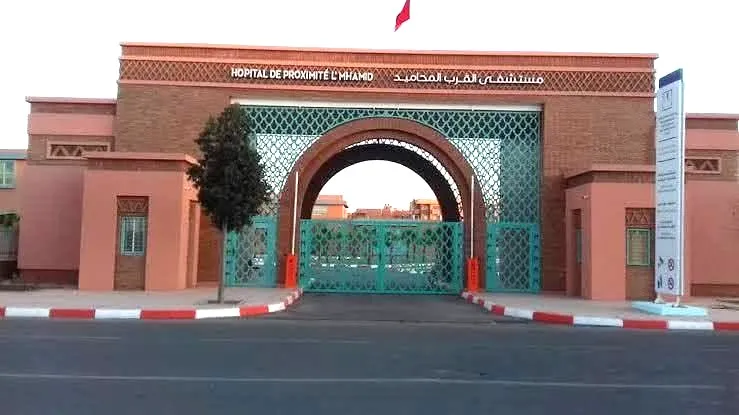

The ongoing health crisis in the Mahamid neighborhood of Marrakech has prompted a surge of complaints regarding the deteriorating conditions of local healthcare facilities. Residents are increasingly questioning the administrative management of this sector and the fate of promises made to bring medical services closer to citizens. Reports have surfaced over the past few weeks indicating that the emergency department at the nearby facility, known as "Al-Aqwas," has ceased operations for over three months, leaving thousands of residents facing a healthcare reality that starkly contradicts the purpose for which this facility was established.
According to testimonies from citizens who visited the hospital on the past weekend, the emergency service was unavailable, lacking both doctors and supporting staff capable of receiving and addressing incoming cases. This raises a critical question: how can a department named "emergency" be devoid of emergency services for months, without providing citizens with any clear official explanation? It is particularly astonishing that this pertains to a hospital that was opened only a few years ago, which was expected to serve as a cornerstone of healthcare access for one of the most densely populated areas in Marrakech. Yet, according to local accounts, several services and specialties are no longer operational, revealing a healthcare facility that presents itself as a hospital while its fundamental services are eroding from within.
In the absence of emergency services, residents find themselves compelled to seek care at Ibn Zohr Hospital, known as "Mammounia," exacerbating the pressure on an institution already struggling with overcrowding and a high influx of patients and visitors. This situation highlights a profound contradiction that warrants scrutiny: if the purpose of local hospitals is to alleviate the burden on larger hospitals and bring treatment closer to citizens, how does the failure of these services contribute to increased congestion at the central public hospital?
The persistence of this situation, if the circulated information is accurate, cannot merely be dismissed as a temporary oversight in the management of a public facility, particularly when it concerns emergency services directly linked to citizens' rights to access treatment in urgent situations. The gravity of the situation is amplified by the high population density in the Mahamid neighborhood, which is one of the largest demographic areas within Greater Marrakech, contrasting sharply with the clearly limited healthcare infrastructure available to residents.
Available data indicates that the neighborhood is served by only two health centers—one in the Maatallah area and the other in Mahamid. This figure seems grossly inadequate when considering the urban and population expansion in the area, prompting a serious discussion about the alignment of healthcare services with the actual needs of the population.
In Mahamid 9, residents report a similarly troubling scenario, citing the absence of a doctor during part of official working hours. They claim that the physician only arrives around eleven in the morning and leaves by one, leaving dozens of women, patients, and visitors outside a facility that is supposed to be open for their service. This issue transcends the mere waiting for a doctor or the dysfunction of a service; it pertains to the essence of public service and the degree of respect afforded to citizens who find themselves compelled to navigate between healthcare facilities in search of someone to attend to them, examine them, or provide them with the minimum level of care.
The administrative silence surrounding the prolonged absence of emergency services at a local hospital, the need for a densely populated community to seek care elsewhere, and the complaints regarding the actual working hours of doctors at health centers turn administrative inaction into part of the problem rather than a solution. Today, the pressing question for health sector officials in Marrakech is: who is responsible for the continuation of this situation? Why have citizens not been informed clearly and officially about the reasons behind the cessation of emergency services? When will normal operations resume, and who is monitoring the actual presence of medical staff in health centers?
The residents of Mahamid are not demanding exceptional privileges; they simply seek basic rights: a present doctor, open emergency services, and a healthcare facility that performs the functions for which it was established. Meanwhile, the public awaits an official clarification from the relevant health authorities regarding these issues, the reasons for the cessation of emergency services at Al-Aqwas, the validity of complaints concerning doctors' working hours at health centers, and whether there are practical measures to restore health services to their intended standard.
As reported by kechpresse.com.