
Messages circulating on social media continue to call for a reenactment of the events witnessed on July 30 and 31 at the border this Saturday. The uncertainty regarding the likelihood of mass participation in this **call** remains palpable; however, judging by the reactions from Moroccan authorities, it seems unlikely that the organizers will achieve the success they desire.
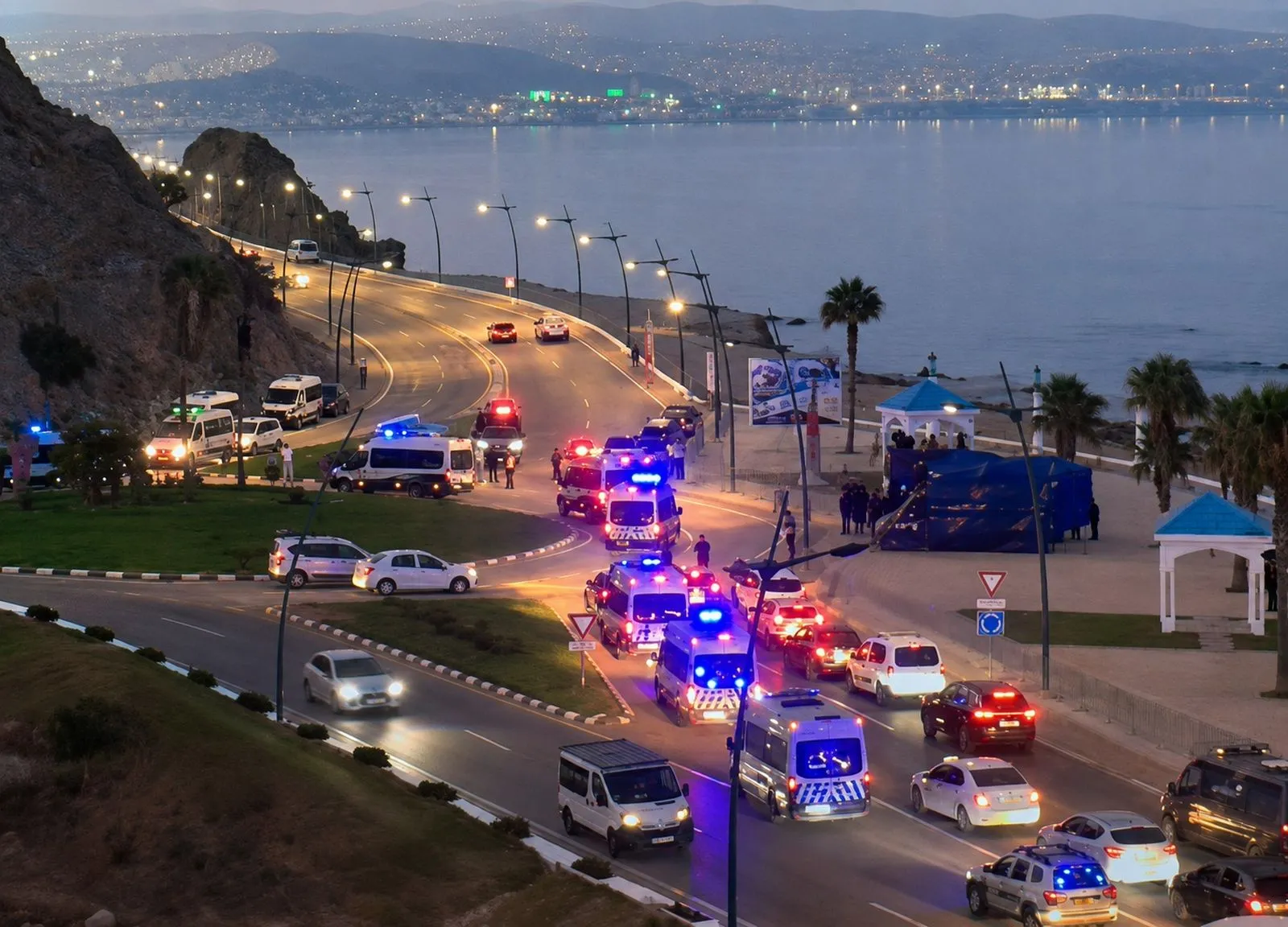
In recent days, **Morocco has intensified its security apparatus**, particularly around the area of Castillejos. This operation comprises hundreds of Moroccan security personnel bolstered by military units. Videos depicting police and soldiers patrolling the border have garnered significant attention among the residents of Ceuta.
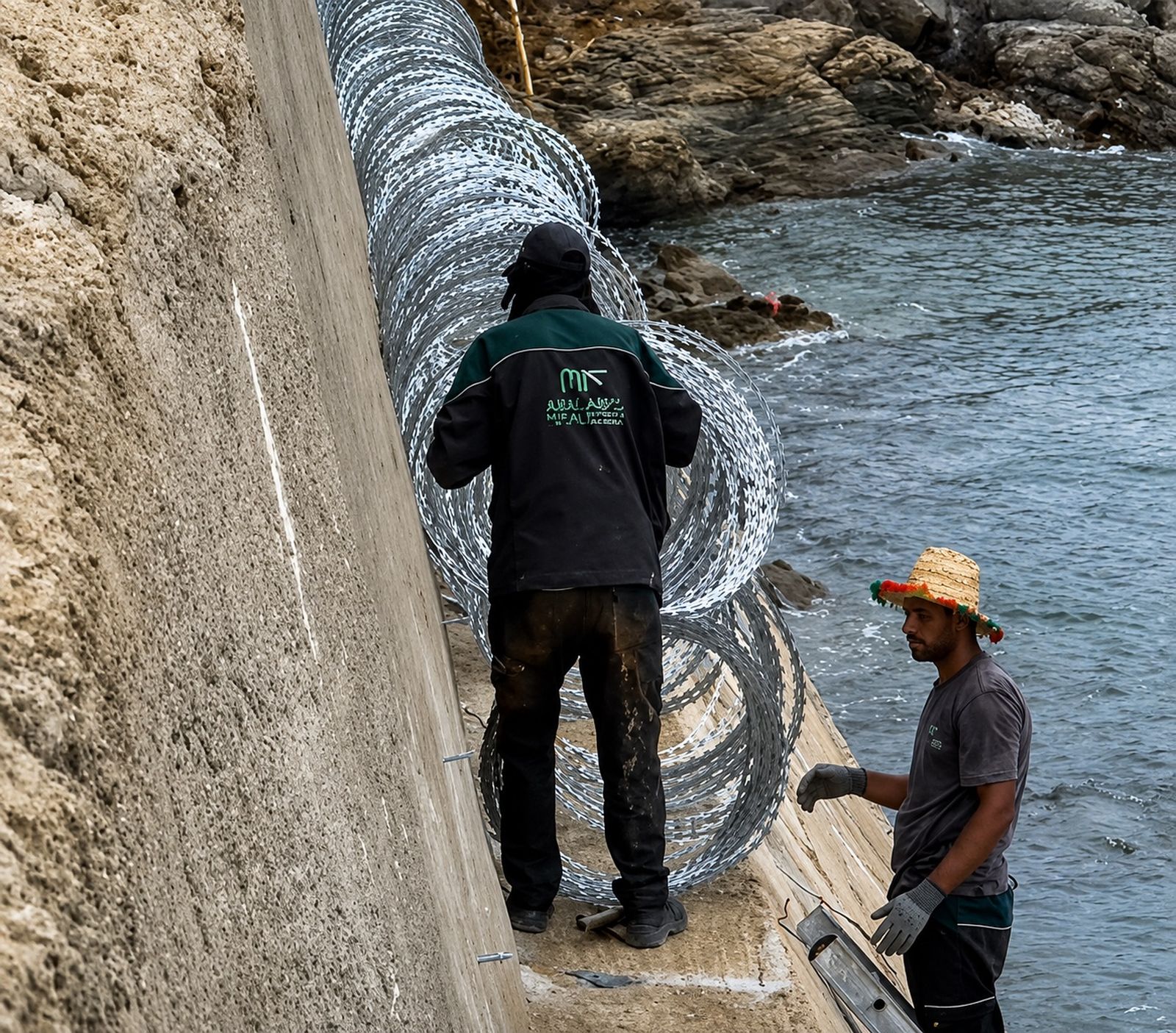
Additionally, there has been a **physical reinforcement of the border** itself. Recent images have emerged showing the installation of barbed wire and new lines of fencing in Moroccan territory, actions aimed at thwarting any attempts to breach the border into Ceuta.
The Moroccan government has defended this initiative as a **preventive measure to avoid further irregular crossings**, a stark contrast to the apparent negligence displayed during the critical days of the assault on Ceuta. Furthermore, Moroccan authorities have made concerted efforts to dissuade their population from heeding calls to irregularly enter the Spanish city.
In response, the **Spanish government has also ordered fortification of the border**. The Ministry of the Interior has deployed 880 national police officers in Ceuta—270 more than on July 30—along with 714 Civil Guard members, all supported by military forces.
**Change in Communication Strategy**
The nature and operational dynamics of these calls to gather at the border for entry into Ceuta have been analyzed by the strategic intelligence firm **Golden Owl**, affiliated with the University of Alicante. Their findings suggest that this movement of thousands of individuals was a well-organized operation rather than a spontaneous phenomenon.
Following the reactions from Spain and Morocco, Golden Owl believes that **increased police pressure has significantly curtailed the activities of major online groups** advocating for mass entry this Saturday. However, experts from the firm assert that the recruitment structure has not been dismantled but has instead relocated to less identifiable areas.
Golden Owl does not rule out the possibility of another migrant intrusion attempt in Ceuta occurring on the 15th; however, they are skeptical about whether it will reach the scale of the events from July 30 and 31. They suggest that **the likelihood of future movements may occur in locations other than the beaches of Castillejos**.
According to their analysis, **activity appears to have shifted towards broader groups**, such as employment forums or youth communities, where messages can circulate more discreetly without direct references to migration. This evolution complicates monitoring efforts, as detection can no longer rely solely on identifying openly recruitment-oriented spaces.
The report concludes that there is a shift in the dissemination strategy: **the structure is reducing its public exposure while maintaining its capacity to recruit and mobilize potential participants**. Consequently, Golden Owl recommends that surveillance efforts should increasingly focus on analyzing the language used and communication dynamics rather than merely locating specific groups.
Meanwhile, the **European Commission** has assessed the measures activated alongside **Meta**, **TikTok**, and other content verification organizations to combat misinformation related to irregular entry attempts into Ceuta. Authorities have clarified that verifiers are analyzing content circulating on social media while platforms enforce their policies against posts related to human trafficking, violence, hate incitement, and other illegal materials. Additionally, these platforms are enhancing their mechanisms to provide reliable information to users searching about the migration situation in Ceuta.
The European Commission convened again this past Thursday to **analyze the situation's evolution and the latest information circulating on social media regarding potential new mass entry attempts** into Ceuta this Saturday. This meeting is part of several discussions held since the beginning of the week to closely monitor digital activity linked to the city.
On its part, TikTok has activated a **special security team** as part of its international protocol for responding to emerging events. The company explained that this setup allows for real-time monitoring of regional trends and potential threats, including deceptive behaviors.
As reported by elpueblodeceuta.es.