
U.S. B-52s and Moroccan F-16s Collaborate in African Lion 26
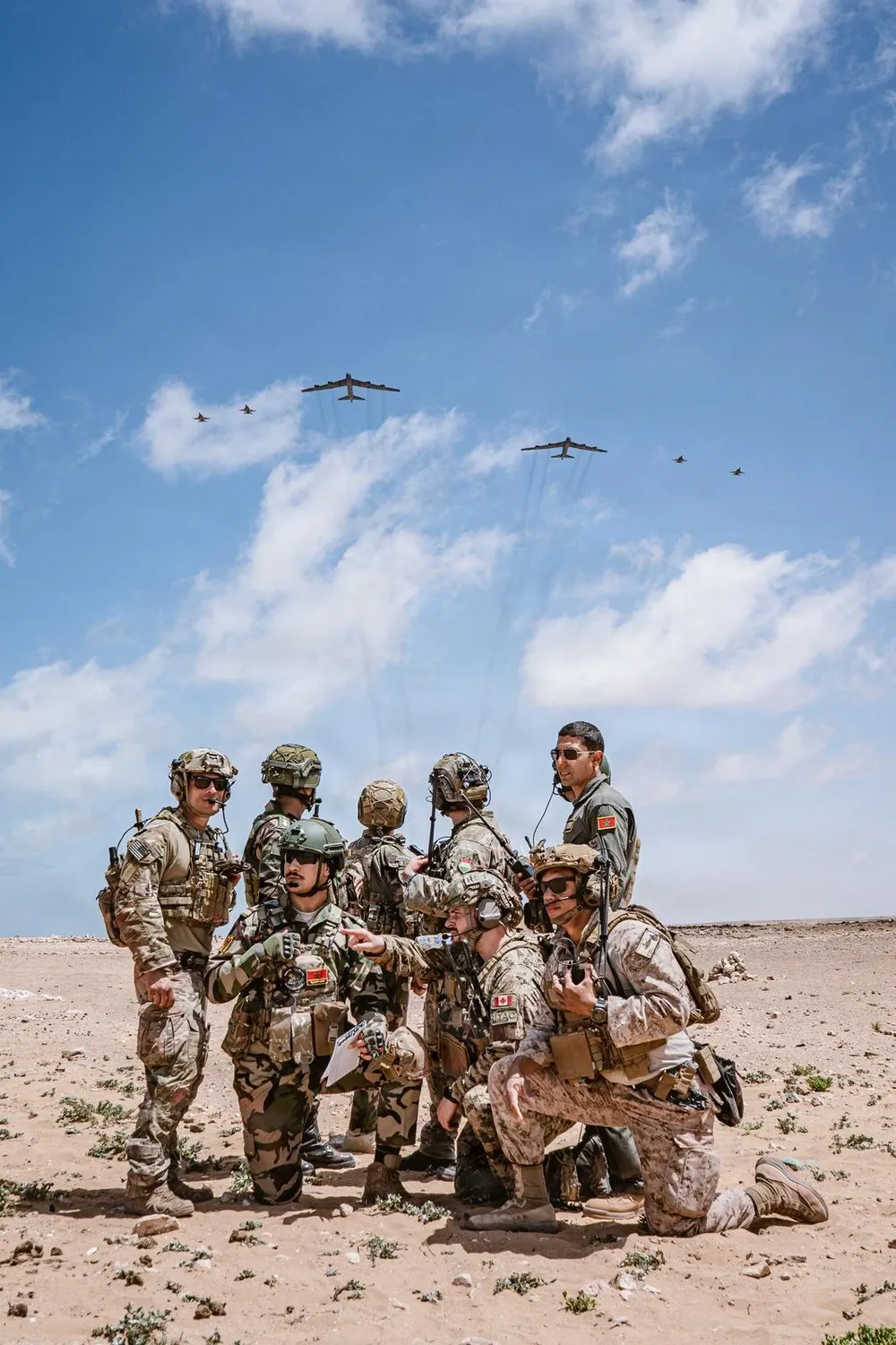
In a significant display of military collaboration, a formation of two U.S. Air Force B-52H Stratofortress bombers, accompanied by four F-16 Fighting Falcons from the Royal Moroccan Air Force, soared over Cap Draa, Morocco, on April 23. This flyover heralded the commencement of Morocco's inaugural Joint Terminal Attack Controller (JTAC) qualification course, a pivotal moment in the realm of military training and collaboration. The event was part of African Lion 26, the largest annual joint exercise conducted by U.S. Africa Command, which runs from April 20 to May 8, 2026, and is spearheaded by the U.S. Army Southern European Task Force, Africa (SETAF-AF).
The integration of these formidable aircraft into the multinational exercise serves as a testament to the commitment of the U.S. and its allies to project credible airpower on a global scale. U.S. Air Force General Dagvin Anderson, commanding general of U.S. Africa Command, emphasized the importance of this visible military presence in Morocco, stating that it reinforces a credible deterrence and underscores the U.S. commitment to enhancing regional security. The operation also highlights the strategic capabilities of U.S. military forces as they regularly conduct sorties to maintain crew proficiency and operational readiness.
Advancing Moroccan Military Capabilities through JTAC Training
The JTAC qualification course is designed to train Moroccan personnel in directing combat aircraft, artillery, and naval gunfire from forward positions, thereby equipping them with the essential skills to clear airstrikes while ensuring accuracy and minimizing the risk of friendly fire. U.S. Air Force Master Sergeant Therron Bundick, chief of weapons and tactics for the 165th Air Support Operations Squadron, noted the significance of this training in advancing Morocco's joint fires capabilities and establishing a standard for internationally interoperable JTAC operations that align with modern coalition warfare requirements.
During the exercise, U.S. Air Force JTACs collaborated closely with their Moroccan counterparts, as well as service members from Canada and Hungary, engaging in both live and simulated training scenarios. This collaborative effort not only provided Moroccan students with realistic close air support experiences but also fostered a professional exchange of tactics and procedures, essential for building a competent JTAC cadre. The culmination of these training exercises represents a critical step toward developing a capable and responsive military force that can effectively operate in complex and dynamic security environments.
The successful execution of combined live-fire training exercises further allows U.S. military units to validate their own tactics alongside trusted partners. As Maj. Michael Chevallier of the U.S. Marine Corps highlighted, such integrative training fosters mutual learning opportunities among forces, thereby enhancing operational effectiveness and strengthening alliances. The joint efforts during African Lion 26 not only provide flexible options for regional security but also serve as a deterrent against potential adversaries within the U.S. Africa Command's area of responsibility.
As reported by dvidshub.net.