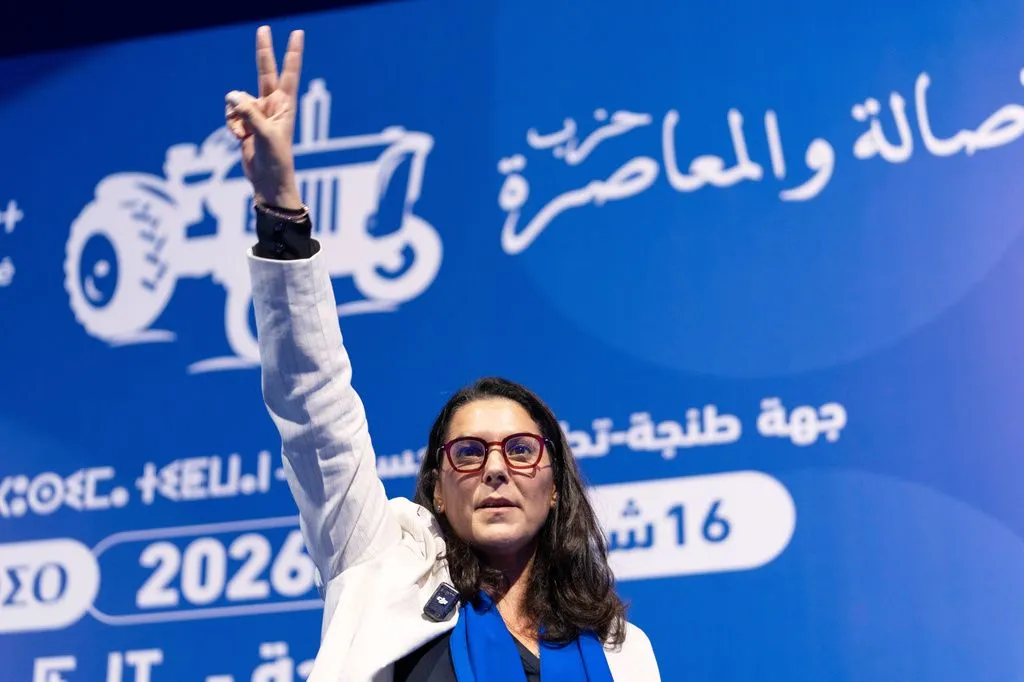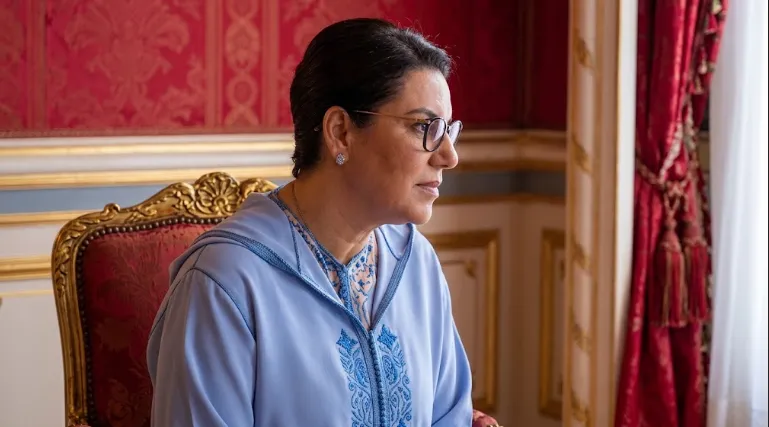

Fatima Zahra Mansouri has opened a groundbreaking chapter in Moroccan political history with her recent appointment as the first woman to head the government. This significant elevation from her previous role as Minister of National Planning, Urbanism, Housing, and City Policy places her at the forefront of executive power, but it also raises numerous questions about her past experiences and her ability to juggle the weighty and multifaceted responsibilities that come with this new position.
King Mohammed VI appointed Mansouri as the Prime Minister and tasked her with forming a new government after the Authenticity and Modernity Party emerged victorious in the September 23 elections, marking a historical first for a woman leading the executive branch in Morocco.
However, behind the powerful political symbolism of her appointment lie four pressing issues that may accompany the beginning of her term and emerge as tests of governance and performance. These issues include allegations of conflict of interest related to a real estate deal involving her family, her performance as head of the Ministry of Urbanism and Housing, the potential conflict of holding both the Prime Minister's office and the mayoralty of Marrakech, and concerns about her capacity to manage the intensive daily responsibilities of the position.
Real Estate Controversy and Governance Challenges
One of the most sensitive issues is the real estate case in Tassalatant, located on the outskirts of Marrakech. Reports have surfaced regarding a 66-hectare plot of land that Mansouri co-owned with her brothers, which was sold in 2023 for over 266 million dirhams. This transaction raises questions about its zoning status at a time when Mansouri was in charge of the urbanism sector. Mansouri has vehemently denied any wrongdoing or favoritism towards her family, asserting that the land was inherited and that its zoning status was determined in 2017, prior to her return to the mayoralty of Marrakech and her appointment as minister. She has also taken legal action against what she claims are defamatory allegations against her and her family.
The director of the urban agency in Marrakech has confirmed that the project related to this land met all legal requirements and went through the usual committees and procedures, denying any exceptional treatment. Nevertheless, the case remains open to questions regarding potential conflicts of interest, given the timing of the family real estate dealings coinciding with Mansouri's political responsibilities over the sector, without any evidence thus far of her personal involvement in the licensing process.
The second challenge relates to her tenure at the Ministry of National Planning, Urbanism, Housing, and City Policy from 2021 to 2026, which was marked by criticisms of her presence, particularly during her absences. During these times, State Secretary Adib Benbrahim took on significant management and institutional representation roles within the sector. Following his appointment in 2024, Mansouri officially delegated extensive powers to Benbrahim, encompassing the housing and real estate recovery department, as well as technical affairs and relations with professionals. This delegation, though legally sanctioned, has fueled discussions about the extent of the minister's involvement in the day-to-day management of the sector, a discussion likely to resurface as she transitions into her role as Prime Minister.
Balancing Multiple Roles and Health Concerns
A third challenge emerges if Mansouri retains her position as the head of the Marrakech municipal council, as she will be required to balance leading the government with managing one of Morocco’s largest cities, which is heavily involved in tourism and investment projects and preparations for major international events.
This scenario echoes the experience of her predecessor, Aziz Akhannouch, who faced repeated criticisms for simultaneously holding the Prime Minister's office and the mayoralty of Agadir, with local opposition highlighting his limited presence in council sessions. According to opposition statistics, Akhannouch attended only six out of 35 council sessions, figures that originated from his political adversaries and not from independent assessments.
Similarly, Abdel Latif Wahbi, Mansouri’s colleague in the Authenticity and Modernity Party and the outgoing Minister of Justice, faced analogous criticisms for juggling his ministerial duties with the leadership of the Taroudant municipality while being accused of limited engagement in field operations. Wahbi defended his record, claiming that serving the city is not solely measured by physical presence but also by the ability to attract funding and projects, although the tangible impacts of such projects remain to be seen.
Lastly, the fourth issue revolves around Mansouri’s health, a topic she herself has addressed. She has previously had to respond to parliamentary inquiries while seated due to a knee issue and acknowledged experiencing neck pain and discomfort in her knee before the elections. However, she asserted that she is in good health and capable of handling her responsibilities, attributing her ailments to the demands of her political, professional, and family obligations.
While these factors do not provide a medical basis for preemptively judging her ability to fulfill her role or predicting its impact on her performance as Prime Minister, they do suggest that the scale of the responsibilities and the pace required by the position will be elements that warrant observation based on her actual performance throughout her term.
As Mansouri steps into the role of Prime Minister, she does so with historical significance as the first woman to hold the post, yet she also carries questions inherited from her previous experiences related to governance, potential conflicts of interest, presence, and time management across her responsibilities. The significance of these issues will be determined by her practical management of them, the degree of separation between private interests and public responsibility, her presence in leading governmental operations, and the choices she makes regarding her continuation or cessation of her role at the helm of the Marrakech municipality.
As reported by lakome2.com.