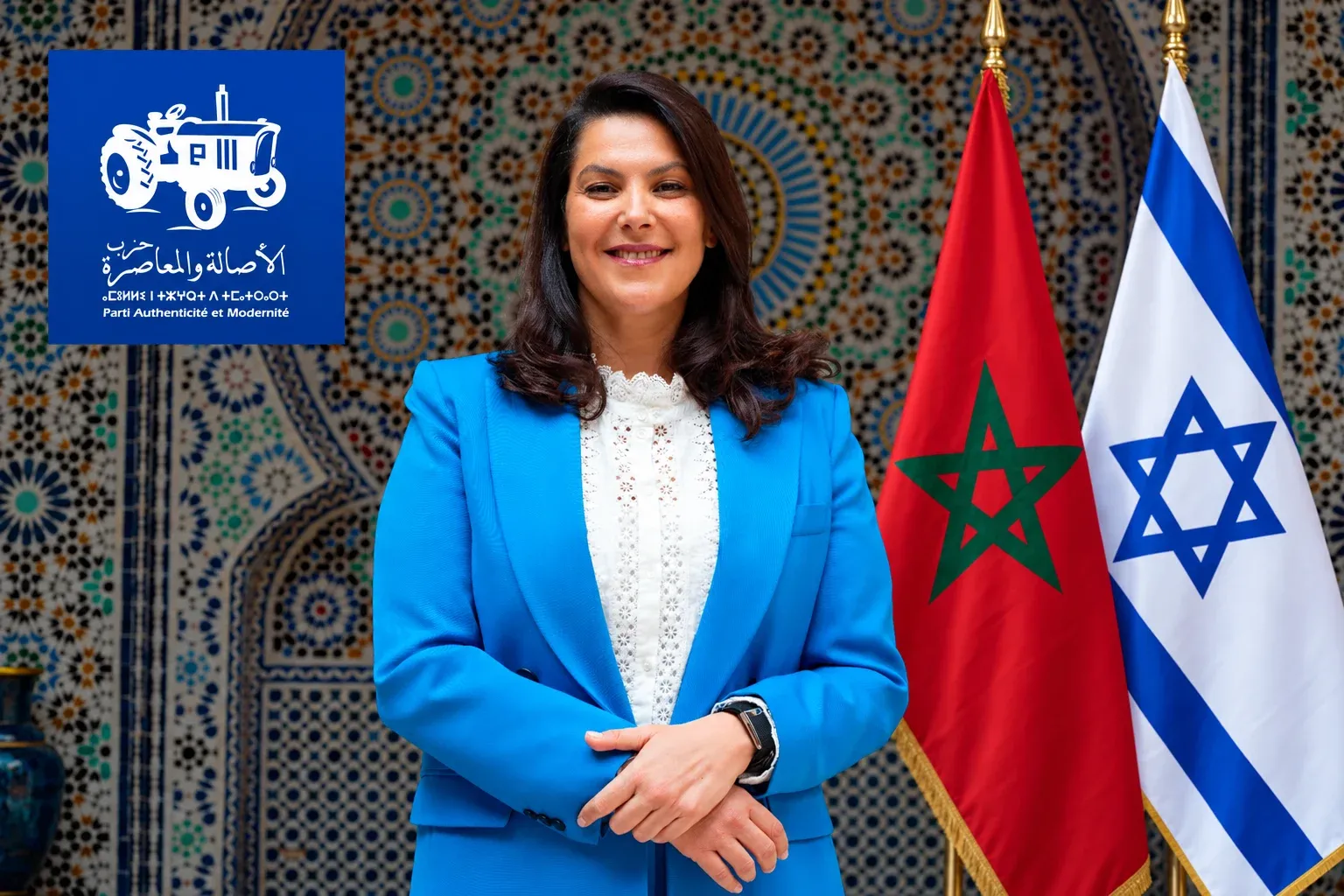

Fatima Ezzahra El Mansouri's recent elevation to the position of Morocco's first female head of government signifies a monumental shift in the political landscape of the nation. Appointed by King Mohammed VI on September 29, following the impressive performance of the Authenticity and Modernity Party (PAM) in the legislative elections held on September 23, her leadership comes at a pivotal moment. However, as she sets out to form a coalition, it is crucial to understand that this political milestone does not inherently alter the dynamics of Morocco's international relations, particularly with Israel.
In recent analyses from Israeli sources, there has been speculation regarding how this political transition might influence Morocco's relationship with Israel, alongside inquiries into PAM's historical connections to Jewish communities and the Israeli state. Conversely, some reports have highlighted the electoral resurgence of the Islamist Justice and Development Party (PJD) and its stance against deepening ties with Israel. While these factors are undeniably important within Morocco's political context, they risk oversimplifying the complexities of the kingdom’s diplomatic strategies when party positions are viewed as the primary determinants of foreign policy. It is vital to recognize that the essence of Morocco's foreign relations is not solely dictated by the governing party in power.
Morocco operates under a dual governance system that features an elected government alongside a robust monarchy. The King holds significant sway over matters of foreign affairs and national security, establishing a clear distinction between the strategic direction of the state and the partisan composition of the government. Understanding this separation is key to grasping why diplomatic commitments can remain intact even when there is a shift in the political party leading the executive branch.
In contrast to political systems where the ruling coalition primarily shapes foreign policy, in Morocco, the elections merely determine which party governs within a framework of enduring royal authority. This distinction underscores the fallacy of projecting expectations from one political system onto another, conflating a party's electoral mandate with a mandate to redefine the nation's international commitments.
A comparison with Spain, another constitutional monarchy, provides further clarity on this matter. Spain’s parliamentary democracy assigns foreign-policy direction to the elected government, as per Article 97, while the King serves as the state’s symbolic representative without independent diplomatic authority. The recent left-wing coalition led by Pedro Sánchez has taken a confrontational approach toward Israel, advocating for Palestinian statehood and imposing an arms embargo, which stands in stark contrast to the positions of the conservative Popular Party (PP) and far-right Vox. As Spain approaches its next general election in 2027, a potential shift towards a PP-led government could open avenues for a more conciliatory relationship with Israel. Here, the ideological composition of the governing majority can directly influence foreign policy, unlike in Morocco, where the monarchy maintains consistent strategic authority across governmental transitions.
Morocco's 2011 Constitution substantiates this structure, designating the King as the guarantor of state continuity and ensuring adherence to Morocco's international commitments. Articles 48 and 49 empower the Council of Ministers, chaired by the King, to deliberate on the state’s strategic orientations, while Article 55 grants the King the authority to sign and ratify treaties. While the government plays a role in foreign policy formulation, as outlined in Article 88, the overarching authority remains with the monarchy.
The appointment of foreign ministers falls within this constitutional framework, as the King appoints government members at the head of government’s suggestion, including the diplomatic minister. However, the government is still expected to engage in discussions regarding treaties prior to their submission to the Council of Ministers. This creates a hierarchy of authority within a system of collaborative institutions, where diplomatic negotiations and agreements take place under the purview of the monarchy's strategic direction.
Notably, the PJD illustrates this principle effectively. On December 22, 2020, Saad Eddine El Othmani, then head of government and PJD secretary-general, signed the Morocco-United States-Israel declaration in the presence of the King. This act of formalizing renewed relations with Israel occurred under a government led by the very party that has since adopted a more oppositional stance toward normalization with Israel, highlighting the disconnect between party ideology and institutional responsibility.
This reality complicates the narrative surrounding Moroccan diplomacy, as evidenced by the Royal Cabinet's reaffirmation of foreign policy as a royal prerogative in response to PJD critiques, emphasizing that the authority over foreign policy lies firmly with the monarchy. The continuity of Morocco's diplomatic framework has persisted through the transition from El Othmani's PJD-led government to the current administration led by Aziz Akhannouch's National Rally of Independents (RNI). As PAM now leads the government, its previous coalition partnership does not disrupt the monarchy's established center of diplomatic authority.
PAM's leadership has actively engaged in fostering relations with Israel. Israeli President Isaac Herzog was among the first to congratulate El Mansouri on her appointment, labeling it a groundbreaking achievement. Furthermore, in July 2022, Abdellatif Ouahbi, then PAM's secretary-general and Morocco’s justice minister, signed a judicial cooperation agreement with Israel, reflecting a commitment toward enhancing bilateral ties. The historical context of PAM's formation by a close royal ally, alongside recent supportive editorial commentary from influential figures advocating for Morocco-Israel relations, indicates a potential for a more favorable stance compared to the PJD's current opposition.
Significantly, the timeline of recent diplomatic developments is critical. Prior to the elections, a trilateral statement on September 16 announced an agreement to elevate Morocco’s and Israel’s diplomatic missions to full embassies, reaffirming U.S. and Israeli recognition of Moroccan sovereignty over Western Sahara while outlining future cooperation. This indicates that the incoming administration is inheriting a diplomatic direction established prior to the election results, underscoring that Morocco’s relations with Israel are intertwined with broader strategic interests beyond party affiliations.
The PJD's potential return to government would not automatically grant it authority over foreign policy if the royal framework remains unchanged. Even with ideological reservations about normalization, it would likely be expected to uphold the existing diplomatic structure, demonstrating that electoral victories do not equate to a transfer of the King’s authority. These distinctions highlight that while foreign policy can influence electoral dynamics, the sovereign power to alter diplomatic relations rests with the monarchy, not the governing party alone.
Moreover, the Royal Cabinet's reaffirmation of Morocco's commitment to the Palestinian cause further illustrates that continuity in foreign policy does not imply unconditional alignment with Israel. The monarchy's approach accommodates relations with Israel while simultaneously advocating for Palestinian rights, emphasizing that these identities are not mutually exclusive within the broader strategic framework.
El Mansouri's historic appointment deserves to be recognized for its significance in Morocco's political journey. However, understanding its implications for Morocco-Israel relations requires careful consideration of how her administration will navigate the existing diplomatic framework and the conditions under which it may be reevaluated. A nuanced assessment of Morocco's foreign relations must transcend party labels, focusing instead on the enduring institutional authority that shapes these vital connections.
As reported by blogs.timesofisrael.com.