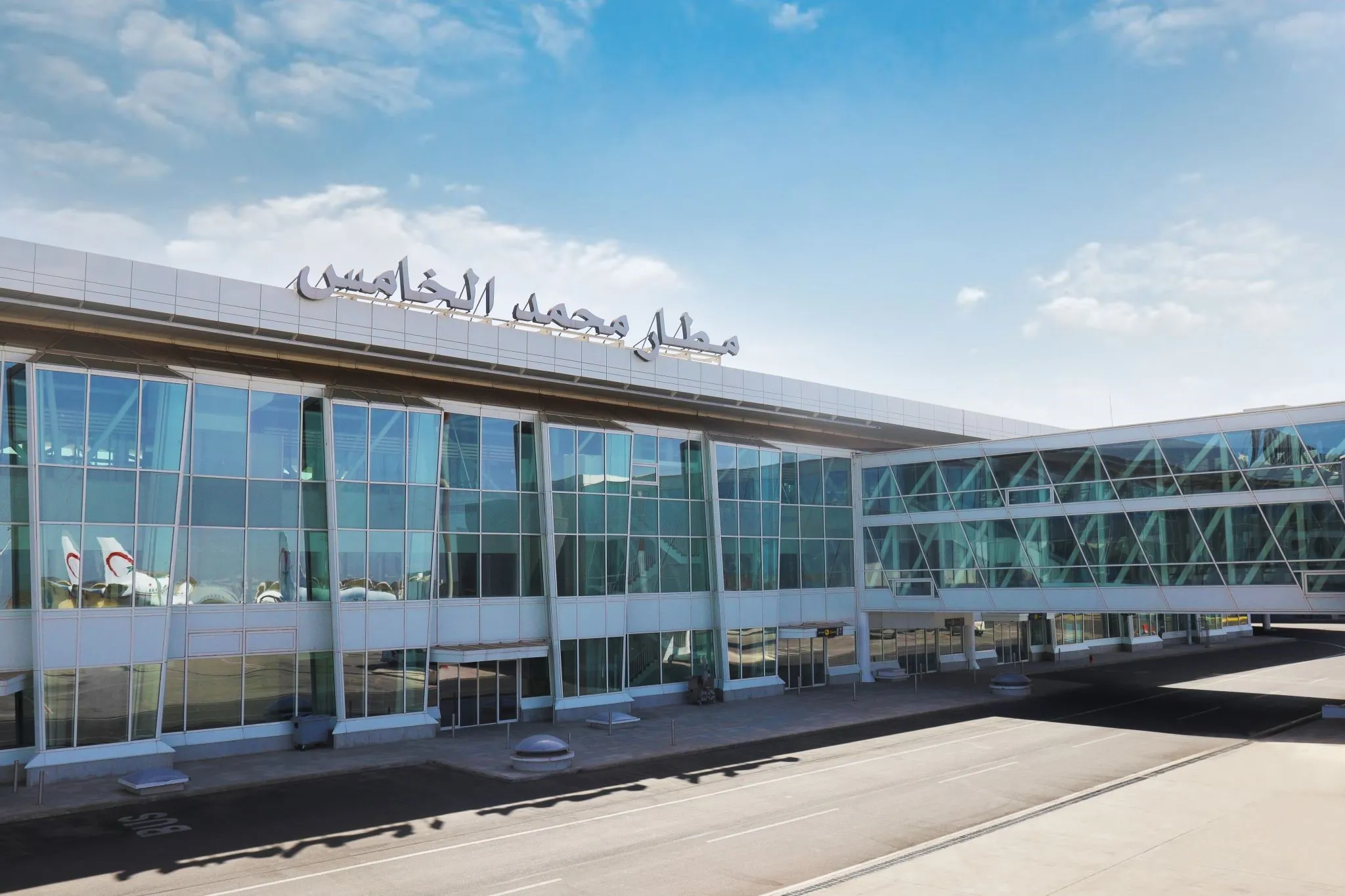

Marrakech – Casablanca’s Mohammed V Airport achieved a remarkable milestone by handling an astonishing 46,439 passengers within a single 24-hour period during the initial weekend of August 2026. This surge has been recognized by Airports of Morocco, previously known as the National Airports Office (ONDA), as a historic achievement, reflecting the growing demand for air travel in the region. This impressive figure is part of the agency's newly released passenger statistics for the summer season of 2026, highlighting the increasing trend in air traffic across Morocco.
The growth in passenger numbers was not confined to Casablanca alone; Marrakech-Menara Airport also made headlines by surpassing 30,000 passengers in a single day. Other airports across the nation contributed to this upward trend, with Rabat-Salé receiving 9,226 travelers, Agadir-Al Massira accommodating 11,973 passengers, and Tangier Ibn Battouta handling 13,309 on their peak days. Notably, Dakhla and Tétouan reported the most significant increases, showcasing impressive surges of 45.2% and 36.14%, respectively, during their busiest days.
This remarkable summer peak continues a trend that was already visible in 2025, when national air traffic soared to an unprecedented 36.3 million passengers. The authorities attribute the levels achieved this season to a structural growth trajectory, suggesting that this upward trend is here to stay. Over the first seven months of 2026, Morocco's airports welcomed a total of 22,282,997 passengers, marking an 8.77% increase compared to the same period in the previous year. International traffic also experienced growth, rising by 8.82% to reach 19,894,489, while domestic travel increased by 8.36%, totaling 2,388,508 passengers. July alone saw airports managing 3,450,846 passengers, demonstrating the sustained demand for air travel.
Casablanca Mohammed V Airport retained its position as the busiest entry point in Morocco, processing 6,953,695 passengers over the first seven months, followed closely by Marrakech-Menara with 6,407,303. European travelers significantly contributed to this international growth, accounting for 16,541,007 passengers, an increase of 9.29%. Aircraft movements also saw a rise, totaling 164,164, up by 9.82%, while air freight reached 66,980.55 tons, representing a substantial gain of 12.61%.
This surge in passenger volumes coincides with Morocco's strategic expansion of its airport network in preparation for the upcoming 2030 FIFA World Cup, which the country will co-host with Spain and Portugal. Under the ambitious "Airports 2030" strategy, Morocco aims to significantly enhance its airport capacity from approximately 34 million to an impressive 80 million passengers annually by 2030. This initiative is backed by a substantial investment of MAD 38 billion ($3.8 billion) as part of an agreement between the government and ONDA covering the years 2025 to 2030.
Central to this expansion is the Casablanca airport, where construction of a new hub terminal commenced in July 2025. This state-of-the-art facility, costing MAD 15 billion ($1.5 billion), is designed to accommodate an additional 20 million passengers annually, thereby increasing the airport's total capacity to 35 million by 2029. Furthermore, Marrakech-Menara is set to double its current capacity from eight million to 16 million passengers, while Agadir-Al Massira is undergoing expansion to handle seven million passengers, up from about three million.
Transport and Logistics Minister Abdessamad Kayouh has linked this expansive program to the preparations for the World Cup and the sustained growth in air transport, a strategy that has received positive feedback from the International Air Transport Association (IATA). Managing the summer rush required extensive coordination among various stakeholders, including Airports of Morocco, the Mohammed V Foundation for Solidarity, the General Directorate of National Security (DGSN), the Customs and Indirect Taxes Administration (ADII), the Royal Gendarmerie, and Royal Air Maroc (RAM).
In light of these developments, the operator has committed to enhancing capacity, modernizing infrastructure, digitizing services, and optimizing travel experiences to align with evolving travel patterns and prepare the network for future growth stages. They are focused on delivering a transformation that matches the increasing traffic levels and aims to fortify the network's capacities, accelerate air connectivity, and enhance airport performance, which is viewed as a critical factor in boosting Morocco’s international appeal.
Furthermore, separate figures released on July 28 indicated that border processing times improved significantly over the first half of 2026. Average passport control times dropped to 3.6 minutes for departures, a decrease of 24%, and to 9.6 minutes for arrivals, down by 22%. Casablanca airport led this improvement with arrival times plunging by 54% to 5.4 minutes and departure times decreasing by an impressive 70% to just 2.25 minutes.
As reported by moroccoworldnews.com.