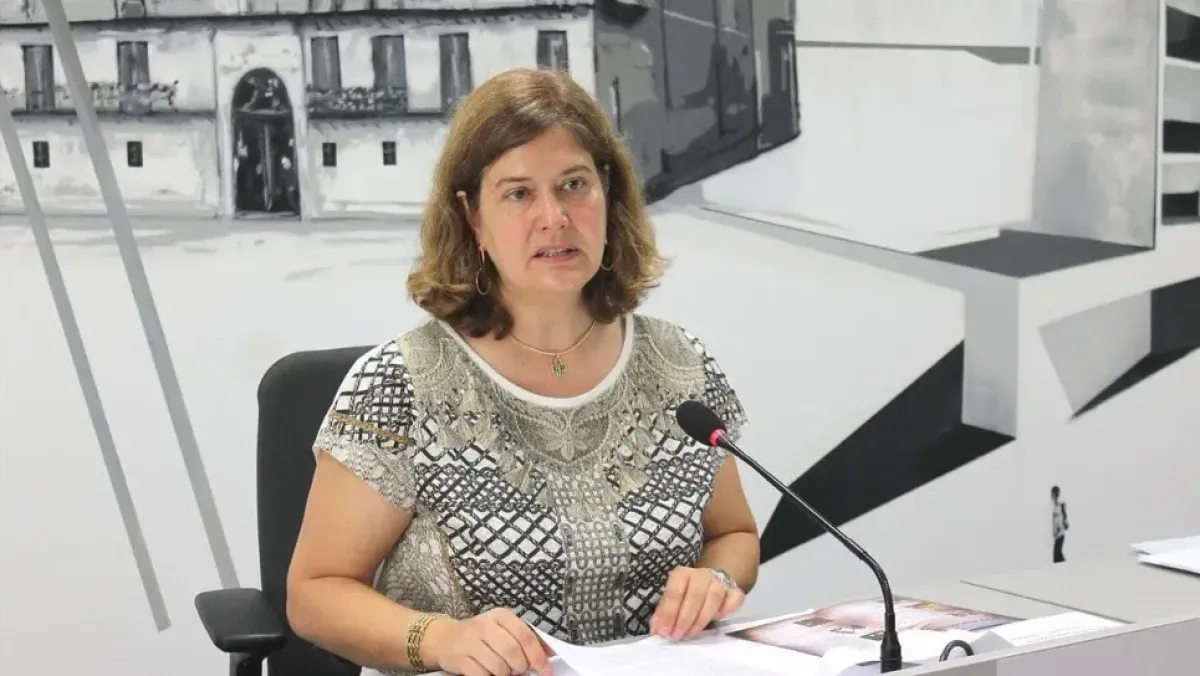

Historian Margarita Torres has made a bold assertion regarding the historical status of Morocco, declaring that the Kingdom of Morocco did not exist prior to 1957. During her recent appearance on the program "La Tarde" on COPE radio, she emphasized the unwavering Spanish claim to the cities of Ceuta and Melilla, stating that these territories have never been Moroccan. With a rich historical narrative spanning over three thousand years, Torres meticulously contrasted the ancient origins of these cities with the modern establishment of the Alaouite Kingdom.
In her analysis, Torres delved into the historical foundations of Spain's claim to Ceuta and Melilla, labeling the assertions made by Moroccan authorities regarding these autonomous cities as "wild fantasies" that lack documentary evidence and historical logic. She insisted that both locations possess a continuous history that transcends the establishment of the modern Moroccan state, emphasizing, "This is the first thing Spaniards must clearly understand: the Kingdom of Morocco did not exist before 1957." Torres contextualized this claim by comparing the ancient Phoenician heritage of both Ceuta and Melilla with the contemporary narrative of neighboring Morocco.
Furthermore, she explored the integration of these sites into "Roman Hispania," particularly as part of the province of "Mauretania Tingitana." Torres pointed out that it was Hispania that governed these cities, not Morocco or North Africa, with Merida serving as the capital. She elaborated on the enduring connections between the Iberian Peninsula and these territories, particularly during the Andalusian era under the rule of Córdoba. Notably, she highlighted how rulers like Almanzor fortified Ceuta in 978, reinforcing the notion that Ceuta and Melilla were under Córdoba's jurisdiction, akin to Granada or Almeria.
From the Green March to the Canary Islands
During her discussion on the declaration of independence of the protectorate (Morocco) in 1956 under Francisco Franco, Torres drew a comparison to the events of the Green March in 1975. She warned that if the residents of Ceuta and Melilla—and all Spaniards—wish to comprehend the current situation in Ceuta, they must study the implications of the Green March of 1975. This historical perspective serves as a critical lens through which to view ongoing border pressures and territorial disputes, which extend beyond North Africa and directly reference the Canary Islands. Torres asserted, in evaluating Morocco's territorial claims and legislative movements, that "Ceuta is the first step, Melilla is the second, and the Canary Islands are the third."
Regarding the strong ties of the local population, Torres stated that residents fiercely defend their sovereignty, as they are acutely aware of the historical connections they have maintained for centuries. However, she criticized the current educational system for its failure to include the province of Mauretania Tingitana in school maps of Roman Spain. In her concluding remarks, Torres stressed the necessity of preserving historical memory and territorial sovereignty in the face of any external strategies or expansionist plans from the Moroccan regime. She resolutely declared on "La Tarde," "We will certainly not lose the Spanish cities of Ceuta and Melilla, which have never been Moroccan."
As reported by elkhabar.com.