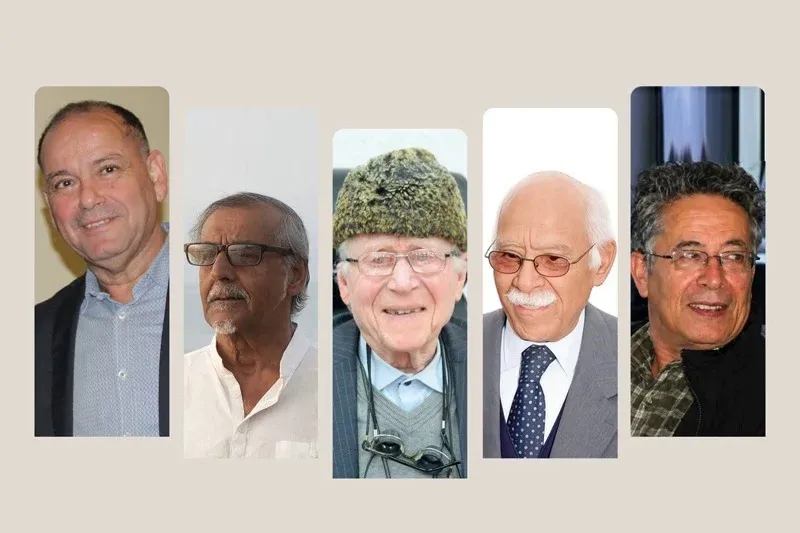

A new exhibition in Casablanca is set to honor the legacies of several prominent Moroccan figures who recently passed away, making significant contributions to literature, philosophy, history, and anthropology. This initiative takes place at the King Abdulaziz Al Saud Foundation for Islamic Studies and Human Sciences, highlighting the profound impact these intellectuals have had on Moroccan culture and academia.
The exhibition serves as a platform to celebrate the writings and achievements of notable individuals such as poet Mohamed Serghini, historian Hamid Taki, philosopher Abdelali Al-Imrani Jamal, anthropologist Abdelrahman Lakhassasi, and historian Lotfi Bouchentouf. Organized by the Al Saud Library in Casablanca, this initiative focuses on showcasing the work and documentary legacy of these honorees through various exhibitions within the foundation's space, alongside the publication of bibliographies that include their books, studies, and translated works in multiple languages.
Philosopher Abdelali Al-Imrani Jamal
The published bibliography on Moroccan philosopher Abdelali Al-Imrani Jamal, prepared by Mohamed Al-Qadri, emphasizes that he was well-versed in Arabic Islamic culture, particularly in language, logic, philosophy, and mysticism, and had a comprehensive understanding of European philosophical heritage. This linguistic mastery enabled him to delve deeply into his research, establishing a notable presence in his field. Al-Imrani Jamal specialized in Islamic Arabic philosophy, beginning his academic journey in French schools and eventually earning a baccalaureate in philosophy in 1964. He continued his philosophical studies at the Sorbonne and the École Normale Supérieure in Saint-Cloud. After obtaining his master's degree, he joined the French National Centre for Scientific Research in 1971 as a researcher, focusing on Arabic translations of Aristotle's Organon and its historical reception in Western Islamic culture. He dedicated nearly four decades to academic work at the center, eventually becoming the director of research.
Furthermore, the late academic contributed to the "Centre for the History of Arabic and Medieval Sciences and Philosophies," directed by Rushdi Rashid and Jean Guillemin, and taught at Paris III and Paris IV universities, as well as the Dar Al-Hekma Institute in Rabat.
Exploring the Contributions of Other Honorees
The exhibition also showcases the work of historian Hamid Taki, a pioneer in the field of social history, particularly known for his groundbreaking research on epidemics and famines in Morocco during the 16th and 17th centuries. Taki was one of the first Moroccan historians to recognize the significance of literary sources as a foundation for writing Moroccan history, especially during the medieval period. His later writings reflected a keen interest in urban history, focusing on cities like Safi, Marrakech, Fez, and Rabat, examining aspects of architecture, crafts, and oral heritage.
Moreover, the exhibition highlights the intellectual journey of poet Mohamed Serghini, a leading figure in modern Moroccan poetry and a significant contributor to literary studies in Moroccan universities since 1963. Serghini's diverse intellectual and literary output spanned poetry, fiction, and literary criticism, and he was known for his translations from French and Spanish, alongside his work on the manuscripts of the Andalusian mystic Ibn Sab'in.
Anthropologist Abdelrahman Lakhassasi is also recognized for his research on Amazigh culture, exploring various themes including poetry, local historical memory, and modern creativity. His work on the philosophy of Ibn Khaldun and his collaborative book with historian Abdelahad Sebti, "From Tea to Atay," reflects their exploration of social and cultural transformations in Morocco.
Lastly, historian Lotfi Bouchentouf's contributions to the historical narrative of Morocco are noted, particularly his innovative approach to religious history and the dynamics of power transitions in Moroccan governance. His work has provided valuable insights into the social history of scholars and jurists in Morocco, contributing significantly to the broader understanding of the country's historical landscape.
As reported by hespress.com.