
Mass Asylum Claims in Ceuta Amidst Ongoing Crisis
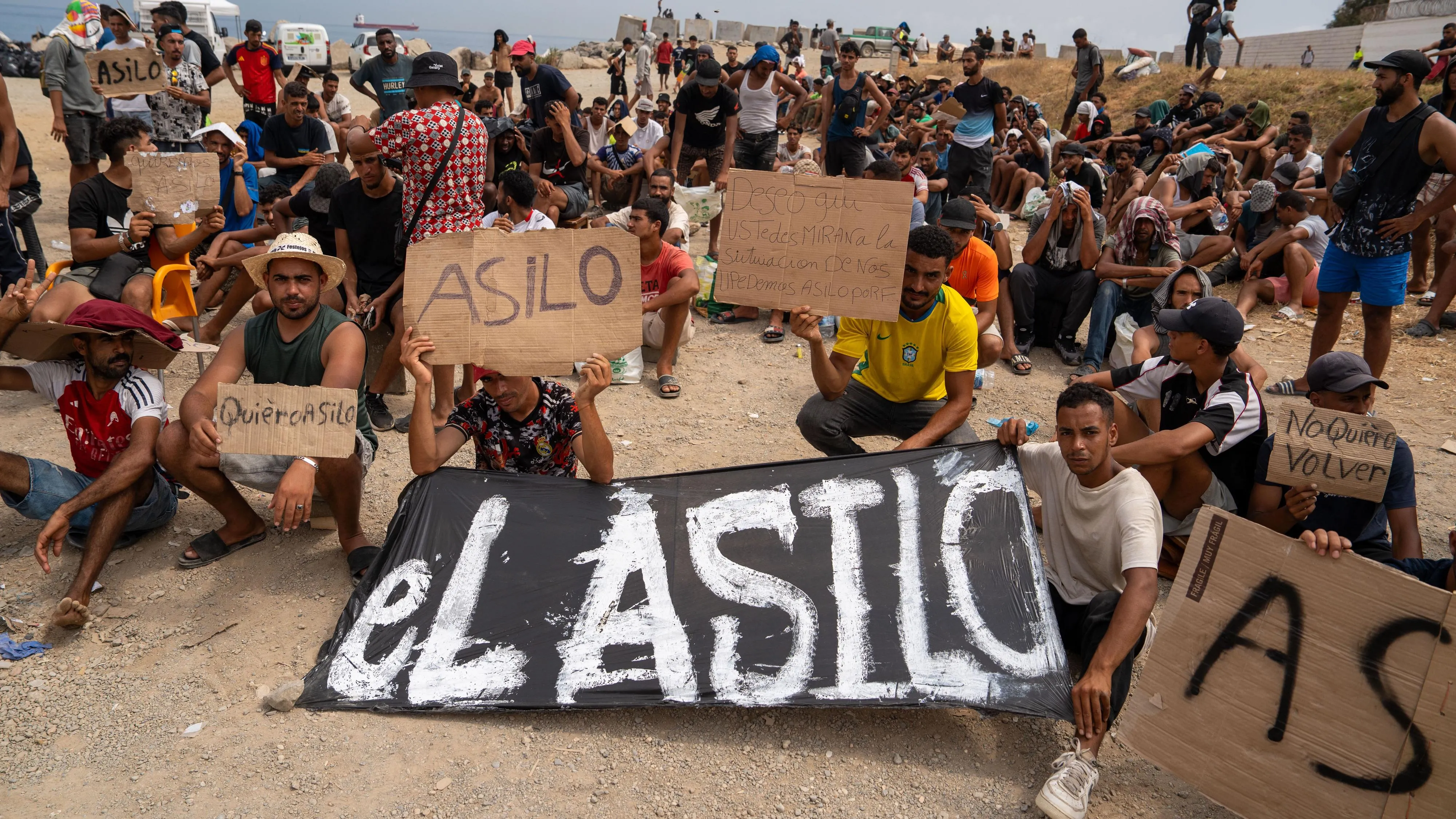
A spontaneous demonstration took place on the beach of Trampolín in Ceuta, where approximately two hundred migrants gathered to assert their right to asylum. This protest comes as a response to the critical situation faced by between 5,000 and 8,000 individuals who have remained in Ceuta following a massive border crossing two weeks ago that saw over 72,000 migrants enter the city.
The migrants showcased banners with powerful messages such as "We do not want to return to Morocco" and "We are also human," while chanting slogans like "We are tired" and "We need a solution." Mohammed Ouanzar, a 39-year-old automation specialist from Fez, Morocco, expressed his desperation, stating, "I would prefer to die rather than go back." He highlighted the dire economic situation in Morocco, where an average salary of 3,000 dirhams (approximately 280 euros) makes it nearly impossible to afford housing or support a family.
Another participant, Emmanuel, a 30-year-old electrician who fled conflict in northeastern Nigeria, shared his harrowing journey, which involved months of travel through Niger, Algeria, and Morocco. His primary motivation was the safety of his children, who had stopped attending school due to fears of abduction. "I fight for a better life for them," he declared.
The makeshift settlement at Trampolín, characterized by tents and precarious structures, has become a temporary home for many migrants awaiting clarity on their fates. Ayoub Elarroud, originally from Tetouan, Morocco, lamented the harsh living conditions, stating, "We sleep by the sea, enduring cold and unpleasant odors. We are suffering greatly." He also mentioned that police have restricted migrants from entering the city center.
Despite being unorganized, this protest allowed migrants to raise their voices and demand the opportunity to apply for asylum in Spain. Meanwhile, various NGOs and support groups provided assistance, helping to create signs and encouraging participants to express their grievances.
Challenges Faced by Migrants and Government Response
In light of the overwhelming number of migrants, Spanish Interior Minister Fernando Grande-Marlaska recently announced that those who have entered irregularly will not be allowed to remain in Ceuta or travel to mainland Spain. He affirmed that no individual who enters or attempts to enter Ceuta or Melilla irregularly will be allowed to stay or will be regularized, emphasizing efforts to combat the influence of human trafficking networks.
As the situation unfolds, the plight of thousands of migrants remains precarious, with many hoping for a chance to continue their journey to mainland Europe. The ongoing humanitarian crisis in Ceuta highlights the pressing need for effective migration policies and support systems to address the challenges faced by those seeking asylum.
As reported by rtve.es.