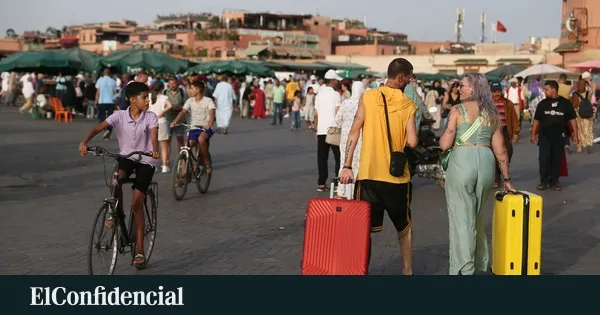

The allure of Morocco as a tourist destination has been on the rise, but a significant downturn has emerged since the end of July. The pivotal factor in this change is the situation in Ceuta, which has caused a dramatic spike in last-minute cancellations of over 80%, according to Carlos Abella, the Secretary General of the Tourism Board, as reported by travel agencies affiliated with this organization. This downturn is not just a short-term issue; forecasts indicate that the Spanish tourism sector in Morocco is unlikely to recover before the end of the year. Abella notes, “It is affecting our tourism businesses, and I lean towards the idea that it is more about insecurity than a patriotic sentiment. Tourists seek tranquility, and any perception of conflict with neighboring countries makes them hesitant to visit.”
The decline in reputation and investor confidence in Morocco is likely to hinder tourism growth in the neighboring country. As Abella states, “Visitors prefer to travel to places where they can avoid problems, given that they already face enough challenges throughout the year.” Despite concerns, he does not expect significant implications for other markets, such as the rapidly growing American tourist demographic in Morocco.
José Luis Sánchez Ollero, an Applied Economics professor at the University of Malaga and an expert on Moroccan affairs, travels regularly to Morocco and leads research projects involving Moroccan students. More than a decade ago, Morocco emerged as a favored destination for Spanish tourists, thanks to its exotic appeal, geographical proximity, and favorable currency exchange rates. In 2025, 3.8 million Spaniards visited Morocco, an increase from 3.5 million in 2024. Efforts by El Confidencial to gather additional data from the Moroccan Tourism Office in Madrid and Malaga regarding projections for 2026 and the impact of this summer yielded no responses.
Sánchez Ollero highlights that the hedonic tourist, who is fundamentally a consumer, tends to avoid risks and prefers not to travel until the situation stabilizes. The marketing materials for Morocco’s imperial cities, such as Fez and Marrakech, are readily available across many Spanish cities, and there are at least twenty national travel agencies and tour operators specializing in Moroccan trips.
According to data from Spain's National Statistics Institute (INE), Spanish tourists spent €280 million in Morocco in 2024, up from €369 million in 2025, representing a 31.80% increase. This information is derived from banking transactions made via cards by Spanish residents during their travels abroad, including in-person payments and cash withdrawals. The average daily tourist expenditure for Spanish visitors in Morocco reached €120.23 in 2025, an increase from €101.60 in 2024.
José Manuel Lastra, the new president of the Spanish Confederation of Travel Agencies (CEAV) and director of Viajes Triana in Seville, acknowledges a “detraction” of reservations towards Morocco but does not observe widespread cancellations, especially considering that tourists from Latin America frequently include Morocco in their travel itineraries to Spain. He emphasizes that travel can and should continue, noting a 10% increase in bookings in the Agadir region, while decreases in Marrakech stand at 5.6%, with Rabat and Tangier-Tetouan seeing declines of 1% to 2% compared to the summer of 2025. Lastra believes that while the Ceuta situation may impact tourism products related to Morocco, the overall activity in the region can be maintained without issues due to its competitive pricing and unique cultural appeal.
Sánchez Ollero advocates for clearer communication from the Spanish government regarding the relationship between Spain and Morocco, indicating that uncertainty stemming from a lack of information is what keeps potential travelers at home. He believes it is crucial that the internal crises in Spain do not escalate into a wider crisis between the two nations.
Barceló Hotels, the Spanish hotel chain with the most significant presence in Morocco, regards the country as a "strategic market". Officials from the Mallorca-based company assert that their hotel bookings in Morocco are within the usual range for this time of year, despite the crisis in Ceuta. Currently, the chain operates nine hotels across six cities, including Agadir, Casablanca, Fez, Marrakech, Rabat, and Tangier, under four brands catering to both urban and holiday markets.
The recent opening of the Royal Hideaway Casablanca marks the brand’s inaugural establishment in Morocco and Africa, reinforcing the company's commitment to one of the most dynamic tourist markets in North Africa. Barceló plans to reopen four hotels in three cities—Rabat, Agadir, and Fez—over the next few years.
Meanwhile, RIU Hotels has stated that the situation in Ceuta has had no direct effect on their operations or occupancy rates in Morocco, primarily because the Spanish market is not one of their most significant sources for this destination. With over 20 years of experience operating in Morocco alongside a local partner, the Tikida group, RIU has six establishments across the country, all offering all-inclusive services.
Although Meliá Hotels International has a minimal presence in Morocco with only two hotels in Marrakech, the country remains highly accessible by air and sea. The president of the Spanish Confederation of Travel Agencies emphasizes that Morocco, with its historical cities, beaches, and deserts, is increasingly in demand among travelers.
Royal Air Maroc, the national airline of Morocco, has connected nine Spanish cities to five Moroccan destinations this year and aims to enhance connectivity between major national destinations and key European markets. The airline transported 480,000 passengers between Spain and Morocco in 2025. Other major airlines serving the Spain-Morocco route include Iberia Express, Air Europa, Vueling, Ryanair, and EasyJet. According to Aena data, there was a 16.7% increase in passengers traveling from Spanish airports to Morocco last year, raising questions about this year’s figures and the potential impact of the Ceuta crisis.
As reported by elconfidencial.com.