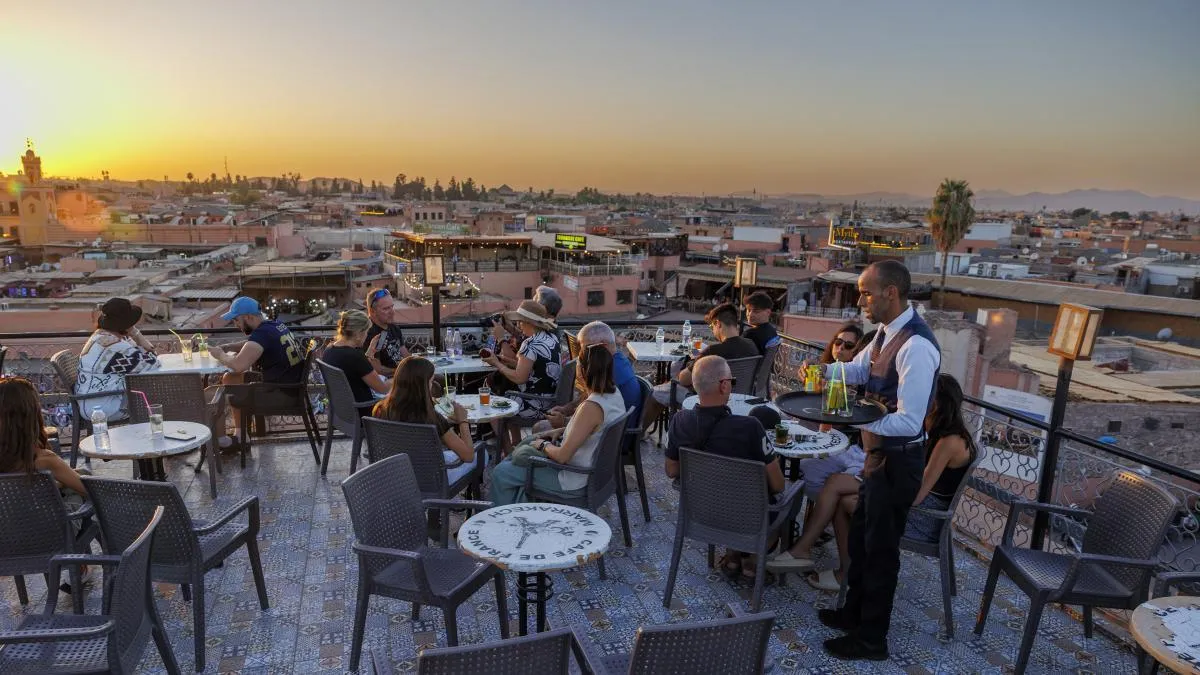

The ongoing migration crisis in Ceuta, coupled with Morocco's involvement, has severely impacted the flow of tourists from Spain to the North African nation. The tourism sector is witnessing a notable decline in bookings for the last quarter of the year, with numerous cancellations of pre-arranged trips. Carlos Abella, Secretary General of the Tourism Table, has indicated that cancellations may reach as high as 80% for September, which coincides with Morocco's peak tourist season. He remarked, "The situation is very complicated, both in the short and medium term."
On the other hand, the Spanish Confederation of Travel Agencies (CEAV) emphasizes that their concerns are less about cancellations of existing reservations and more focused on the slowdown of new bookings. They observe the current situation with apprehension, closely monitoring developments and expressing hopes for a swift resolution to the situation in Ceuta, which would allow for a return to normalcy in tourism activities.
Spain's Critical Role in Moroccan Tourism
Spain stands as the second-largest source of visitors to Morocco, trailing only France. The Moroccan National Tourist Office (ONMT) estimates that over four million individuals from Spain visited Morocco in 2024, with projections increasing to 4.2 million by November 2025, accounting for approximately 23% of international arrivals. However, not all these trips can be attributed to Spanish tourists alone. A portion of these journeys is undertaken by Moroccan expatriates residing in Spain who return to visit family or manage personal affairs. More stringent statistics from Morocco's Tourism Observatory recorded around 1.5 million Spanish tourists in 2024, highlighting the discrepancies between different measurement sources, where some track travelers by origin and others by nationality.
In recent years, Morocco has experienced significant growth in its tourism sector, welcoming 19.8 million visitors in 2025—a 14% increase over the previous year, according to the Moroccan Ministry of Tourism. Revenue associated with tourism reached approximately 116.2 billion dirhams (around €10.6 billion) in 2024, representing a 38.4% increase compared to 2019 in nominal terms. Consequently, the travel sector now constitutes approximately 7.3% of Morocco's GDP, on par with remittances sent by Moroccans living abroad. Furthermore, this sector generates around 8.2% of employment and accounts for nearly 41% of service exports, as reported by the OECD. Thus, the slowdown of its second-largest source market poses a threat to this vital sector for employment and foreign currency influx.
The increasing attractiveness of Morocco as a destination has prompted several Spanish hotel chains to bolster their presence there. The Barceló Hotel Group operates eleven properties across various Moroccan cities, including Casablanca, Tangier, Fez, Marrakech, Rabat, and Agadir. Despite the downturn in demand from Spain, the company has stated that it has not yet detected any adverse effects on its business. They noted, “Booking levels in our Moroccan hotels remain within the typical range for this period.” The international nature of the clientele explains this resilience, as these hotels attract not only Spanish travelers but also tourists from France, the UK, Germany, Italy, and other markets, alongside Moroccan customers. Thus, a decline in Spanish sales may not immediately correlate with a drop in overall hotel occupancy rates.
Similarly, Riu Hotels has provided a comparable assessment, asserting that the events in Ceuta have had "no direct effect" on occupancy or operations at their properties, largely because Spain does not represent one of their most significant markets for this destination. Riu has been present in Morocco for over twenty years in partnership with the local Tikida group and operates six hotels in the region. The chain is committed to its expansion in Morocco, having reformed the Riu Palace Tikida Agadir in 2025 and planning to renovate the Riu Palace Tikida Taghazout by the summer of 2027.
Airlines have also made significant investments in Morocco, with Ryanair establishing operational bases in Marrakech, Fez, Agadir, Tangier, and, as of this year, Rabat, deploying sixteen aircraft. The airline connects numerous Spanish airports to Moroccan destinations and has even expanded its domestic network within the kingdom. Vueling has concentrated its growth in Barcelona, offering direct flights to Marrakech, Tangier, Agadir, Essaouira, Nador, and Fez.
To date, neither hotel chains nor airlines have announced any structural changes to their plans. The sector believes that the duration of the current crisis will determine whether the recent slowdown in Spanish bookings represents a temporary issue or if it will begin to impact occupancy rates and investments in one of the Mediterranean’s most rapidly growing tourism markets.
As reported by lavanguardia.com.