
Historic Graduation of the African Lion Drone Academics
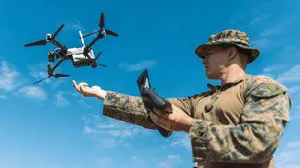
Agadir, Morocco, recently witnessed a significant milestone with the graduation of over 20 service members from four nations, marking the successful completion of the inaugural African Lion drone academics class. This unique training event, which took place at the Southern Zone Headquarters on May 5, equipped participants with essential skills in cost-effective small unmanned aircraft systems (sUAS) as part of U.S. Africa Command’s largest annual joint exercise, overseen by the U.S. Army Southern European Task Force, Africa (SETAF-AF). The diverse cohort included military personnel from Ghana, Morocco, Nigeria, and the United States, all collaborating to enhance their operational capabilities against persistent security threats.
Empowering Forces through Innovative Training
The drone academics program served as a dynamic fusion center for both training and technology, exemplifying the U.S. Army's ongoing transformation initiative aimed at fostering innovation from the ground up. This initiative emphasizes equipping service members with advanced skills and capabilities. According to Secretary of the Army Dan Driscoll, the importance of providing the necessary tools to warfighters and observing their practical application cannot be overstated. The drone academy embodies this philosophy, with U.S. Soldiers training alongside international partners, enhancing their operational effectiveness and sharing valuable lessons within their respective military formations.
The training comprised two concurrently held courses: an eight-day sUAS planner course and a 10-day sUAS operator course, conducted by expert instructors from the 7th Army Training Command. Participants from the U.S. included members of the 173rd Airborne Brigade and the Utah Army National Guard's 19th Special Forces Group (Airborne). The sUAS planner course was designed to impart knowledge on the integration of sUAS into broader military maneuvers, focusing on critical areas such as airspace management, multidomain integration, and synchronization of intelligence, surveillance, and reconnaissance operations. The rigorous curriculum enabled planners to develop actionable strategies and conduct mission rehearsals, culminating in their ability to effectively incorporate sUAS operations into tactical frameworks.
Meanwhile, the sUAS operator course provided service members with hands-on training in planning, operating, and maintaining sUAS in tactical settings. This course emphasized real-time reconnaissance capabilities, emergency response, and various operational considerations essential for effective mission execution. As explained by U.S. Army Sgt. 1st Class Derrick Guyton, participants engaged in comprehensive training that included practical applications across multiple systems, ensuring they were well-prepared to handle a range of operational challenges.
One of the standout features of the training was the integration of a live drone feed into the combined joint task force innovation cell, showcasing the potential of real-time imagery for both training and operational purposes. This capability is instrumental in enhancing situational awareness and refining the operational process, ultimately contributing to a more effective and responsive military framework. U.S. Army Gen. Christopher Donahue, commanding general of U.S. Army Europe and Africa, remarked on the significance of partner forces leveraging emerging technologies collaboratively to address their unique security challenges. This initiative not only strengthens individual military capabilities but also fosters regional stability and security.
Morocco's conducive training environment, characterized by its open electromagnetic spectrum, unobstructed airspace, and realistic combat terrain, plays a crucial role in facilitating training that is challenging to replicate elsewhere. As Guyton noted, operators are departing with the ability to plan missions, pilot various platforms, and provide commanders with critical real-time reconnaissance data, while planners are equipped to seamlessly integrate sUAS operations into broader military strategies.
Looking ahead, the drone academics program is poised to expand and evolve, reinforcing shared security interests through sustainable, partner-led solutions. The African Lion exercise continues to serve as a premier platform for multinational training and innovation, reinforcing the commitment to collaborative security efforts across the region.
As reported by dvidshub.net.