
Mohammed VI Tower: A Symbol of Modernity and Sustainability
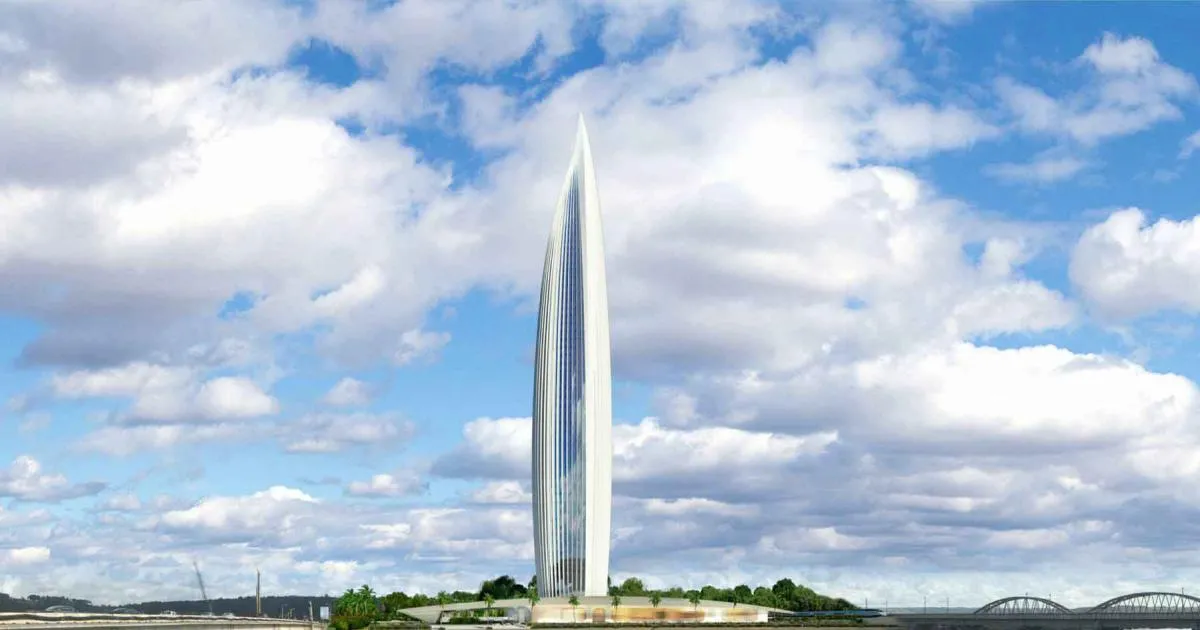
Morocco has officially inaugurated the Mohammed VI Tower, now recognized as the tallest building in the country, marking a significant advancement in the nation's urban development strategy. This landmark project, which was unveiled by Crown Prince Moulay El Hassan, stands at an impressive 250 meters and consists of 55 stories, elegantly situated along the banks of the Bouregreg River. The tower symbolizes Rabat's ambitious transformation into a modern capital that is not only connected globally but also enhances its cultural, economic, and investment appeal as part of the broader "Rabat, City of Light" initiative, which seeks to integrate the city more closely with its neighboring Salé.
The tower's striking architecture has rapidly become a dominant feature of Rabat's skyline, visible from distances of up to 50 kilometers. This ambitious structure embodies a dual mission: to project a sense of modernity while preserving Morocco's rich national identity. Its design ingeniously merges advanced engineering techniques and international architectural standards with traditional Moroccan materials, culminating in a breathtaking panoramic heritage observatory that bridges the gap between the contemporary and the historical aspects of the twin cities.
A Multifunctional Urban Ecosystem
Covering an expansive area of approximately 102,800 square meters, the Mohammed VI Tower encompasses a diverse array of high-end functions, including a luxurious Waldorf Astoria hotel, premium office spaces, upscale residential units, and commercial facilities, all supported by a four-level podium and 36 elevators. Officials have stated that the project aims to create a high-value urban ecosystem that attracts investment, tourism, and business activities, aligning with Morocco's goal of positioning itself as a strategic gateway between Africa and Europe.
Beyond its commercial aspirations, the Mohammed VI Tower also highlights Morocco’s commitment to sustainable development. The building's façade is equipped with photovoltaic panels designed to minimize energy consumption, while systems for rainwater harvesting, wastewater recycling, and energy recovery are implemented to enhance overall efficiency. Additionally, a rooftop solar installation and advanced environmental designs aim for the tower to achieve LEED Gold and HQE certifications, positioning it among the most environmentally advanced structures on the African continent.
Developed by O Capital Group, and constructed by a joint venture between BESIX and TGCC, this ambitious project represents an investment of approximately 4 billion Moroccan dirhams (around $432 million). Construction commenced in late 2018 and was completed in March 2026, involving complex engineering processes to ensure resilience against seismic activities and environmental challenges.
Analysts observe that the tower reflects a larger national strategy wherein significant infrastructure projects act as catalysts for economic growth, while also serving as instruments of strategic positioning. By intertwining sustainability and cultural identity into such flagship developments, Morocco aims to distinguish its urban model from conventional high-density or purely commercial projects. Moreover, the initiative carries political importance, aligning with the long-term development agenda championed by King Mohammed VI, with the Crown Prince’s inauguration underscoring a continuity of leadership and vision.
Despite these grand ambitions, the long-term impact of the Mohammed VI Tower will ultimately hinge on its ability to deliver tangible benefits beyond mere symbolism. Critical questions linger regarding its contribution to inclusive growth, job creation, and overall urban integration, particularly as Morocco continues to navigate regional competition alongside domestic socio-economic challenges.
For the time being, the Mohammed VI Tower stands as a bold statement of intent—a reflection of Morocco’s aspirations to project confidence, innovation, and environmental responsibility, all while anchoring its future at the delicate intersection of tradition and transformation.
As reported by middle-east-online.com.