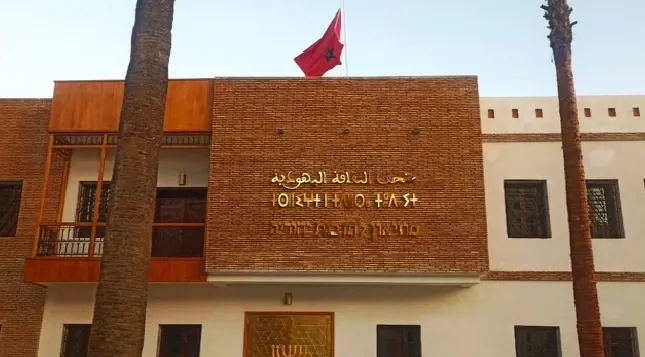

In a significant cultural event, the Museum of Moroccan Jewish Culture was inaugurated in Fez, following the command of His Majesty King Mohammed VI. This new museum serves as a dedicated space aimed at preserving and promoting one of the fundamental components of Morocco's national heritage, encompassing its diverse historical, cultural, and spiritual dimensions.
This initiative aligns with the royal vision that places central importance on preserving and valuing the various tributaries of Moroccan identity in its diversity and integration. The inauguration ceremony was attended by prominent figures, including Ahmed Toufiq, Minister of Endowments and Islamic Affairs, Serge Berdugo, President of the Moroccan Jewish Cultural Heritage Foundation, Mehdi Qatbi, President of the National Museums Foundation, and Khalid Ait Taleb, the Wali of the Fez-Meknes region, along with several ambassadors and distinguished personalities.
Located in the heart of the Mellah district of Fez, this cultural landmark allows visitors to explore the long-standing history of Jewish presence in Morocco, which spans thousands of years. The museum showcases a diverse array of heritage and religious artifacts, everyday items, archaeological finds, ethnographic pieces, and rare archives, books, and manuscripts from the Moroccan Jewish community.
During the ceremony, Minister Ahmed Toufiq emphasized that the opening of this museum embodies Morocco's commitment to values of coexistence and respect for shared values, even during uncertain times. This initiative, rooted in history, looks forward to the future while carrying a message that encourages the embrace of life and the fostering of cultural rapprochement.
Moreover, the minister pointed out the symbolic dimension of this initiative, as it contributes to enhancing understanding among various communities and highlighting the diversity of Moroccan Jewish culture, particularly in its linguistic expressions. He stressed the importance of recognizing human differences and the capacity for cohabitation while respecting common values, in harmony with the spiritual reference of the kingdom.
Serge Berdugo elaborated that the museum serves as a space for knowledge, memory transmission, and dialogue, showcasing the richness of Moroccan civilization and the contributions of its diverse components to the building of a shared heritage. He noted that this museum is part of the royal vision aimed at safeguarding and promoting national heritage while recognizing the multiple tributaries of Moroccan identity, asserting that cultural diversity is a fundamental aspect of national identity.
Berdugo expressed that the Moroccan experience serves as an inspiration in a world facing challenges that test societies' ability to coexist. He added that understanding others, respecting differences, and recognizing shared legacies are all factors that contribute to building a society based on peace and dialogue.
Mehdi Qatbi described the museum as a "hymn to peace, brotherhood, coexistence, and shared living." He affirmed that "Fez sends a powerful message to the world during these difficult times," highlighting the symbolic significance of this museum, which embodies the richness of Morocco's multifaceted identity and the contributions of its various components to a shared history.
Additionally, he pointed out the museum's proximity to the Museum of Islamic Arts located in the Batha neighborhood, which is only a short distance away. He considered this proximity a natural and harmonious dialogue between the two spaces, reflecting the richness and diversity of Moroccan heritage.
His Majesty King Mohammed VI had initiated the construction of the Museum of Moroccan Jewish Culture during his visit to Fez in April 2019, as part of a program aimed at rehabilitating the ancient city and valuing its historical legacy. This initiative also coincided with the launch of restoration works for the Batha Palace, transforming it into a museum of Islamic arts, which will open to the public in 2025.
The Museum of Moroccan Jewish Culture is established on a property donated by the Jewish community in Fez, within the Mellah neighborhood, whose foundation dates back to 1438. This historic neighborhood is one of the oldest organized Jewish quarters in Morocco, providing the museum with a unique character as it integrates into the architectural, urban, and religious environment that shaped the lives of the Jewish community in the city.
The construction and preparation works, carried out by the Development and Rehabilitation Agency of the City of Fez, covered a total area of over 1,700 square meters, with around 1,200 square meters dedicated to exhibition spaces. The construction was completed in March 2023.
The architectural design of the building celebrates the features of traditional Moroccan craftsmanship, especially zellij, carved plaster, and colored wood, which are clearly manifested in the internal reception area that features a marble fountain at its center.
The museum's permanent exhibition spans two levels, recovering various dimensions of Moroccan Jewish culture by providing a comprehensive view of social, cultural, economic, and spiritual history beyond merely displaying religious artifacts.
The museum's pathway is organized around several themes, including "Morocco, Land of Encounter," historical landmarks, a chronological sequence of events, community institutions, prominent figures, life stages, and religious occasions throughout the year, as well as traditional crafts.
The ground floor timeline offers a glimpse into over 2,500 years of Jewish presence in Morocco, starting from the earliest historical evidence to modern times, including the establishment of the Mellah of Fez and the arrival of Jews expelled from Spain in 1492.
Furthermore, the museum dedicates significant space to Jewish holidays and the intangible heritage associated with them, especially family traditions, religious practices, music, crafts, and skills passed down through generations.
As reported by maghribona24.com.