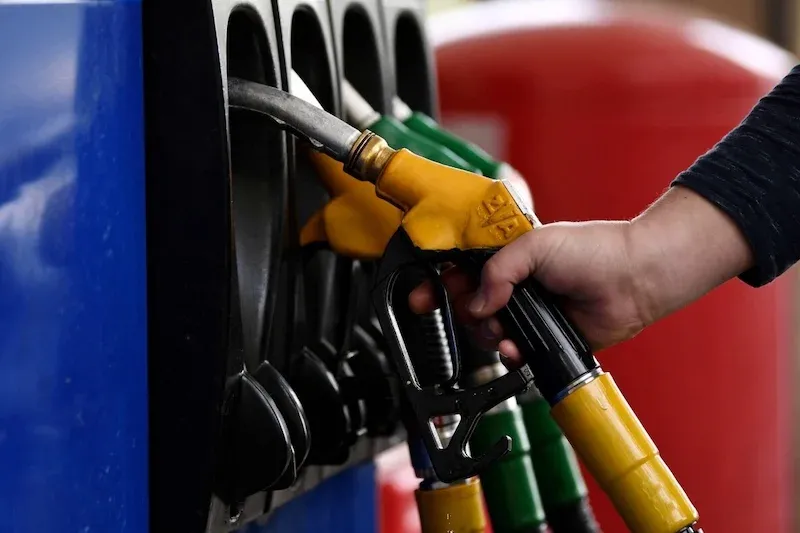

Diesel Prices to Rise in Morocco While Gasoline Remains Unchanged
Beginning September 1, 2026, diesel prices in Morocco will experience a modest increase of 0.06 dirhams per liter, while gasoline prices are set to remain unchanged, as confirmed by the Federation of Station Operators. This price adjustment comes in light of recent fluctuations in global oil prices, which saw a noticeable decline in the past week.
On August 24, 2026, Brent crude oil futures closed at $92.17 per barrel, marking a decrease of 2.35%. Meanwhile, West Texas Intermediate (WTI) dropped by 2.35% to settle at $85.01. According to reports from Reuters, investors took profits following recent gains, opting to overlook the new U.S. sanctions on Iran. This decline followed two consecutive weeks of price increases that saw gains exceeding 5% in the preceding week, driven by ongoing complications in peace negotiations between the United States and Iran, alongside constraints on oil shipments through the Strait of Hormuz.
On August 25, crude oil prices continued their downward trend, with Brent stabilizing at $88.58 per barrel, down 3.9%, and WTI closing at $82.36, reflecting a 3.1% drop. Reuters noted that this level represented the lowest in more than a week, attributing the reduction to diminished economic pressure on Iran, which is seen as less of a threat to supply than military escalation. As reported by Bloomberg, Brent experienced a further decline of nearly 4%, dipping below $89, while WTI remained above $82, buoyed by renewed diplomatic efforts suggesting a potential easing of tensions regarding Iran.
On August 26, prices continued to fall following discussions between Iran and Oman concerning the Strait of Hormuz, with Brent pegged at $87.84 per barrel, down 0.84%, and WTI at $82.23, down 0.16%. The session saw both crude grades hit their lowest levels since August 10. Bloomberg indicated that Brent was trending towards dipping below $87, with WTI nearing $81, as negotiations about a temporary framework for resuming shipments through the Strait of Hormuz were being discussed.
By August 27, oil prices rebounded as hopes for a return to previous ceasefire agreement conditions between the U.S. and Iran diminished; Brent rose to $89.70, up 2.1%, and WTI increased by 1.6% to $83.53, marking the end of three consecutive sessions of declines. However, by the following Friday, prices reverted back to a downward trajectory, as Brent fell by 0.43% and WTI by 0.16%, closing the week with losses exceeding 5% for Brent and over 4% for WTI. Reuters linked this to expectations surrounding U.S. monetary policy and the possibility of an agreement to reopen the Strait of Hormuz, where shipping traffic remained inconsistent.
As the week concluded on August 30, Brent was on track for a weekly loss of 5.3%, with WTI at 4.3%, reflecting trading close to $89.10 and $82.89, respectively, according to the same sources.
As reported by hespress.com.