Ceuta Prepares for Rising Number of Migrant Bodies
According to reports from the Spanish newspaper "El País," authorities in the city of Ceuta have set up a local morgue to accommodate approximately 200 bodies as ongoing search and recovery operations continue in the waters following a recent surge in irregular migration. Currently, the morgue holds 88 bodies, which exceeds the official toll of 72 announced by the Spanish government's representative in Ceuta, Miguel Ángel Pérez Triano. It is important to note that not all bodies in the morgue necessarily belong to individuals who attempted the mass crossing this week; some show signs of decomposition, indicating they may have been in the water for an extended period.
In a related report from the Spanish news agency "EFE," security sources revealed on Sunday that the return of irregular migrants from Ceuta to Morocco is still ongoing. The death toll of migrants attempting to cross from Morocco to Ceuta has now risen to 72 individuals. Furthermore, around 73,500 irregular migrants have returned to Morocco from Ceuta since July 30, with this figure possibly including migrants who entered the city before that date.
Calm Resumes in Fnideq After Migration Surge
As the situation unfolds, the city of Fnideq in northern Morocco is gradually returning to normal after four days of mass irregular migration towards the Spanish-administered city of Ceuta. Calm has been returning to Fnideq, where Moroccan authorities have provided dozens of buses to transport returning migrants to their original cities. In an effort to prevent further attempts at crossing, police have intensified their measures around the Tarajal border crossing, deploying security personnel along the coastline of Fnideq. Additionally, the border crossing between Beni Ansar (in the north) and Melilla has seen increased security enhancements in anticipation of any collective swimming migration attempts across the Mediterranean Sea.
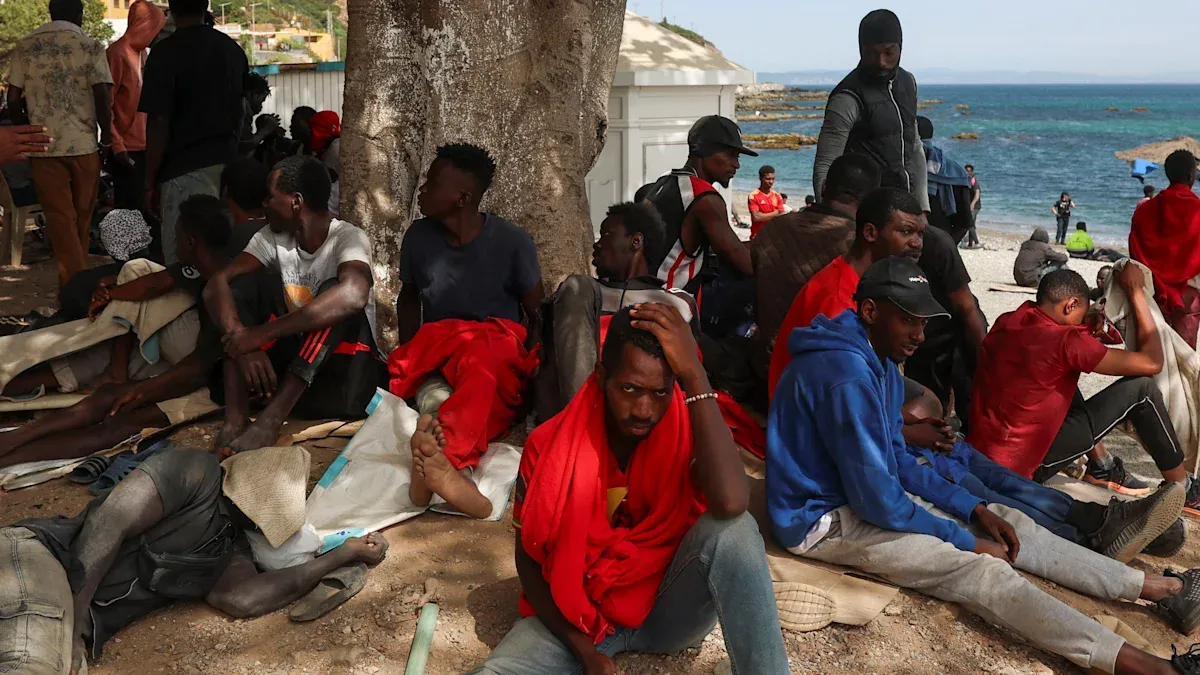
This surge in migration attempts follows confrontations between hundreds of young individuals seeking to migrate irregularly and Moroccan security forces at the crossing point. The Spanish news agency "EFE" reported on Saturday that the voluntary return to Morocco is still ongoing among the irregular migrants who had crossed into Ceuta. Many of these migrants faced severe hunger and thirst, as most were forced to remain in the streets and public parks without food or water after shops closed their doors out of fear of unrest.
Furthermore, Spain has completed the construction of a 500-meter floating security barrier along the border line in Ceuta in an effort to curb irregular crossings from Morocco. This situation persists as individuals from various African nations, including Morocco, seek to migrate irregularly in search of better lives in Europe amid economic crises and armed conflicts in their home countries. Ceuta and Melilla, located on Morocco's northern coast, are administered by Spain, while Rabat continues to demand their return, considering them occupied cities.
As reported by trtarabi.com.