
The Nigeria Civil Aviation Authority (NCAA) has recently raised alarms regarding the alarming rise in the use of forged Schengen travel documents among passengers heading to Europe. According to Michael Achimugu, the director of public affairs and consumer protection at the NCAA, instances of fraudulent documents are increasingly being identified both during transit and upon arrival at European destinations. Achimugu highlighted that some of these forgeries are so sophisticated that they pose a significant challenge for inexperienced profiling officers to detect prior to departure from Nigeria. This situation inadvertently shifts part of the onus of document verification onto airlines and transit airports further along the travel route, with Casablanca emerging as a crucial hub in this intricate system.
In a related trend, Achimugu pointed out that some passengers traveling through Morocco deliberately opt for extended layovers that could qualify them for hotel accommodations outside the airport. However, there have been reports of these travelers failing to return to the airport for their onward flights, attempting instead to continue their journey to Europe through alternative means. Despite the concerning nature of these incidents, the NCAA has not publicly disclosed specific figures that quantify the frequency of these occurrences, leaving the extent of the issue somewhat ambiguous.
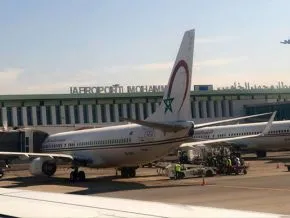
Royal Air Maroc has recently expanded its flight schedule from Nigeria, increasing the frequency from five to twenty-one weekly flights. This significant growth in operations has not only bolstered the airline's connectivity between Nigeria and Casablanca but has also heightened the potential for document verification challenges involving Nigerian travelers. Airlines, such as Royal Air Maroc, have a vested interest in ensuring that passengers possess valid travel documents prior to boarding, as international regulations require carriers to transport inadmissible passengers back to their point of origin, which could lead to substantial financial implications and penalties.
The relationship between Royal Air Maroc and Nigerian aviation authorities has faced scrutiny due to various passenger complaints regarding baggage handling and customer service. In July, the NCAA threatened to suspend the airline’s operations in Nigeria, a dispute that has since moved towards resolution. Recent reports indicate that Royal Air Maroc has met with NCAA representatives and has acknowledged the need for improvements in service quality, leading to a collaborative effort to enhance its operations in the Nigerian market.
To address the challenges faced by legitimate travelers during layovers in Casablanca, Achimugu has proposed practical solutions, including an increase in the number of hotel rooms available at the airport or enhanced access to airport lounges for passengers who are not permitted to enter Morocco. This initiative aims to provide genuine passengers with comfortable waiting options without necessitating their exit from the international transit area.
It is essential to clarify that there is currently no widespread ban on Nigerian nationals transiting through Morocco; rather, authorities are implementing stricter measures for certain passenger profiles due to concerns over fraudulent documentation and issues related to passengers failing to complete their journeys as scheduled. Understanding the distinction between transit connections and the right to enter a country is paramount for travelers. While one may be allowed to transit through an airport, crossing into the country itself requires meeting specific entry requirements, and even a valid visa does not guarantee admission, as final authority rests with border officials.
Achimugu emphasized the importance of shared responsibility in addressing these challenges. The Nigerian government continues to engage in diplomatic efforts to facilitate international travel for its citizens, while travelers must also remain vigilant and refrain from undermining these initiatives through fraudulent practices or abuse of transit provisions. For legitimate Nigerian passengers, the key takeaway is to familiarize themselves with the applicable rules not only at their destination but at every transit point along their journey.
As reported by ecofinagency.com.