
Unveiling the Heart of Casablanca's Traffic Control Center
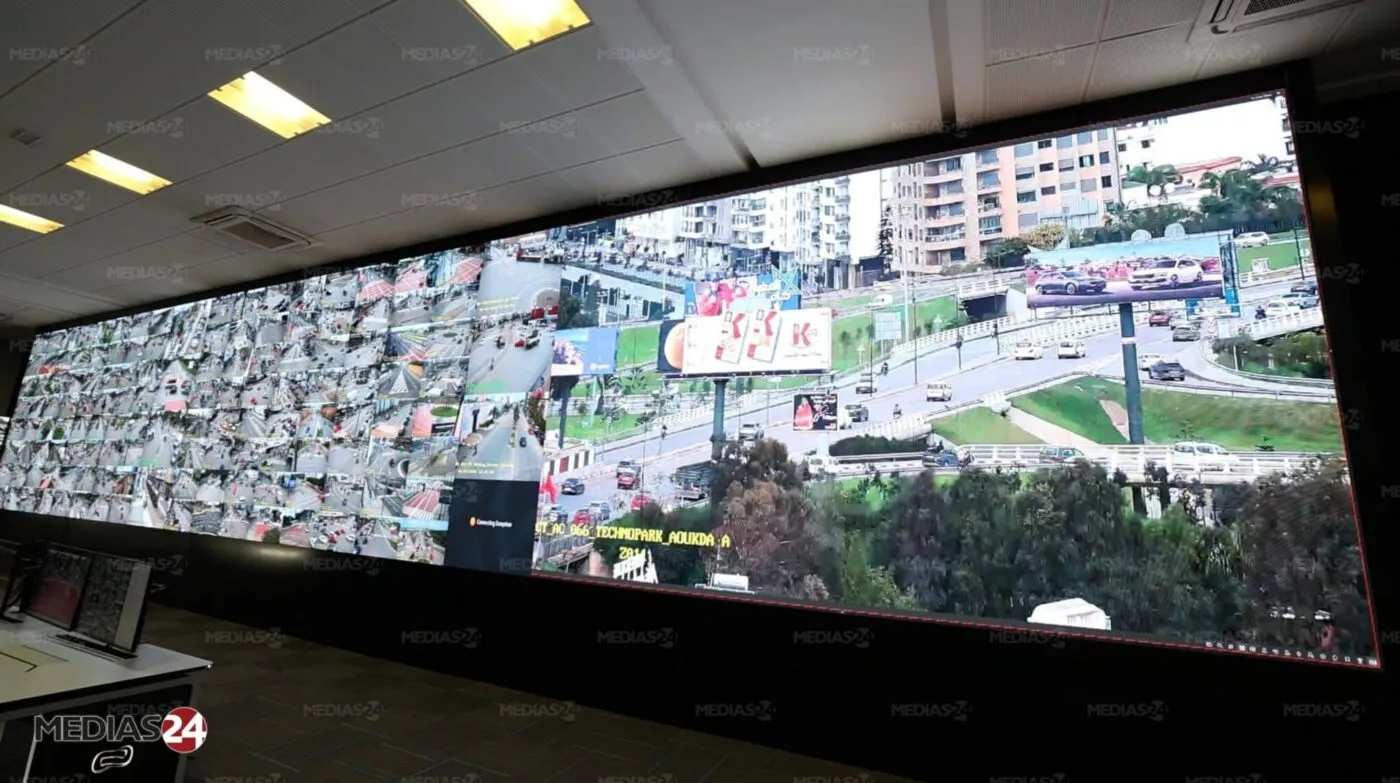
At the heart of Casablanca's police headquarters lies a discreet yet crucial center dedicated to monitoring the city's traffic and enhancing urban safety. Equipped with hundreds of cameras and an impressive wall of screens, the Central Traffic Regulation Post (PCC) oversees the bustling city in real-time. On March 5, 2026, Medias24 had the opportunity to explore the behind-the-scenes workings of this vital facility.
The enormous wall of screens at the PCC continuously displays images captured from various locations across the metropolis. During our visit, we found six to seven agents already operational in the main control room by 10 AM. Despite it being a weekday morning during Ramadan, the activity remained relatively moderate. The agents primarily focused on the urban highway, a crucial artery that needs to remain fluid to facilitate the daily commute of Casablancans.
As the day progresses, the pace picks up; by noon, staff numbers gradually increase as traffic density rises. Typically, peak activity occurs around 3 PM during Ramadan. In regular times, peak traffic is spread across three main periods: morning starting at 8 AM, midday, and late afternoon from 4 PM.
Advanced Surveillance: The PCC's Technological Backbone
Located within the Casablanca police prefecture, the PCC encompasses an area of approximately 1,050 square meters. This center features dedicated spaces, including a main operational room, a crisis management room, an emergency call center, and various technical offices for system administration, maintenance, archiving, and reporting.
The PCC operates on advanced technological frameworks, highlighted by a network of high-definition cameras and an extensive screen array allowing simultaneous monitoring of multiple city zones. These tools are essential for observing traffic flows and assisting police interventions on the ground.
Initially, the PCC launched with about 210 cameras. Today, the count exceeds 410, although this number can vary among institutions due to differing counting methods. For instance, the municipality tallies each camera individually, while police often refer to 'positions' or 'camera sites,' where one pole may support multiple cameras for 360-degree coverage.
A new expansion phase aims to increase the number of cameras to between 900 and 1,000 or more. As explained by Abdelhakim Ilsika, the PCC chief, "the number of cameras is set to rise to support ongoing and future urban projects." Casablanca is expanding rapidly, and its various infrastructural developments necessitate enhanced surveillance and traffic management to ensure user safety and mobility.
Operational since April 7, 2022, the PCC is active 24/7, ensuring constant vigilance over a city that never sleeps. Agents continuously monitor feeds from the cameras and respond promptly to detected incidents.
The primary function of the PCC is to identify and locate events, including traffic accidents, thefts, altercations, or any other incidents occurring in public spaces. Operators can zoom in on specific areas, track suspects or vehicles, and relay information to on-ground police units, who then take over the situation.
In some instances, footage can be extracted and sent to investigative services for use in judicial processes, as instructed by the prosecution. The PCC itself does not conduct investigations but plays a critical role in rapid response to various situations, including public thefts. Ilsika noted that the system has enabled swift interventions in numerous cases, such as tracking suspicious individuals to assist in their apprehension by field teams.
The PCC also adapts to special events, ensuring that security measures are in place to manage large crowds efficiently. This adaptability is vital in maintaining public safety during significant gatherings or events in the city.
As reported by medias24.com.