
In Marrakech, under the glow of small white lights, a party headquarters transforms into a bustling operations room, meticulously managing an ongoing electoral campaign. Wooden tables are strewn with cold cups of tea and piles of campaign flyers, while a large map hangs on the wall, marked with pen dots to track the movements of various neighborhoods and districts. As evening falls, small teams begin to depart from the headquarters in succession. Outside, the scenery shifts dramatically; the predetermined routes laid out by group coordinators morph into a vibrant tour of markets, neighborhoods, alleys, and side streets.
Walid Al-Shatouki, the campaign director for the Justice and Development Party in the Sidi Youssef Ben Ali district, emphasizes the importance of selecting communication locations with great care. He points to a team member tasked with documenting the campaign: "We start with a field map where we identify natural gathering spaces for citizens, then we divide the team based on tasks between direct communication and observation." He adds that they also hold small meetings at the headquarters since these allow for calm, direct dialogue to understand what citizens truly expect.
Such scenes are commonplace in both permanent and temporary campaign offices of competing parties, becoming increasingly dynamic as the countdown to the end of the electoral campaign approaches, set for midnight on September 22. The very next day, Moroccan voters will cast their ballots to determine the contest for 395 seats in the House of Representatives, thereby shaping the majority that will lead the formation of the next government.
Jouad Al-Shafdi, head of the Moroccan Observatory for Political Participation, asserts that the number of party offices or their geographic spread cannot be solely relied upon to gauge their true electoral strength. While the presence of a headquarters indicates a certain level of organizational presence, he believes that what lies behind it is more crucial: whether there is ongoing local organization, engaged members, voters, and candidates capable of mobilization, or if activity only emerges close to elections.
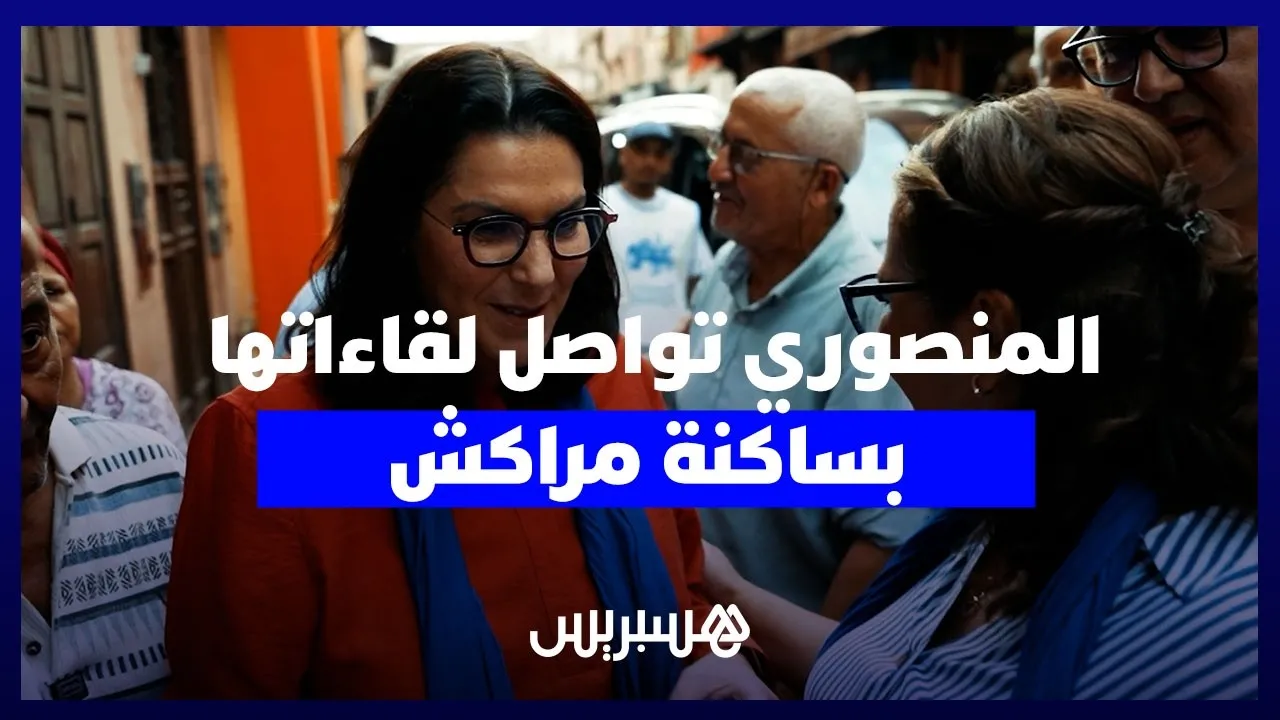
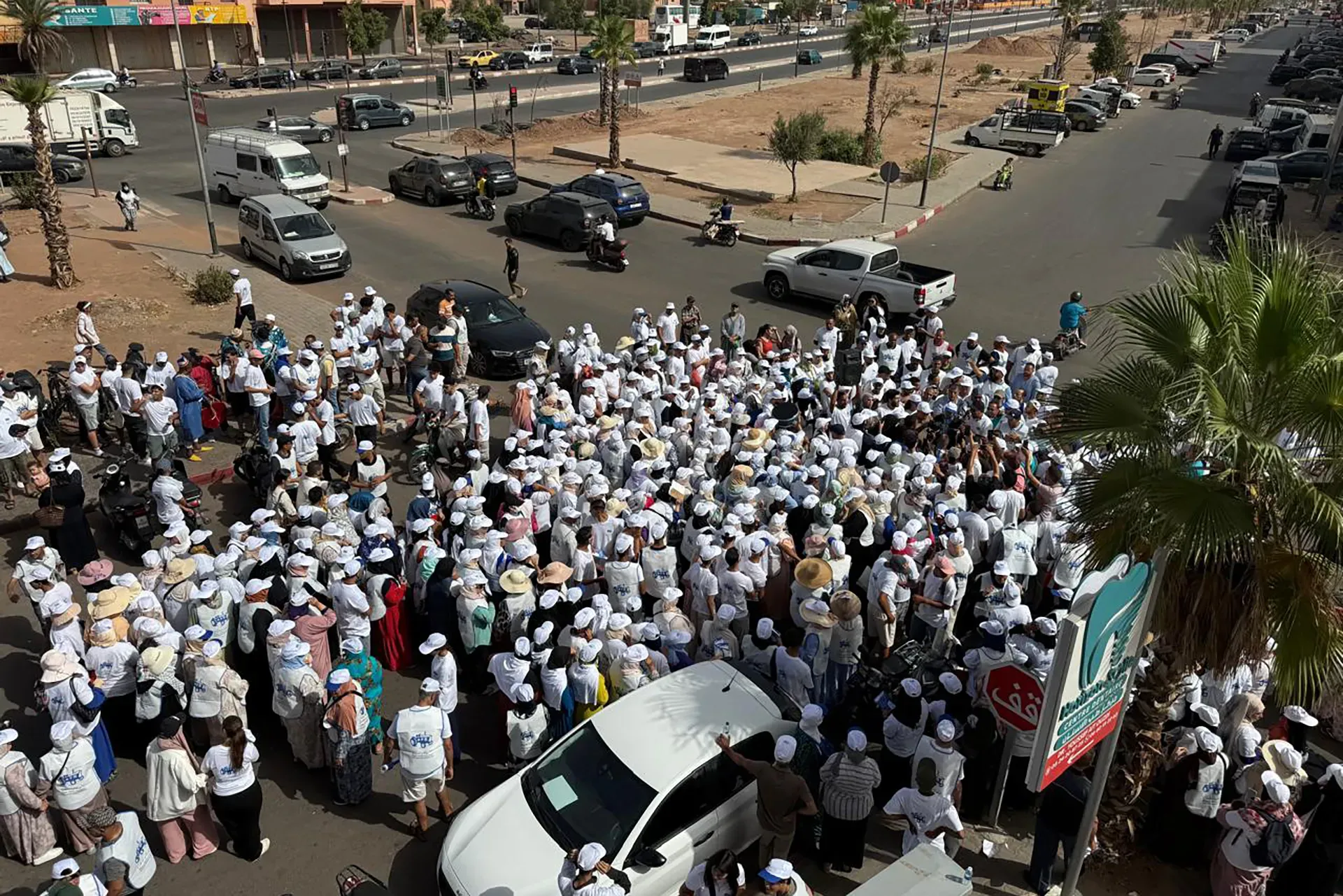
In a bustling market, a campaign team member stops to engage with a vendor, while others continue to navigate between shops, extending hands to offer flyers or simply signaling their presence. Amid this lively atmosphere, the sounds of loudspeakers blare snippets of popular music and wedding songs to grab attention, especially in the presence of some candidates, as foot teams intersect with others moving about on bicycles.
Although the goals of these rounds are similar across parties, the methods of execution vary. Political activist Youssef Ait Sidi Said from the Progress and Socialism Party in the Chichaoua region explains that for the party, this campaign has evolved into more than just a limited timeframe for introducing candidates and electoral programs. It has become an opportunity for direct and continuous communication with residents to listen to their concerns and expectations.
Fatima Tani, a candidate for the Left Alliance in the Hay Mohammadi Ain Sebaa district of Casablanca, elaborates that the campaign serves first as a space for listening and secondly for presenting clear, actionable issues derived from the daily realities and problems faced by the community, whether related to transportation, housing, pollution, or public services. This is all framed within a program built on a clear strategic vision that respects the intellect of Moroccans and is detailed in its execution and funding.
Moving from the lively streets to residential neighborhoods, the campaign shifts focus from the hustle and bustle of the streets to door-to-door interactions, engaging in conversations at thresholds, and documenting questions for follow-up. Some citizens extend their hands to accept pamphlets with cautious curiosity, while others discard the material into nearby trash bins.
However, the scene contrasts sharply in upscale neighborhoods; the spacious streets appear more tranquil, with minimal visible presence from campaign teams. Despite the varying nature of engagement from one area to another, campaigns operate within legal regulations that govern their tools and spaces. These regulations prohibit the use of religious and administrative headquarters for electoral propaganda and forbid the employment of national symbols for partisan purposes. Additionally, audiovisual content is subject to oversight by the High Authority for Audiovisual Communication to ensure plurality and fairness.
In this dynamic field environment, the feedback gathered on the streets directly influences the team’s actions. Al-Shatouki explains, "What we hear in the field guides our daily work. After each round or meeting, we gather observations and frequently asked questions to discuss them within the team, distinguishing between local issues needing attention and those related to public policies and parliamentary work." Parties often document instances when they believe certain practices exceed legal boundaries, recording details about the location, time, and nature of the violation, which they then refer through appropriate legal channels.
Yet the journey does not end at the last door. On their return, images captured in the streets find their way to smartphones, which then make their way to party pages, turning recent events from a neighborhood or market into shareable content within a short span of time. Behind the screens of phones and computers within the headquarters, team members track interaction metrics and view counts. By the evening, the narrative expands from the local level to a national stage, complete with elevated platforms, loudspeakers, flags, and slogans, as party leadership arrives in the city to address a broader audience, while dozens of phones rise to record the speeches.
Parliamentarian Tani asserts, "We do not wish to speak to citizens from a position of superiority, nor do we want to turn the campaign into a festival of images and slogans. We aim to communicate with them in clear language and to listen to them before speaking on their behalf." She stresses that the campaign is not an end in itself but rather the beginning of a new political relationship with citizens, grounded in clarity, accountability, and commitment to promises.
Former regional secretary and current party page manager Ait Sidi Said remarks that digital platforms enable access to a wide demographic, especially the youth, allowing them to interact, pose questions, and express their opinions. However, he adds, "We do not consider that digitization can replace direct communication. On the contrary, we see that each medium has its role. Field communication allows for direct listening to citizens, while digital platforms help expand reach and interaction and document activities."
The vibrancy within the headquarters serves as an important indicator of organizational activity, but it is not a definitive electoral metric. Political analyst Al-Shafdi believes that the Moroccan experience confirms that winning votes is achieved through a more complex system that combines party organization, candidate strength, local reach, networks of elected officials, and both direct and digital communication, alongside the party's image and political offerings. Thus, he argues that the true criterion is not the number of people entering the headquarters but its ability to convert organizational momentum into electoral mobilization, and transform that mobilization into votes, ultimately winning seats.
As night falls, exhausted teams return with heavy footsteps, the map that was once filled with routes in the morning now bears new markings, while leftover flyers accumulate beside it. Images from the day transition to computers and phones as screens dim and loudspeakers quiet down. Between the map drawn at the headquarters, the routes traversed in the streets, and the monitored screens from afar, maps are folded in anticipation of the morning of September 23, 2026, when voters will enter polling stations and cast their ballots behind closed curtains, perhaps only recalling a fleeting promise from the campaign.
As reported by aljazeera.net.