
Exploring Film Heritage at the 2026 FIAF Congress in Rabat
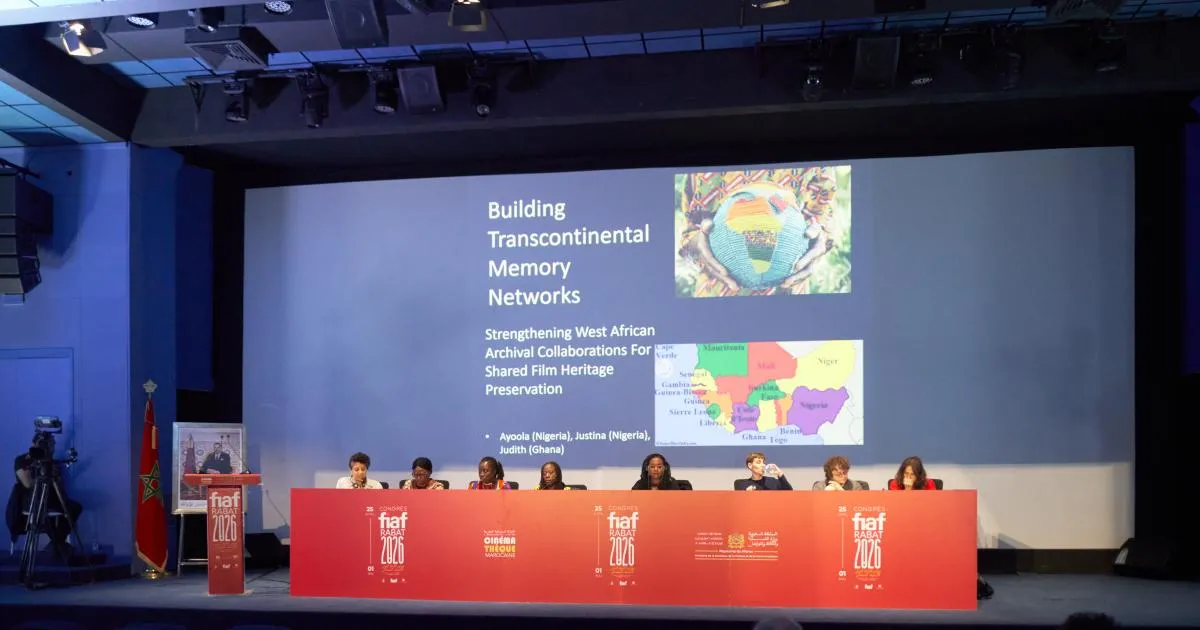
The recent 2026 FIAF Congress in Rabat, Morocco, served as a significant platform for discussing critical issues surrounding film heritage. Attendees, including archivists, filmmakers, and cultural practitioners, gathered to delve into pressing matters such as the displacement of film, inequitable access to resources, and the fragile infrastructures that hinder film preservation. The Congress invited thought leaders to reflect on how film heritage is cared for and the power dynamics involved in determining how these films are viewed, shared, and remembered. This dialogue was particularly timely, given that only a handful of African nations possess national film archives, as highlighted by UNESCO’s 2021 findings that the continent’s best cinematic elements are rarely found within its borders.
Founded in 1938 by notable organizations such as the BFI, MoMA, and the Cinémathèque française, the International Federation of Film Archives (FIAF) continues to operate as a global network dedicated to the preservation, training, and advocacy of film heritage. This year’s Congress, organized by the Cinémathèque Marocaine, marked a historic occasion as it was only the third time that this annual gathering has taken place in Africa. With the theme ‘Reimagining African and Arab Film Memory: Methodologies, Collaborations, Restitutions and Dialogues’, the discussions were rich with insights on creating sustainable archival practices while ensuring that access to film heritage is equitable for all.
Building Collaborative Networks for Film Preservation
Throughout the Congress, there were emphatic calls for a shift from traditional custodianship models to more participatory frameworks that emphasize shared agency and collaboration. Participants emphasized the need for archives to be viewed as dynamic resources and sites of memory, where the act of archiving is seen as a form of resistance against cultural erasure. Various archives from across Africa and the Arab world were represented, showcasing a diverse range of organizations that, despite facing limited resources, actively contribute to the preservation of film heritage.
Among the notable contributions was that of Arike Oke, Executive Director of Knowledge, Learning and Collections, who is also a member of the FIAF Executive Committee. Oke played a key role in planning the Congress and stressed the importance of international collaboration in addressing the challenges faced by film archives. Other prominent figures included Elena Nepoti, Film Conservation Manager, who shared insights on international projects aimed at enhancing collections care and preservation, and Natasha Fairbairn, Information Specialist, who discussed advancements in cataloguing practices essential for effective archival management.
The collaborative spirit of the Congress extended beyond discussions, as attendees forged new partnerships and explored avenues for supporting African and Arab film heritage. As one participant poignantly noted, the future of film heritage lies in collective stewardship and cultural interconnectedness. The event concluded with gratitude towards the Cinémathèque Marocaine for facilitating these essential exchanges and to FIAF for its ongoing commitment to uniting the international archive community. This gathering not only provided a platform for sharing knowledge but also ignited a renewed sense of responsibility towards preserving film heritage for future generations.
As reported by bfi.org.uk.