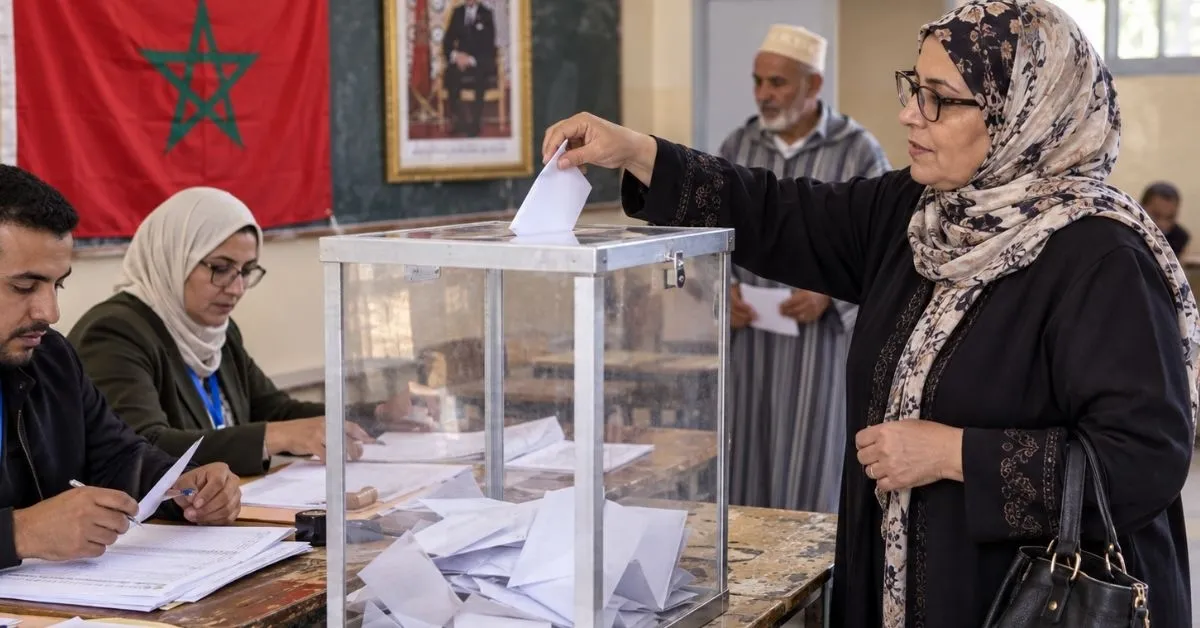

The political landscape in Morocco is heating up as the nation prepares for its upcoming legislative elections, scheduled for September 23. With a focus on critical sectors such as health, education, and employment, political parties are vying for the attention and votes of the youth demographic. A total of 27 political parties will compete for 395 seats in the House of Representatives, the lower house of Parliament. As the election date approaches, these parties are employing every strategy at their disposal to persuade voters of the effectiveness of their electoral programs.
The official campaign kicked off on September 10 and will run until midnight on September 22, leading up to the polls where citizens will cast their votes the following day. Political analysts suggest that the key issues surrounding this election cycle revolve around health, education, and job creation, with candidates working diligently to convince the electorate of the viability of their proposals in these critical areas.
According to political analyst Abdelilah Daghamy, parties are banking on these sectors to attract voter support, emphasizing that health, education, and employment should be prioritized within their agendas. He noted that citizen interest in these sectors is notably high, reflecting a collective demand for improvement and reform.
As of July, the number of registered voters reached approximately 15.8 million, underscoring the significant electoral engagement anticipated in the upcoming elections. Furthermore, Daghamy highlighted the necessity for parties to cater to the demands of Generation Z, urging them to incorporate the concerns of this demographic into their electoral platforms. He remarked, "In the past, many from Generation Z have taken to the streets to voice their demands, and it is imperative that parties listen and integrate these issues into their electoral agendas, as they are legitimate concerns."
Between September 27 and October 9, 2025, the Generation Z movement in Morocco organized daily protests advocating for reforms in education and healthcare, as well as a crackdown on corruption. This generation, born between the mid-1990s and the early 2000s, has emerged amid a technological revolution and the rise of the internet, making their voices particularly significant in the current political climate.
Daghamy also pointed to the importance of responding to the needs of this youthful population, especially given recent events that have seen a surge in mass migration to Ceuta, a Spanish enclave. The political tension between Morocco and Spain has escalated due to approximately 70,000 irregular migrants crossing from Morocco into Ceuta on July 30 and 31, raising concerns about border security and international relations.
Furthermore, Moroccan Interior Minister Abdelouafi Laftit pledged on November 13, 2025, to ensure transparency in the upcoming parliamentary elections, acknowledging that one of the main challenges ahead lies in establishing standards that promote transparency in political and electoral processes.
The last legislative elections were held on September 8, 2021, where the National Rally of Independents emerged victorious, securing 102 seats. The Authenticity and Modernity Party followed with 86 seats, while the Istiqlal Party garnered 81 seats. This election resulted in the formation of a government led by Aziz Akhannouch, the leader of the National Rally of Independents, in coalition with the Authenticity and Modernity Party and the Istiqlal Party.
In conclusion, the upcoming elections represent a crucial moment for Morocco, as parties strive to connect with the electorate and address pressing issues that resonate with the public, particularly the youth, who are increasingly asserting their influence in shaping the political discourse.
As reported by alquds.co.uk.