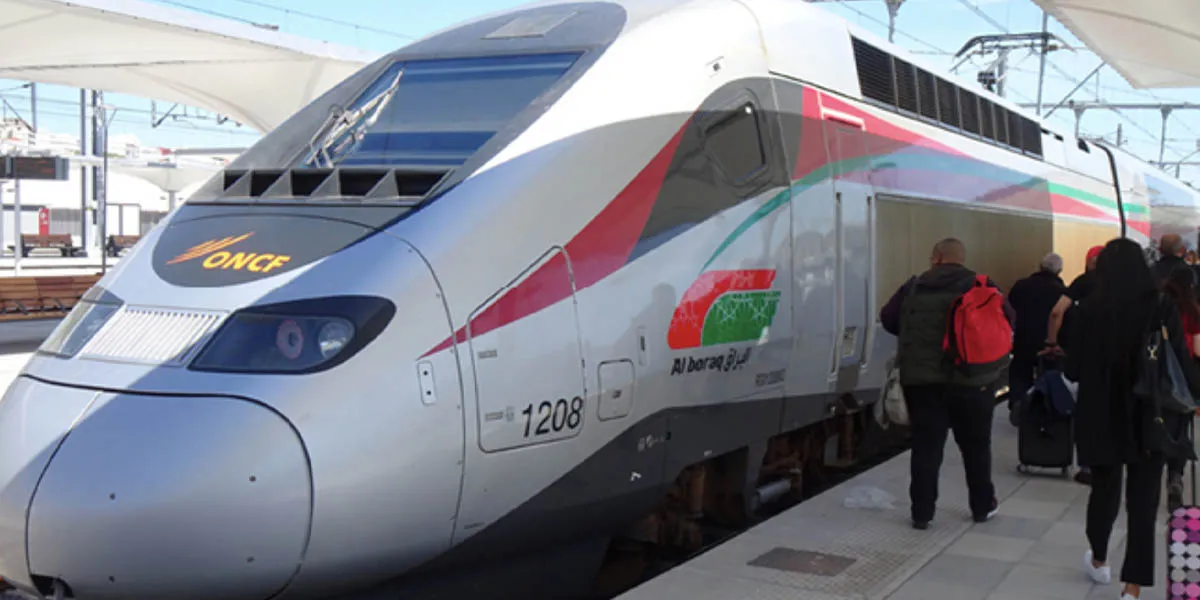

Major Electrification Project for Kénitra-Marrakech High-Speed Rail
The ambitious high-speed railway project connecting Kénitra and Marrakech is taking a significant step forward with the launch of electrical connection works by the ONCF (National Railway Office of Morocco). This critical phase, which involves an investment of 142 million dirhams, focuses on establishing three substations that will connect to the high-voltage network of ONEE (National Office of Electricity and Drinking Water). The successful execution of these works is essential for enabling the trains to operate at speeds of up to 320 km/h, ultimately facilitating swift travel between these two key cities.
Infrastructure Development to Ensure Efficient Operation
The infrastructural demands of this high-speed line necessitate a robust electricity supply, which will be provided through the connection of three substations strategically located near Benslimane, Settat, and Benguerir. Each substation will require the installation of approximately fifteen kilometers of overhead power lines to link them to the existing network. To grasp the scale of this project, the figures reveal that 16 kilometers of lines will be laid in Benslimane, 18 kilometers in Settat, and 19 kilometers in Benguerir, resulting in a total of several dozen kilometers of cabling throughout the region’s plains and hills.
Furthermore, the pylons designed for this project are constructed to withstand the challenging Moroccan climate, including sandstorms, extreme heat, and coastal humidity. They will be made of galvanized steel and treated with a special anti-corrosion paint, particularly thick in areas close to the ocean. To enhance safety, anti-climbing defenses and skull-shaped markers atop the pylons will be painted in bright red for high visibility. An innovative aspect of this project is the incorporation of fiber optics within the guard cables, enabling not just electrical transmission but also telecommunications data, thereby optimizing the entire infrastructure.
Environmental considerations are paramount in the execution of this project. An environmental supervisor will be present on-site to monitor the impact on surrounding areas, which include agricultural plains, forests, and rivers. While trees obstructing the power line route will be removed, measures are in place to minimize disruption to local wildlife and flora. Farmers whose crops are affected during construction will receive compensation, and the land will be restored post-project completion. The entire construction process is anticipated to last fourteen months, with the first two months dedicated to preparatory studies, followed by civil engineering works, and ultimately the installation of pylons and cabling. The completion of these developments is expected to coincide with the launch of the high-speed rail service, with the exact timeline yet to be confirmed.
As reported by leseco.ma.