
Iran's Strategic Response to U.S. Pressure
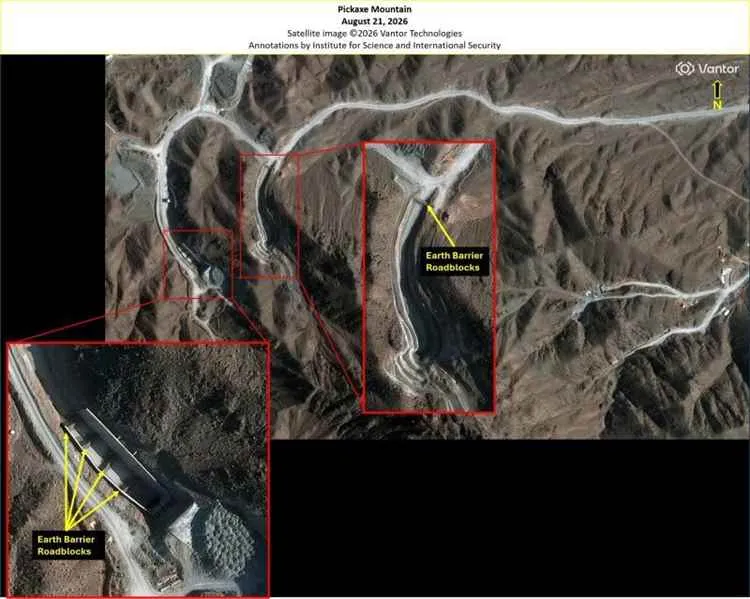
Recent satellite imagery has revealed that Iran has erected substantial earthen barriers at the entrances of the western tunnels of its "Mount Fasa" nuclear facility located near Natanz. This development, noted by the Institute for Science and International Security, took place in late July and early August 2026, with the barriers remaining visible in photos dated August 21 through September 11. The construction of these barriers appears to be a direct response to increased scrutiny and threats from former U.S. President Donald Trump, who publicly indicated intentions to target the site following reports of centrifuge component transfers to the facility after the June 2025 conflict.
Prior images from April and May had also suggested that the entrances to the eastern tunnels were blocked. The establishment of these barriers has effectively restricted vehicle access to all four entrances of the complex, implying that any resumption of ground access will necessitate their removal. As long as these barriers remain in place, construction activities or other operations within the underground facility will likely face significant limitations.
Implications for Regional Security
This move by Iran to fortify its nuclear site underscores the ongoing tensions in the region and raises concerns about the potential implications for international security. The barriers not only serve as a physical deterrent but also symbolize Iran's commitment to safeguarding its nuclear ambitions amidst external pressures. Observers speculate that such actions could escalate existing tensions with the United States and its allies, who are closely monitoring Iran's nuclear program and its implications for regional stability.
As reported by adngad.net.