
Increased Construction Activities at Pickaxe Mountain
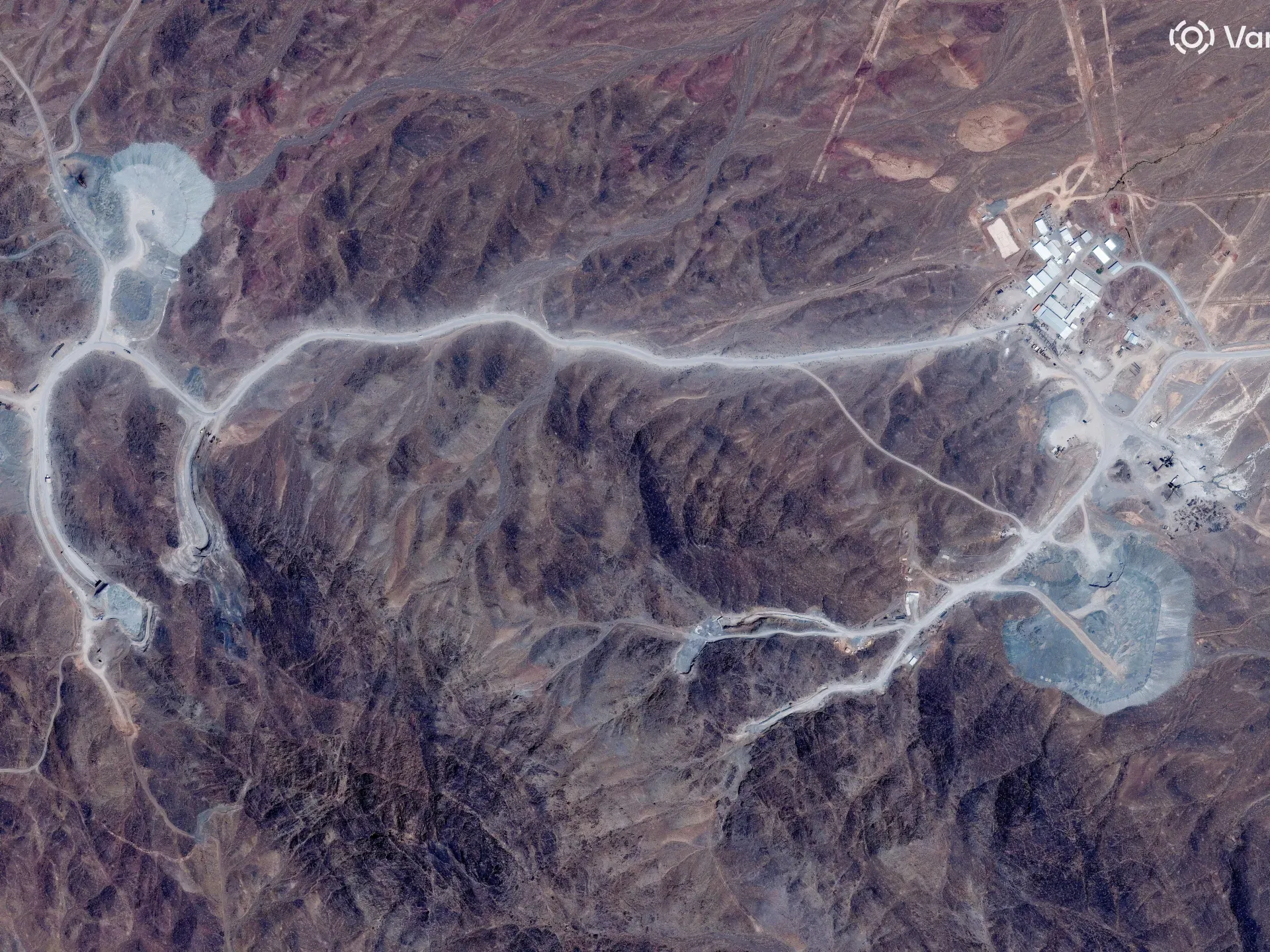
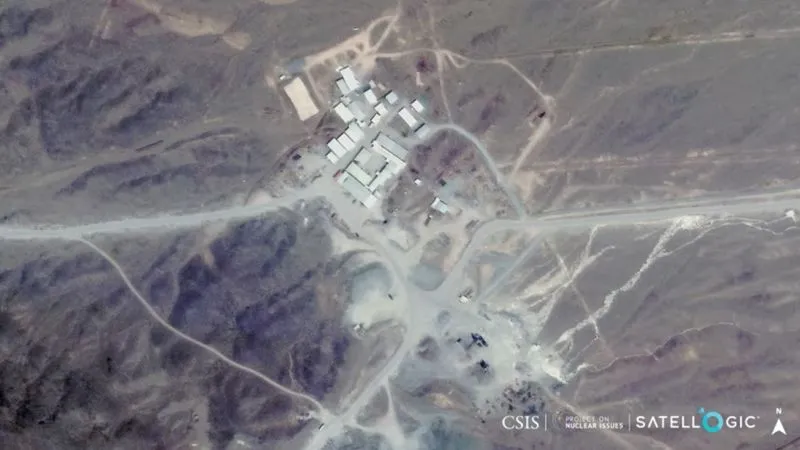
According to a comprehensive analysis by a group of analysts, Iran has significantly ramped up construction activities this year at the Pickaxe Mountain site, which is suspected of hosting nuclear-related operations. The site, located approximately 140 miles south of Tehran near the Natanz nuclear complex, has become a focal point of ongoing discussions among intelligence agencies, which view it as a likely venue through which Iran aims to safeguard its future nuclear program efforts.
Recent satellite imagery analysis conducted by the Center for Strategic and International Studies (CSIS) and shared exclusively with CNN ahead of its public release, indicates a notable surge in construction activities at the site during this year. Israeli intelligence has previously suggested that Iran may seek to relocate centrifuge machines to this location as part of its uranium enrichment endeavors. This prompted former President Donald Trump to repeatedly threaten military action against the site, stating just last week, “We may strike Pickaxe Mountain very soon,” while asserting that they know “the identity of everyone moving” within the facility.
Challenges in Targeting Deeply Buried Nuclear Facilities
Despite the escalating tensions, CSIS analysts noted that the granite mountain presents a formidable target that is difficult to destroy, even with the heaviest non-nuclear bombs available in the Pentagon's arsenal. Moreover, it is not the only Iranian nuclear facility that is believed to be well-protected from current-generation weaponry. Nevertheless, indications suggest that the United States is actively working on developing means to target such fortified sites, as U.S. forces have primarily focused on other types of objectives during the ongoing six-month conflict with Iran.
Just four days prior to launching the “Epic Fury” operation against Iran, a director from a mysterious Pentagon agency tasked with countering weapons of mass destruction signed a justification document for an emergency contract worth $1.2 million to repair a unique underground missile testing facility at White Sands, New Mexico. This facility is reportedly being prepared for live-fire tests aimed at verifying clandestine capabilities to counter rapidly emerging threats. Analysts believe that this underground facility was likely designed to provide a secure haven for Iran’s nuclear program.
The document, issued by the Defense Threat Reduction Agency, was entered into a federal database on February 27, just one day before the onset of hostilities. It indicated that the “rapid preparation for the test”—as described in another database—was to be completed within two to three weeks, in response to a “national security directive with a tight timeline.” According to three sources familiar with the matter, the testing plans were tied to the conflict with Iran and the urgent need to develop a means to target Iranian facilities buried deep underground, as well as to simulate potential U.S. strikes against specific nuclear sites.
While the United States had previously conducted strikes targeting nuclear sites in June 2025, which succeeded in destroying some key locations associated with Tehran's nuclear program, a senior American general informed lawmakers last year that the nuclear site in Isfahan—buried at significant depth—had only its entries filled in. The Pentagon concluded that its penetrating bombs would not be capable of completely destroying the facility. Currently, the military is developing a “next-generation penetrator bomb” to serve as a replacement for the existing Massive Ordnance Penetrator (MOP), which may be better suited to strike targets buried at greater depths.
In September 2025, a contract was awarded to begin work on a prototype, while the Air Force requested proposals from defense sector companies to develop the new weapon in June. Satellite images reviewed by CNN reveal that between February 16 and 18, excavation work began at a remote site in White Sands managed by the Defense Threat Reduction Agency and U.S. Strategic Command—designated for testing the effects of weapons on deeply buried targets. This timing coincides with the emergency contract, as Pate Construction provided a cost estimate for the testing work on February 17 and secured the contract the following day, according to federal contracting records.
Work at the site continued until mid-March, during which time piles of dirt from the excavation increased progressively. However, this phase of activity appeared to have ceased thereafter, as indicated by the images. An environmental assessment shows that the testing site at White Sands is also excavated into granite, similar to the Pickaxe Mountain location. CNN has been unable to independently verify whether the test has indeed taken place, nor confirm the purpose of the activities observed through satellite images at the agency's testing site.
The Pentagon did not immediately respond to CNN’s inquiries, and Pate Construction did not return communications from the network’s reporter. The U.S. military retains operational plans to strike the Pickaxe Mountain site, which was part of a package of targets under review earlier this summer when President Trump threatened to escalate hostilities with Iran, according to a source familiar with the matter. The source added that the strike plan for Pickaxe Mountain included the use of some of the largest bombs in the U.S. arsenal, although it remains unclear whether those munitions would be capable of penetrating deep enough to destroy any facilities or equipment Iran may have relocated there. Efforts continue to devise plans for decisive strikes against underground facilities, with a source telling CNN that elements within the Pentagon have recently conducted intensive and expedited planning on this issue.
According to the analysis by the Center for Strategic and International Studies, it is “likely” that the facility at Pickaxe Mountain is designed to serve one of three purposes, all of which are related to Iran's nuclear program: it could be a facility for assembling centrifuges, a site for enrichment, or a safe haven for other nuclear-related activities, such as converting uranium into metal. The report noted that construction activities at the site “have transitioned from active excavation to a phase that likely includes internal construction and continued fortification of external defenses.” The report emphasized that Pickaxe Mountain has experienced a “growing activity in road works” throughout 2026 that surpasses any previous level, with additional work including “raising and fortifying tunnel entrances, paving internal road networks, reinforcing areas surrounding entrances, and grading and removing” the dirt resulting from tunnel excavation.
Furthermore, analysts warned that the “ongoing construction activities” observed at the site—along with other factors—indicate that the location is “not yet ready for enrichment operations, if that is its intended purpose.”
As reported by arabic.cnn.com.