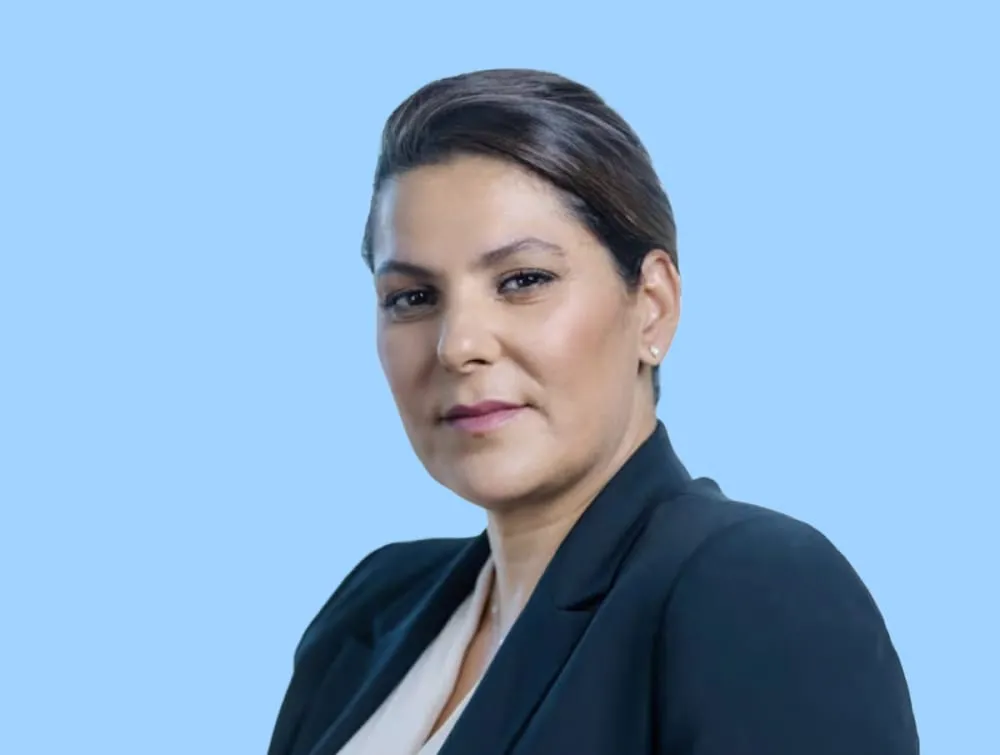

As the Moroccan legislative elections scheduled for September 23 approach, a scenario that once seemed inconceivable is now increasingly plausible: the possibility of Fatima Ezzahra El Mansouri becoming the first woman to lead the government of the Kingdom. This political figure, who has garnered significant support and experience, is entering a national electoral phase with an impressive array of assets, including a longstanding local presence, substantial governmental experience, and the leadership of one of the country's major political parties.
El Mansouri, who serves as the mayor of Marrakech and the national coordinator of the Authenticity and Modernity Party (PAM), is progressively emerging as a strong candidate for the role of head of government. Her party, PAM, appears to be aiming for more than just its current position as the second-largest political force in Morocco.
The Ground Legitimacy from Marrakech to Rabat
Fatima Ezzahra El Mansouri is not a newcomer to Moroccan politics, having built her legitimacy in her hometown of Marrakech where she first served as mayor from 2009 to 2015 before reclaiming the municipal presidency in 2021. This local dimension is crucial, especially in a political landscape where voters often criticize national leaders for their disconnect from local realities. With a concrete experience in governance, El Mansouri presents herself as a pragmatic leader. Marrakech serves as both her political laboratory and a national showcase of her achievements.
Her municipal record is remarkable, comprising 423 projects worth over 15 billion dirhams, with 311 either completed or underway. These initiatives span various sectors, including transportation, urban infrastructure, green spaces, public safety, and public facilities, showcasing a commitment to modernizing the city. For instance, she has overseen the introduction of 349 buses, the creation of 130 kilometers of roads, the development of 85 renovated intersections, and the installation of 738 surveillance cameras, alongside the establishment of numerous green spaces.
This method is evident in her national discourse as well, where she increasingly emphasizes the concept of a "profound Morocco"—focusing on territorial disparities, local engagement, and addressing needs articulated at the grassroots level rather than solely from the capital, Rabat. El Mansouri aims to center her party's agenda on reducing regional inequalities and reconciling with the youth, making her profile politically appealing to both urban and rural voters.
Can PAM Secure the Top Spot?
Despite the promising indicators, the question remains whether PAM can indeed claim the first position in the upcoming elections. In 2021, Aziz Akhannouch's National Rally of Independents (RNI) won 102 of the 395 seats in the House of Representatives, with PAM securing 86 seats and the Istiqlal Party 81. However, since then, several dynamics have shifted. Akhannouch has opted not to seek re-election, while PAM has restructured its leadership around El Mansouri, who has been instrumental in preparing the party's candidates across the nation and integrating new figures into its ranks.
PAM's objective is clear: to emerge as the top party in the elections. Importantly, the Moroccan political system does not require PAM to secure an absolute majority to lead the government; the King appoints the Prime Minister from the party that receives the most votes. Should PAM finish first, El Mansouri would likely be the frontrunner for this significant role, given her leadership position and experience.
However, achieving this goal will not be sufficient for PAM to govern alone. The new government will require a parliamentary majority, necessitating coalition-building in a potentially fragmented political landscape. This aspect will undoubtedly be critical as the elections draw nearer. Additionally, El Mansouri has strategically distanced herself from past coalitions, indicating a desire for a fresh approach while still recognizing the achievements made during her party's previous tenure in government.
A potential victory for El Mansouri would not only mark a significant milestone for PAM but also represent a historic breakthrough for gender representation in Moroccan politics. Despite having women in various high-profile political roles, including ministers and mayors, the country has never seen a female Prime Minister. At 50, El Mansouri combines extensive municipal and governmental experience, electoral grounding, and a thorough understanding of political dynamics, positioning her as a formidable candidate for this pivotal role.
Ultimately, her candidacy reflects broader trends in Morocco—economic modernization, international affirmation, major investments, and a pressing need for equitable distribution of resources to meet the aspirations of a youth demographic increasingly dissatisfied with standard macroeconomic indicators. As Morocco continues to assert itself on the international stage, El Mansouri's leadership could symbolize a transformative step forward for the nation.
As reported by latribune.fr.