
From October 7 to 10, 2026, Israel Aerospace Industries (IAI) will officially participate in the Marrakech Airshow for the first time. This event signifies more than just the presence of a new exhibitor; it reflects the deepening military cooperation between Morocco and Israel that has been developing since 2020. Following agreements on arms sales, both Rabat and Israeli industries are now focusing on advancing their industrial and technological collaboration.
Publicly Acknowledged Military Cooperation
The presence of Israel Aerospace Industries at the Marrakech Airshow is not merely a commercial venture. IAI, a state-owned enterprise and one of Israel's key strategic groups in fields such as aerospace, missiles, drones, radar, and space technology, aims to showcase several of its major technologies during this inaugural participation. Among the technologies on display will be air defense solutions, the precision strike system LORA, the MALE Heron MK II drone, collaborative combat technology OPAL, and communication satellites. Additionally, IAI will highlight its aircraft maintenance services and the conversion of passenger transport aircraft into cargo planes.
This participation comes six years after the resumption of diplomatic relations between Morocco and Israel. The normalization process initiated in 2020 was swiftly followed by a rapprochement in security matters. In November 2021, the two countries signed a defense cooperation agreement that encompasses intelligence sharing, military industries, and equipment acquisitions. Since then, the relationship has evolved beyond government dialogue, manifesting in the arrival of Israeli manufacturers in the Moroccan market and several supply programs for the Royal Armed Forces. According to Reuters, the 2021 defense pact serves as the framework for this cooperation in intelligence, industry, and military procurements.
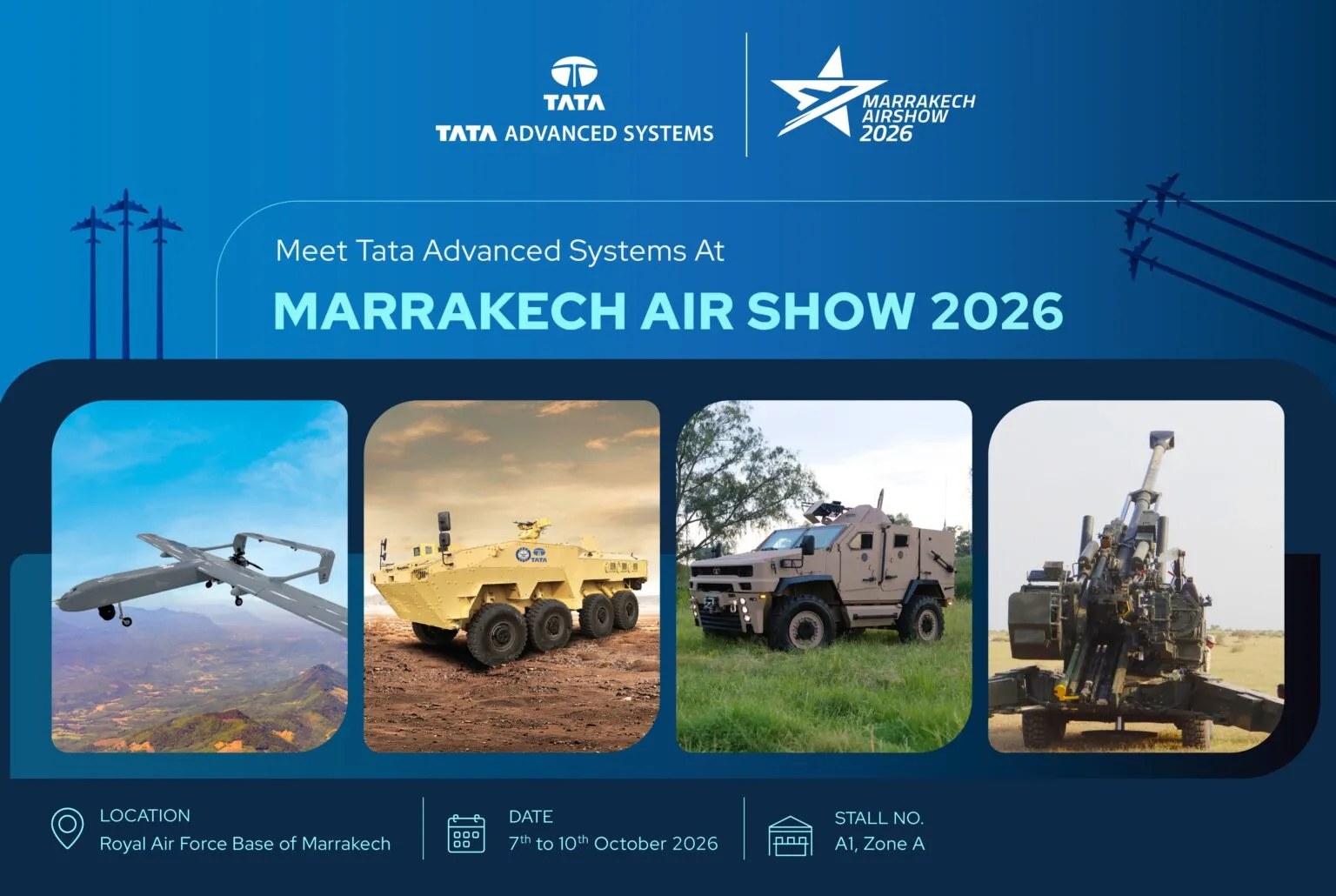
IAI is not the only Israeli industrial player expected at Marrakech. Other companies such as Elbit Systems, Rafael Advanced Defense Systems, Xtend, Uvision, Asio Technologies, and Orbit Technologies are also set to participate, as reported by the Jerusalem Post. Their participation is part of a much larger event featuring nearly 200 exhibitors from 27 countries, including Lockheed Martin, Airbus, Boeing, Safran, Thales, L3Harris, RTX, and Tata Advanced Systems. Therefore, the Israeli presence does not transform the Marrakech Airshow into a bilateral exhibition; rather, it illustrates the integration of Israeli industries into a strategic gathering organized with the Royal Armed Forces and supported by Morocco's primary institutions involved in defense and aerospace.
From Arms Supplier to Strategic Partner
The participation of IAI is particularly significant as the company is not entering Morocco as a newcomer seeking to explore a new market. The group already has substantial ties with Rabat. One of the most well-documented programs is the Barak MX air defense system, with reports indicating a contract of approximately $500 million for equipping Morocco with this system. The French Ministry of Armed Forces also noted in its 2026 International Companies Notebook that IAI delivered Barak MX systems to Morocco in 2024. Thus, IAI’s presence at Marrakech aligns with an already established commercial and strategic relationship.
Space technology represents another revealing aspect of this partnership. In July 2024, Reuters reported that Morocco was set to acquire an Ofek 13 reconnaissance satellite from IAI under a contract valued at $1 billion. While IAI announced the conclusion of a $1 billion contract to be executed over five years without publicly naming its client, Moroccan media identified the Kingdom as the purchaser of the satellite. Neither the Israeli representation in Rabat nor the Moroccan Ministry of Foreign Affairs had confirmed this information to Reuters at that time. This nuance is crucial, as it underscores the growing importance of space technologies in the context of the cooperation between IAI and Morocco.
This relationship is poised to evolve towards deeper industrial collaboration. In March 2022, the Moroccan Ministry of Industry and IAI signed a memorandum of understanding in the aerospace sector, which outlined potential cooperation in areas such as 3D printing, the manufacturing of engine parts and aerostructures, and the establishment of a research and development center. Both parties also discussed creating a network of local suppliers, indicating a longstanding intention to extend their relationship beyond mere military equipment purchases.
The industrial dimension of IAI’s participation at the Marrakech Airshow is particularly noteworthy. In its official communication regarding the event, IAI does not merely announce the equipment on display; it emphasizes its search for opportunities for local cooperation, industrial collaboration, knowledge sharing, and technological transfer with Moroccan and regional partners. IAI explicitly presents these collaborations as a means to enhance sovereign capabilities and support the development of local ecosystems in defense and aerospace.
Morocco's ambitions align with these industrial goals, as the Kingdom seeks to advance its aerospace sector towards higher value-added activities while simultaneously developing a national defense industry. Consequently, the focus is no longer solely on purchasing foreign missiles, drones, or radars; it now encompasses acquiring skills, integrating more Moroccan companies into value chains, and ultimately strengthening the country’s industrial autonomy. The Marrakech Airshow serves as a showcase for these ambitions.
However, it would be premature to claim that Morocco and Israel have transitioned from a supplier-client relationship to genuine military co-production. While available announcements reflect a desire to advance industrial cooperation and technology transfers, they do not imply that all discussed projects are contracted or operational. Nonetheless, IAI's presence at the airshow raises a pivotal question: after acquiring Israeli technologies, will Morocco seek to produce or develop some of these on its own territory?
Furthermore, the African dimension is a crucial element of IAI's strategy. In its presentation of the Marrakech Airshow, the group indicates its intention to offer its technologies to meet the needs of Morocco, as well as those of Africa and the broader region. Thus, the Moroccan market may present a strategic interest for the Israeli company that extends beyond mere orders from the Royal Armed Forces. The Kingdom's position, its aerospace industry, and its significant economic and diplomatic ties in Africa bolster this perspective.
However, it would be an overstatement to assert that Morocco has already become an "African base" for Israeli defense industry. The publicly available elements suggest an ambition to transform a bilateral commercial relationship into a partnership that encompasses equipment sales, industrial cooperation, and access to new markets. IAI’s presentation of a range of products, including missiles, drones, space technologies, collaborative systems, and aerospace services, indicates that the company envisions its presence in Morocco within a much broader framework than a single contract.
The geopolitical implications of this presence become clearer. Since 2020, the Israeli-Moroccan relationship has progressed through several stages: the resumption of diplomatic relations, institutionalization of defense cooperation, military acquisitions, and industrial rapprochement. IAI's inaugural participation at the Marrakech Airshow does not create this relationship, but it certainly enhances its visibility. Moreover, it occurs within a strategic domain—defense—despite a region significantly affected by conflicts in the Middle East.
Thus, the presence of the Israeli public group in Marrakech reflects the continuity of the strategic ties established since 2020. It also reveals a complementarity of interests: Israel possesses an advanced defense industry seeking new partners and markets, while Morocco aims to modernize its armed forces and develop its own industrial base. Therefore, the stakes at Marrakech extend beyond the systems displayed at the IAI booth; they now involve observing how far Rabat and Israeli industries are willing to evolve their relationship from mere arms acquisition to a more sustainable technological and industrial cooperation.
As reported by enderi.fr.