Israel and Morocco Enhance Diplomatic Relations
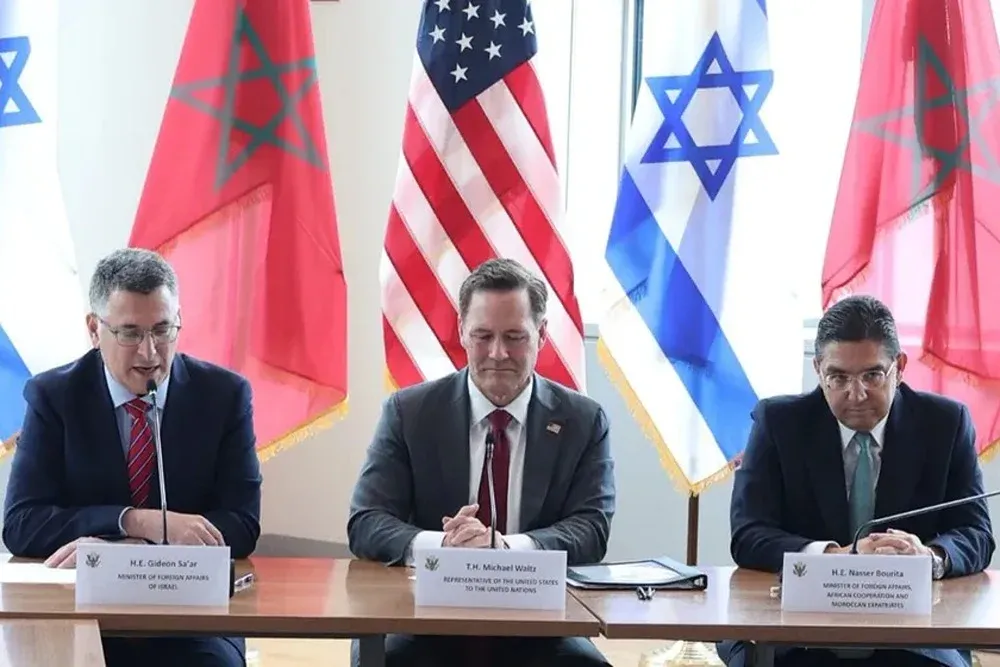
In a significant development on Wednesday, Israel and Morocco agreed to elevate their diplomatic representations to full-fledged embassies and exchange ambassadors. This decision comes nearly six years after Morocco joined the U.S.-led normalization initiative that has reshaped Israel's relations with parts of the Arab world. The agreement was reached during a trilateral meeting held in New York, which included U.S. Ambassador to the United Nations, Mike Waltz, Moroccan Foreign Minister Nasser Bourita, and Israeli Foreign Minister Gideon Sa'ar. This meeting took place just a day after the authorities commemorated the sixth anniversary of the Abraham Accords.
The original accords were signed by Israel, the United Arab Emirates, and Bahrain on September 15, 2020. Following in their footsteps, Morocco signed a joint declaration with the U.S. and Israel on December 22, 2020, in Rabat, which restored official contacts and committed the nations to work toward establishing full diplomatic relations, direct flights, and increased economic cooperation. The recent agreement marks a significant step forward in fulfilling these commitments.
Commitments to Cooperation and Regional Stability
The agreement reached on Wednesday solidifies various commitments, with Israel and Morocco agreeing to establish full embassies and exchange ambassadors. They also plan to restore direct flights between Israeli and Moroccan airlines by the end of 2026, finalizing agreements on investment protection and prevention of double taxation. Furthermore, the countries pledged to enhance cooperation in trade, finance, technology, tourism, water resources, agriculture, food security, energy, telecommunications, and regional security, as outlined in a joint statement on September 16.
This declaration also reaffirmed the recognition by the U.S. and Israel of Morocco's sovereignty over Western Sahara and their support for Morocco's autonomy proposal as a basis for resolving the territorial conflict. However, discussions soon expanded beyond Morocco, focusing on the potential for the normalization framework to include Saudi Arabia. When asked whether Saudi Arabia could be the next country to join the Abraham Accords, amid reports of increasing security cooperation between Israel and Saudi Arabia against Iranian-backed Houthi forces, Waltz highlighted the regional threat posed by these Houthis and their attacks on international maritime transport.
Waltz emphasized the unacceptable nature of the terrorism represented by the Houthis, stating, "The scourge of terrorism they represent is unacceptable for the entire region." His comments surfaced as the Houthis have made significant gains along Yemen's Red Sea coast, raising new vulnerabilities for Saudi Arabia and bolstering Iran's regional influence. The Bab el-Mandeb Strait, a crucial maritime route, sees approximately 7% of the world's oil production pass through it, making the security of such routes vital for global trade.
In conclusion, the recent agreement between Israel and Morocco represents not just a diplomatic milestone but also a strategic initiative aimed at fostering stability in the region. Both countries recognize the importance of cooperation and are committed to working together to address common challenges while supporting humanitarian efforts, particularly in Palestine. As international dynamics evolve, the potential for broader regional cooperation remains a topic of significant interest.
As reported by es-us.noticias.yahoo.com.