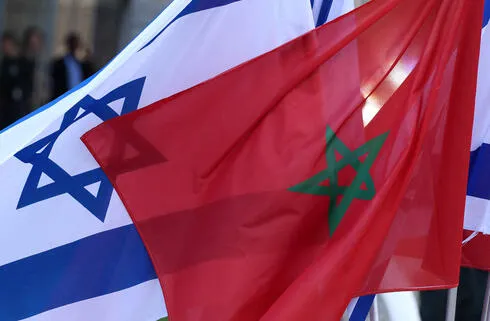

On September 16, 2026, a landmark agreement was unveiled during a high-profile trilateral meeting in New York, which included Israeli Foreign Minister Gideon Sa'ar, Moroccan Foreign Minister Nasser Bourita, and officials from the United States. This momentous occasion marked a significant shift in the geopolitical landscape of the Middle East and North Africa, as Israel and Morocco formally elevated their diplomatic liaison offices to full embassies and appointed official ambassadors. This agreement was not just a ceremonial gesture; it was a strategic move to enhance bilateral relations, including the expansion of direct commercial aviation routes and the finalization of vital agreements on investment protection and double taxation by the close of 2026. It signifies a continuation of the normalization process that began in 2020.
However, the implications of this agreement extend far beyond mere diplomatic formalities. The elevation to full embassy status symbolizes a deeper strategic realignment that is reshaping the dynamics of the Western Mediterranean and North Africa. This development is indicative of a new regional paradigm where national energy security, defense industrialization, and border management are increasingly interconnected across various geographic theaters, particularly in the Maghreb and Southern Europe. Such changes are creating new strategic realities for all nations involved, requiring them to adapt to a rapidly evolving geopolitical environment.
Deepening Security Collaboration
To comprehend the timing of the formalization of diplomatic ties between Jerusalem and Rabat, one must explore the evolution of their security collaboration in recent years. What began as discreet intelligence sharing and selective military acquisitions has matured into a comprehensive defense-industrial partnership. Morocco is transitioning from being merely an importer of advanced Israeli technology to actively engaging in the integration, manufacturing, and co-production of military hardware within its borders. This shift is part of a national strategy aimed at modernizing its armed forces while simultaneously building its domestic industrial capacity.
The clearest manifestation of this burgeoning defense collaboration can be found in Benslimane, where a specialized facility linked to Israel's BlueBird Aero Systems is either producing or in the process of establishing production capabilities for SpyX loitering munitions. This facility stands as a significant milestone in Morocco's quest to develop a self-sufficient military manufacturing sector. Moreover, satellite imagery reports indicate that Morocco has completed the deployment of the Israeli-made Barak MX air-defense system at Sidi Yahya air-defense base, providing its military with a multi-layered defensive shield capable of addressing various aerial threats. While the enhancement of military capabilities does not instantly alter the regional military balance, it does narrow the technological advantages that Algeria has historically held.
While the Israeli-Moroccan security partnership has deepened, the broader Mediterranean landscape is simultaneously shaped by vulnerabilities along Europe's southern borders. A poignant example of this fragility occurred on July 29 and 30, 2026, when over 70,000 migrants surged into Ceuta, Spain, from Morocco, exacerbated by a wave of misinformation on social media. This influx overwhelmed local reception facilities and triggered a severe humanitarian crisis, illustrating the urgent need for effective border management. For both Jerusalem and Rabat, these events underscored the importance of cooperation in maintaining stability along Europe's southern borders, particularly as Spain seeks to balance its relationships with both Morocco and Algeria amidst ongoing geopolitical complexities.
For Israel, the agreement reached on September 16 represents a significant realization of a long-term strategic vision. Skeptics of the Abraham Accords had often suggested that regional conflicts would lead Arab nations to retreat from their ties with Israel. However, the transition from liaison offices to full embassies solidifies the partnership between Jerusalem and Rabat as grounded in essential national security interests that can endure through broader regional volatility. The establishment of full embassies will facilitate permanent channels for strategic cooperation, encompassing military co-production, intelligence sharing, and robust economic ties.
As the strategic landscape of North Africa and the Western Mediterranean continues to evolve, it becomes apparent that navigating this complex environment requires a nuanced understanding of the interconnected security, economic, and energy interests at play. The decisive actions taken by Israel and Morocco to strengthen their partnership demonstrate that their relationship has transcended initial normalization, evolving into a crucial pillar of the emerging strategic architecture in the Western Mediterranean.
As reported by ynetnews.com.