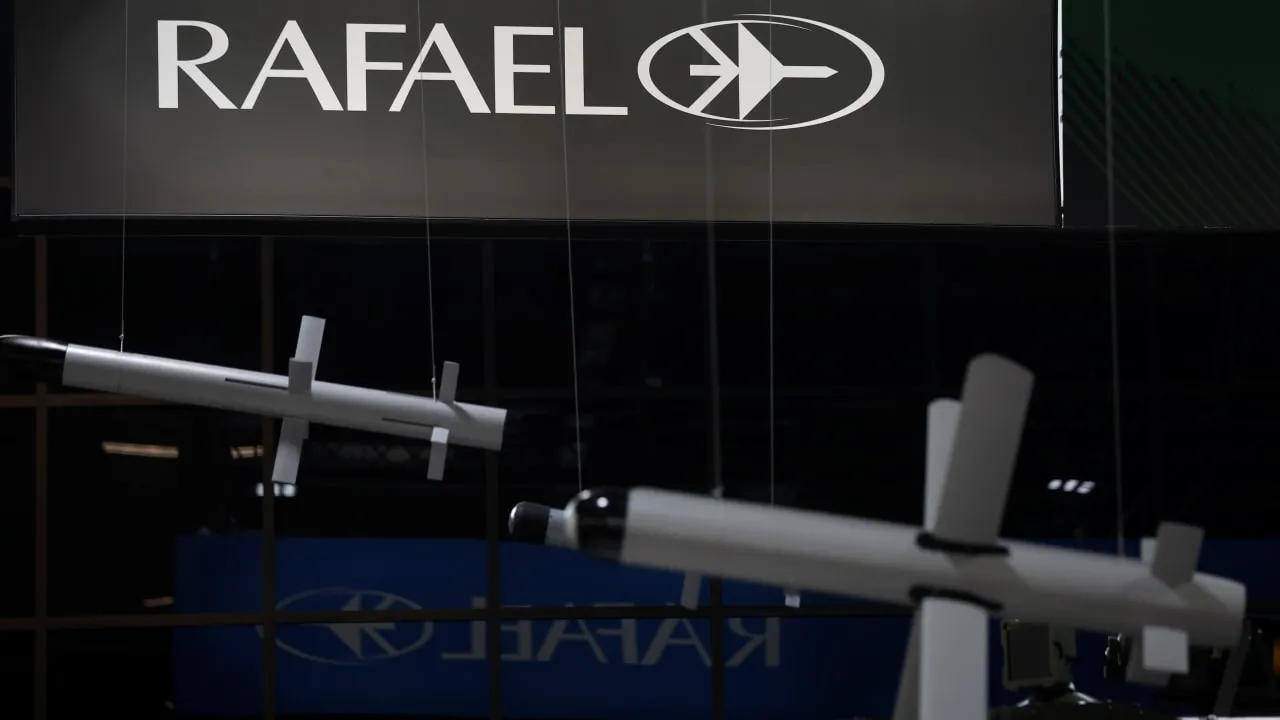

Israeli Defense Companies Showcase Innovations at Marrakech Airshow
From October 7 to 10, Israel's leading defense entities, including Israel Aerospace Industries (IAI), Elbit Systems, and Rafael Advanced Defense Systems, will officially participate in the International Aerospace Exhibition in Marrakech. This event marks a significant milestone, occurring shortly after Morocco and Israel elevated their liaison offices to embassy status during a commitment made in New York. Alongside these prominent companies, other Israeli firms such as Xtend, Shilat, UVision, and Orbit Technologies will also showcase their offerings, highlighting the growing collaboration between the two nations.
The exhibition will prominently feature advanced strike weapons and intelligence systems. IAI is set to present its Barak air defense system, the precision ground-to-ground LORA missile with a range of 90 to 430 kilometers, and the Heron MK II drone, which boasts an impressive endurance of 45 hours at altitudes exceeding 35,000 feet. Additionally, IAI will demonstrate its OPAL-NG collaborative combat architecture, compatible with NATO’s Link 16 data link, as well as satellite communication technologies. The company aims to showcase solutions that have been tested in combat, specifically tailored to meet the increasing demands of Morocco and the broader African region. IAI is also looking to explore industrial cooperation and technology transfers with Moroccan partners, although no specific buyers, quantities, or delivery timelines have been disclosed.
Elbit Systems will exhibit several advanced systems, including the PULS multiple rocket launcher, modular guidance kits known as Lizard, the multispectral optronic payload SPECTRO, and various drone models such as Hermes 900, the versatile tactical THOR, and TerminaTHOR, which is an aerially-delivered munition system. The specifics of the offerings from other participating companies like UVision, known for its Hero loitering munitions, and Orbit, a specialist in satellite communication terminals, remain undisclosed.
Significant Defense Contracts and Industry Growth
Morocco is not approaching this exhibition merely as a prospect; it has already engaged in substantial defense contracts. Notably, IAI sold the Barak MX system to the Royal Armed Forces of Morocco for $500 million. This system, developed in conjunction with India's Defense Research and Development Organization (DRDO), is capable of launching three missiles from a single vertical launcher with ranges of 35, 70, and 150 kilometers. Rafael's Spyder system has been deployed at the Sidi Yahia El Gharb base, located north of Rabat, and Elbit has delivered ATMOS self-propelled howitzers and EXTRA rockets, which are credited with a range of 150 kilometers and an accuracy of ten meters. Furthermore, BlueBird Aero Systems, a subsidiary of IAI, recently inaugurated a facility in Benslimane for the production of SpyX loitering munitions, marking the first local production of Israeli drones in North Africa.
In a notable development from July 2024, IAI announced a $1 billion contract with a client referred to as a 'third party,' anticipated to be fulfilled by 2029. Reports suggest this may involve Morocco acquiring radar satellites derived from the Ofek 13, intended to replace the Airbus and Thales Alenia Space-built Mohammed VI-A and VI-B observation satellites launched in 2017 and 2018. Although neither Rabat nor the manufacturer has confirmed this information, it underscores the growing defense relationship between Israel and Morocco. Between 2020 and 2024, Israel emerged as the third-largest arms supplier to Morocco, surpassing France, according to the Stockholm International Peace Research Institute (SIPRI).
In 2025, Israeli arms exports reached a record high of $19.2 billion, a significant increase from $14.8 billion the previous year, representing nearly a 30% rise. The Israeli Ministry of Defense's International Defense Cooperation Directorate (Sibat) attributed this growth partly to many countries increasing their defense budgets and acquisition efforts. Notably, North Africa and the Middle East accounted for 15% of these sales. As the Israeli companies prepare for the Marrakech exhibition, they will face established competitors such as Airbus, Thales, Safran, and Dassault Aviation, which have been supplying Morocco’s armed forces for decades. Other exhibitors include MBDA, Leonardo, General Atomics, L3Harris, and Bell.
The exhibition will kick off three weeks after a significant meeting on September 16 in New York, where Israeli Foreign Minister Gideon Saar met with Moroccan Foreign Minister Nasser Bourita and U.S. Ambassador to the UN Mike Waltz. During this meeting, the countries agreed to appoint ambassadors, open air links to Moroccan airlines, and finalize an investment protection agreement and a double taxation convention by the end of 2026. Saar emphasized the deep-rooted friendship between the Moroccan and Jewish peoples, which he described as having a glorious history. Earlier in January, a trilateral military commission meeting in Tel Aviv developed a military action plan for 2026, focusing on joint training, force preparedness, and long-term planning. The defense protocol signed in November 2021 and the recognition of Moroccan sovereignty over the Sahara by Israel in July 2023 further solidified the partnership between the two nations.
As reported by barlamane.com.