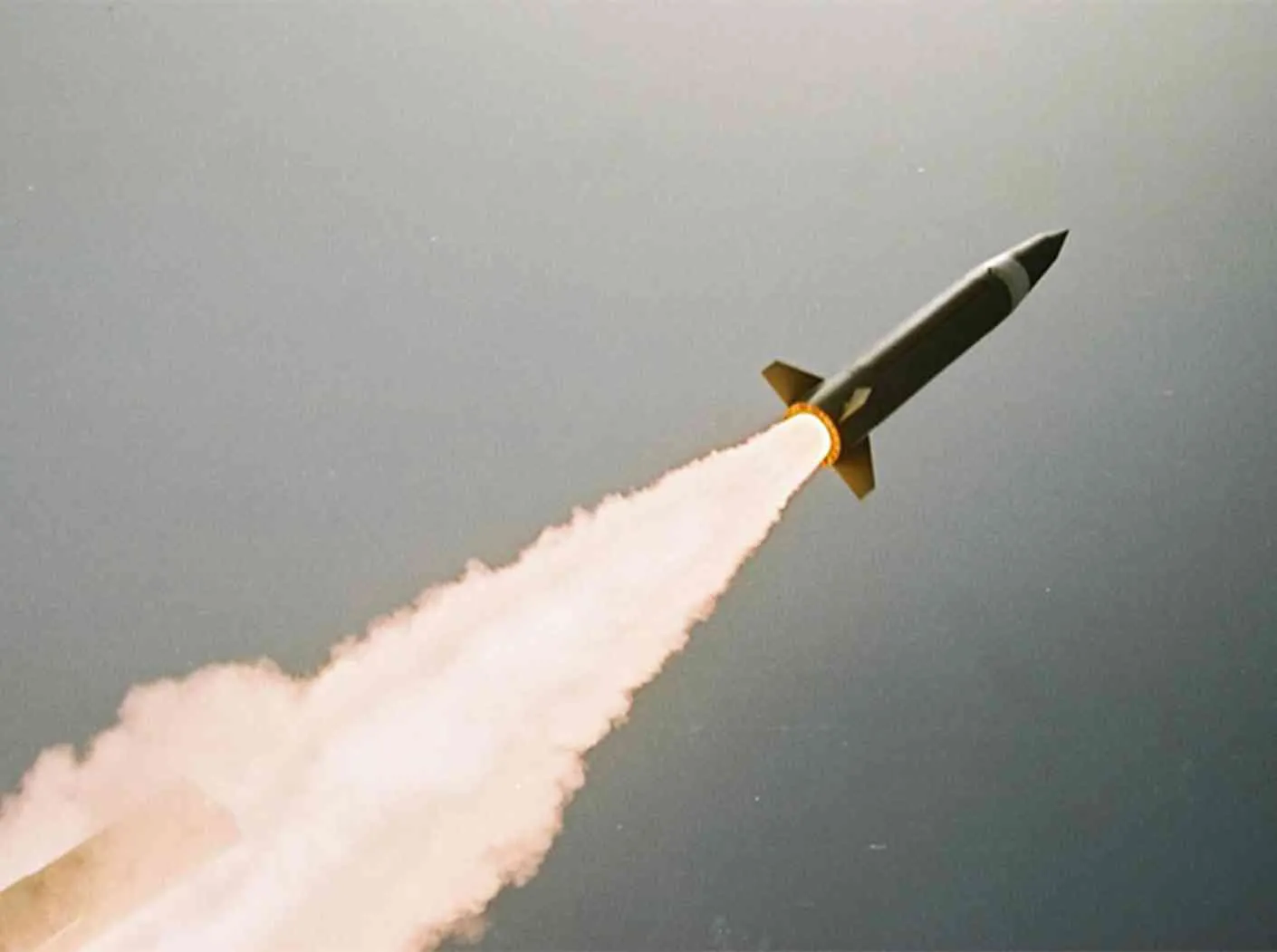

The Arab Defense website reports on August 22, 2026, that the upcoming Marrakech International Airshow, set for October, will showcase a remarkable participation from Israel's military and aerospace industries. Among the highlighted products is the LORA (Long Range Artillery) ballistic missile, recognized as one of Israel's premier long-range precision strike systems. The presence of the LORA missile in Morocco carries particular significance, not solely due to its operational capabilities but also because of the implications tied to the evolving defense collaboration between Morocco and Israel.
The LORA missile is designed for launch from both land and sea platforms, and there are air-launch variants in development, granting it considerable flexibility for executing long-range strikes. Over the years, the name LORA has been associated with Morocco, and it has already been adopted by several countries, including Azerbaijan, which utilized it during its conflict with Armenia.
Does Morocco Possess LORA Missiles?
As of now, there has been no official announcement confirming that Morocco has received LORA missiles. However, previous reports and statements have opened the door to this possibility. In 2023, the Israeli liaison office in Morocco hinted at the kingdom acquiring Israeli ballistic capabilities, without disclosing the specific type of system or missile involved. While it cannot be definitively concluded that LORA was the missile in question, its showcase at the Marrakech exhibition adds a new element to the discussion regarding Morocco's potential acquisition of this system.
This development is particularly noteworthy in light of Morocco's recent efforts to bolster its long-range missile capabilities, either through the procurement of foreign systems or by striving to develop a domestic defense industrial base. The Marrakech International Airshow appears to be evolving beyond its traditional aviation focus, becoming an important platform for showcasing defense systems and military technologies, including land and missile systems.
Expectations are high for the participation of various global companies alongside local firms, reflecting the growing sophistication of Morocco's defense industry. This context emphasizes the Moroccan-Israeli collaboration, especially as Israeli defense companies enter the Moroccan market and establish local production capabilities. One emerging area in Morocco is the manufacturing of guided munitions for the Royal Armed Forces, with the potential for future exports of some production to international markets, alongside the development and manufacture of unmanned combat towers.
These towers allow for the operation of machine guns and cannons mounted on armored vehicles from within, utilizing electro-optical systems for surveillance and targeting, thereby enhancing crew protection and increasing the vehicles' capability for remote engagement. Indeed, prototypes of these systems have already appeared on Moroccan armored vehicles, including locally upgraded M113s, with some of this equipment showcased during the "African Lion" exercises.
The Importance of Technology Transfer
For Morocco, the significance of defense cooperation with foreign companies extends beyond merely purchasing ready-made weapons; it encompasses technology transfer and the establishment of production lines within the kingdom. This transformation could prove to be more crucial in the long term, as it allows for the construction of an industrial base capable of meeting a portion of the Royal Armed Forces' needs while simultaneously opening avenues for exporting Moroccan defense products abroad.
If it becomes confirmed that Morocco will indeed acquire the LORA system in the future, it would significantly enhance the kingdom's long-range missile arsenal, especially considering the presence of other long-range systems as Morocco seeks to strengthen its capabilities in the realm of precision strikes.
The developments surrounding Morocco's missile capabilities understandably attract special attention in Spain, given the geographical proximity between the two nations. The possession of long-range tactical or ballistic missiles is viewed as a significant factor in the deterrence equation, as these systems can cover vast distances and reach distant targets, making them an essential component of military and defense planning.
The LORA missile, developed by Israel Aerospace Industries (IAI), is a tactical long-range ballistic missile that combines long-range capabilities with high precision and the ability to carry various warheads. According to the latest data released by the company, its range spans from 90 to 430 kilometers, with an impressive accuracy of approximately 10 meters CEP. Weighing around 1,600 kg at launch, it measures 5.2 meters in length and has a diameter of 624 mm.
LORA employs a single-stage solid-fuel rocket motor and utilizes a guidance system that combines inertial navigation (INS) with satellite navigation (GNSS/GPS), enabling it to execute precise strikes against fixed or known targets, including command centers, military infrastructure, airbases, air defense systems, and fortified positions. The missile can utilize multiple warhead types, including high-explosive and penetration fragmentation warheads.
Among LORA's notable features is its capability to strike targets within a short time frame; the company claims it can hit a target within less than 10 minutes from the moment the launch decision is made, and it can be launched from unprepared sites. The missile is designed with a maneuverable flight path and supersonic speed, features that reportedly enhance its survivability during flight.
The system is not limited to land-based launches; IAI has developed versions that can be operated from maritime platforms, and it also offers an Air LORA variant for aerial launches from aircraft, which features INS/GPS navigation and enhanced jamming resistance, allowing for long-range air-to-ground strikes. However, possessing these capabilities does not necessarily indicate an intention to use them against any state, as long-range missiles are fundamentally associated with deterrence and the enhancement of national territory and interest protection.
Notably, what once represented technology that was difficult for Morocco to access is now among the areas the country is working to develop and acquire, reflecting a growing trend towards localizing production and transferring knowledge and expertise domestically. Therefore, the display of LORA at the Marrakech exhibition, whether as a mere marketing showcase from the Israeli company or as an indicator of broader, yet-to-be-announced cooperation, will undoubtedly be one of the most noteworthy developments to monitor during the exhibition, particularly in light of the rapid transformation taking place in Morocco's defense industry.
As reported by defense-arabic.com.