
The Istiqlal Party is advancing significantly in its preparations for the upcoming legislative elections scheduled for September 23, 2026. The party's leadership is transitioning from managing internal nominations to reconfiguring its candidate map across various electoral districts, a strategic move that early on unveils the contours of competition that will characterize the forthcoming electoral process.
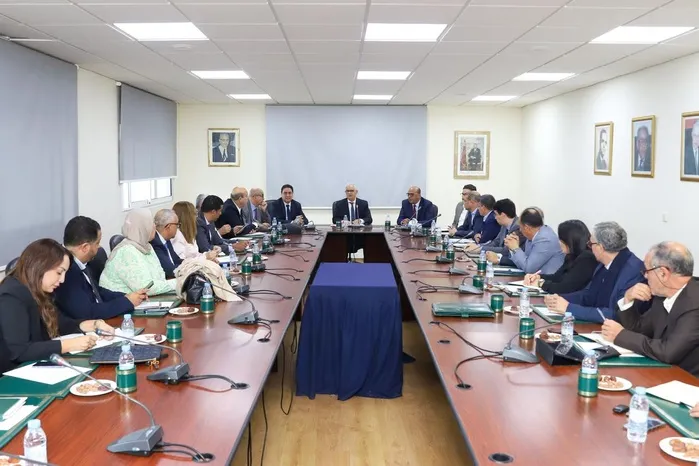
Following a meeting held on August 3, the party's executive committee announced a new wave of endorsements after reviewing submitted applications. These applications underwent scrutiny by the ethics and conduct committee, reflecting the party's aim to align its candidate selections with its internal regulations and code of conduct.
The latest endorsements span several regions from north to south, indicating the party's intention to expedite the establishment of its local lists rather than waiting until the election date approaches to finalize candidate names. In the Tangier-Tetouan-Al Hoceima region, the party has chosen Mohamed Hammoudani to lead its list in the Al Hoceima constituency, while in the eastern region, it has selected Touhtouh Mohamadi for the Nador constituency, a candidate who previously belonged to the National Rally of Independents, a coalition partner in the government.
In the Fes-Meknes region, the party has confirmed the nominations of Hassan Sligoua for the northern Fes constituency, Hassan El-Yemni for the Meknes constituency, and Mohamed Soufan for the Taounate-Tissa constituency. Meanwhile, in the Marrakech-Safi region, the party endorsed Abdelaziz Darwish for the city of Sidi Youssef Ben Ali. In the Rabat-Salé region, it has chosen Idriss Santissi, a former parliamentary leader from the Popular Movement party, for the Salé city constituency.
In the Beni Mellal-Khenifra region, the party has confirmed the nomination of Abdelali Broki for the Azilal-Demnat constituency, while in Marrakech-Safi, Abdelaziz Darwish has been selected for the city of Sidi Youssef Ben Ali, and Shadi Bouloon for the Tan-Tan constituency.
However, the significance of this new batch of endorsements lies not only in the number of names revealed but also in the political choices that underpin them. The recruitment of candidates with prior experience from other parties, especially from within the ruling coalition, indicates that electoral competition is beginning to manifest itself within the governmental alliance even before reaching the ballot boxes.
This aspect is particularly crucial as the parties forming the ruling coalition prepare for the same electoral event, making numerous local constituencies potential battlegrounds where candidates from political factions expected to unite under the coalition enter the election with divergent strategies driven by seat calculations, local influence, and voter mobilization capabilities.
From this perspective, the activities of the Istiqlal Party seem akin to a reengineering of its local electoral presence, blending the retention of established party figures with the introduction of new candidates who possess electoral networks and a tangible presence beyond the traditional organizational framework. This strategy enables the party to broaden its maneuvering space in constituencies that require candidates capable of mounting a strong electoral challenge, rather than relying solely on internal organizational nominations.
This dynamic unfolds within a political context where parties are gradually transitioning from internal preparations to testing their strengths on the ground. As the September 23 election date approaches, the candidate selection process transforms from an organizational decision to a pivotal factor influencing local alliances, attracting influential figures and electoral activists, and redistributing power centers within various districts.
Moreover, the party's reliance on the ethics and conduct committee to vet nominations adds an organizational dimension to this process, as leadership aims to present the endorsements as a result of a robust internal institutional pathway rather than merely responding to local electoral pressures. This approach grants leadership greater latitude in managing candidate choices, especially in a phase where competition within the party over who is entitled to run and who has the best electoral prospects may intensify.
Simultaneously, the second batch of endorsements reveals that the Istiqlal's electoral battle will not solely be contested within the party but will also be influenced by the leadership's ability to reconstruct its local map and attract personalities capable of altering the dynamics of competition in specific districts.
Future batches of endorsements are expected to provide clearer indicators regarding the party's electoral vision, particularly in districts where candidates from the ruling coalition's parties intersect. As the election date draws nearer, the distribution of nominations in these districts will become increasingly sensitive, potentially placing the coalition parties in a challenging position regarding how to navigate between governmental coexistence and electoral competition.
Thus, the endorsement process is not merely an organizational procedure to fill electoral slots, but rather one of the first real battlegrounds of the electoral conflict. Parties that successfully finalize their candidates early have more time to build their local campaigns, organize their networks, attract influential actors, and gauge voter trends before entering the official campaign phase.
The Istiqlal Party presents this process as part of a path aimed at selecting candidates who meet standards of competence, integrity, and merit, capable of representing citizens and advocating for their issues while emphasizing the principle of accountability. However, what future batches will reveal is likely to be more critical than the organizational data itself: Will the party succeed in transforming these endorsements into actual electoral strength? Will attracting figures from the ruling coalition enhance its position within the alliance, or will it merely widen the competition among its components before reaching election day? These questions will gradually find answers as the electoral map of the parties becomes complete, transitioning competition from the offices of political organizations to the districts that will ultimately determine the power dynamics in the next parliament.
As reported by kechpresse.com.